
Statuario marble is the quiet aristocrat of the white Italian marbles. It carries the same prestige as Calacatta and Carrara, yet it reads as the most disciplined and refined of the three: a cooler, brighter white ground crossed by thin, linear grey veins that look drawn rather than spilled. For importers, architects, and high-end fabricators, Statuario is the material that signals restraint and money at the same time. This guide walks through what Statuario actually is, how it differs from its better-known cousins, why it costs what it costs, and exactly how to buy it well.
Stonelink has supplied white Apuan marble since 2012 from our Shuitou and Xiamen bases, holding 60,000 m² of inventory across 2,000+ designs and shipping to 80+ countries. We handle Statuario alongside Calacatta and Carrara every week, and the same question keeps coming from new importers: “How do I know I am getting Statuario, and is it worth the premium?” This article answers both.
What Is Statuario Marble?
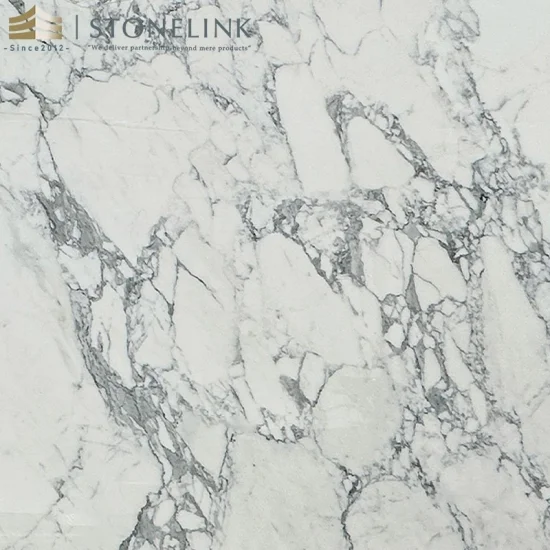
Statuario is a white metamorphic marble quarried in the Apuan Alps of Tuscany, the same mountain system that produces Carrara and Calacatta. Like all marble, it began as limestone that was recrystallized under heat and pressure, but its particular chemistry and the way the stone was folded during formation gave it a distinct optical white and a fine, linear veining pattern. The name is sometimes written “Statuary” in older trade documents; both refer to the same material. Historically it was the favorite stone of Renaissance sculptors for its pale, even body, which is also why it is associated with clean, classical architecture rather than busy decorative surfaces.
Where Statuario Comes From
Statuario is quarried in the Apuan Alps of northern Tuscany, the limestone range that runs behind the towns of Carrara and Massa. In practice, the Statuario, Calacatta, and Carrara quarries sit on the same massif and are often worked by the same operators. The difference between them is less about geography and more about which seam or bench within the mountain produced the block. Italian quarries are tightly regulated for environmental and extraction limits, and the Statuario seams are among the most restricted, which is the first reason supply stays tight and prices stay high. For a full comparison of the regional whites, see our guide on Calacatta vs Statuario and our dedicated Carrara marble page.
The Geology Behind the Look
Marble forms when limestone is subjected to regional metamorphism. The original calcium carbonate recrystallizes into interlocking calcite crystals, which is what gives marble its characteristic translucency and its ability to take a high polish. In the Apuan range the limestone was purer and less contaminated with iron and organic material than in many other deposits, so the base color stays white. Statuario’s particular brightness comes from an exceptionally low level of accessory minerals, while its fine grey veining comes from thin seams of graphite and clay-rich material that infiltrated along fractures during metamorphism. Because those seams are narrow and oriented, the veining reads as linear and disciplined rather than as the broad, branching patterns seen in Calacatta. This geological story is exactly why no two mountains produce the same white, and why “white marble” is never one product.
Appearance: The Statuario Signature
If you only learn one thing about Statuario, learn its visual signature. The ground is a brighter, cooler, almost optical white that can look faintly blue or grey in the right light, especially compared with the creamier, warmer white of Calacatta. Across that white runs a network of thin, straight or gently curved grey veins, usually grey rather than gold, set at a fairly even density. The overall effect is calm and architectural. Where Calacatta looks like a thunderstorm of movement, Statuario looks like a precise line drawing. For buyers, the practical takeaway is that Statuario reads as luxury through restraint: it does not shout, and that is the point.
Statuario vs Calacatta vs Carrara
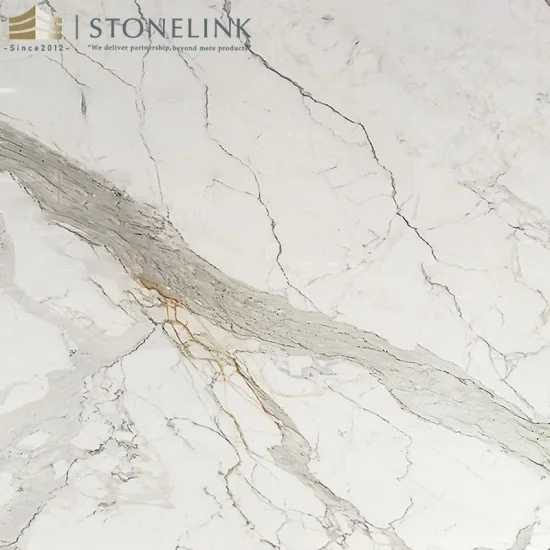
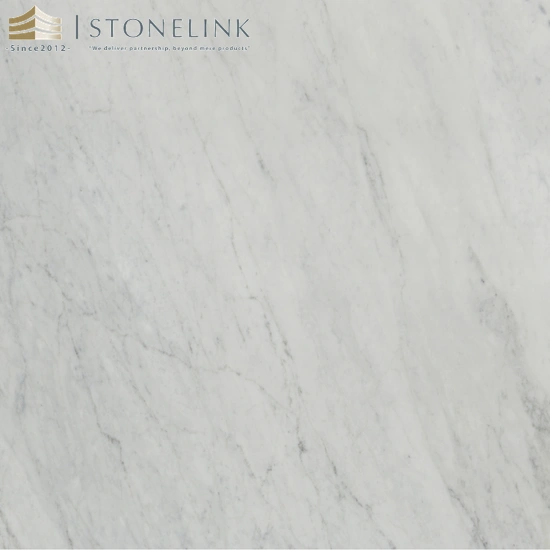
These three are the white Italian marbles buyers mix up most, so here is the short version. Carrara (often sold as Carrara White) is the most common and the most affordable: a soft, slightly grey-white with fine, diffuse, low-contrast veining. Calacatta is rarer and more dramatic, with a warm white ground and bold, thick, often gold or brown veins. Statuario sits between them in rarity but at the top in price discipline: cooler and brighter than either, with thin, grey, linear veining and very little gold. If you need the full side-by-side breakdown, our Calacatta vs Statuario comparison covers it in detail, and our Carrara White marble product page shows the budget end of the same mountain.
Rarity and Why Statuario Commands a Premium
Statuario is the rarest of the major Apuan whites in terms of usable, large-format yield. The seams that produce the cleanest, brightest, most evenly veined material are small and heavily restricted by Italian quarrying permits. Even within a productive block, only a fraction is free of clouding or off-color that would disqualify it from top-grade Statuario. Lower yield plus high demand from luxury hotels, flagship retail, and high-end residential means the price per slab sits above most Calacatta grades and well above Carrara. The gap widens sharply for book-matchable blocks, where two mirror-image halves are needed for a symmetrical feature. Buyers should always confirm they are being quoted true Statuario and not a warmer white with the name loosely applied, because the name alone does not guarantee the stone.
Ideal Applications
Statuario’s restrained character makes it the natural choice for projects where “quiet luxury” is the brief. Common applications include:
- Minimalist kitchens. Waterfall islands and full-height backsplashes where a calm, consistent white with fine grey lines reads as expensive without being busy. See our guide to the best marble for kitchens for more.
- Hotel and spa bathrooms. Vanities, shower walls, and tub surrounds where the cool white pairs with chrome and cool greys for a clinical, five-star feel.
- Refined architectural spaces. Lobbies, feature walls, and staircases in commercial and residential interiors where consistency across large areas matters more than dramatic movement.
- Sculptural and bespoke pieces. Because of its even body, Statuario is also favored for carved and custom fabrications.
Where a client wants maximum visual drama, Calacatta is usually the better fit; where they want polished calm, Statuario wins. Matching the stone to the design intent is the single most important specification decision.
Durability and Maintenance
Statuario is marble, and that comes with fixed rules. It is a relatively soft natural stone (Mohs hardness around 3) and, crucially, it is calcium carbonate, which means it reacts with acids. Lemon juice, vinegar, wine, and many cleaning products will etch the surface, leaving dull spots that no amount of polishing removes at home. That is not a defect; it is the nature of all true marble, including Carrara and Calacatta. Practical care comes down to three points:
- Seal it. A penetrating sealer slows staining and should be reapplied on a schedule based on use and traffic.
- Use a honed or leathered finish in wet, high-traffic areas. Honed Statuario hides etching and wear far better than polished, and it reads as softer and more modern.
- Wipe spills immediately and avoid acidic cleaners. pH-neutral stone cleaners only.
For a deeper look at finish choice, the honed-versus-polished decision is covered in our kitchen marble guide. With correct sealing and sensible habits, Statuario performs well for decades in both residential and commercial settings.
Price Drivers for Statuario
When you receive a Statuario quote, several variables explain the number, and understanding them keeps you from comparing apples to oranges:
- Origin and grade. True Italian Apuan Statuario carries a different price and supply story than whiter-looking material from other regions. Confirm the quarry.
- Slab size and yield. Larger, defect-free slabs cost more per square meter but waste less in fabrication, which can lower total project cost.
- Book-matching potential. Blocks cut for symmetrical layouts command a premium because the matching halves are reserved and cannot be sold separately.
- Finish. Polished is standard; honed, leather, and brushed finishes add processing cost.
- Thickness. 20mm and 30mm are common; thicker or reinforced slabs add material and freight weight.
- Volume and logistics. Full-container loads from a single source reduce per-unit freight, while mixed small orders cost more to handle.
How to Buy Statuario: What to Specify
Buying Statuario well is about removing ambiguity before the stone is cut. Here is the specification checklist we give importers:
- Ask for the real slab photo, not just the name. “Statuario” is used loosely across origins and grades; the photo settles what you are actually getting.
- Specify slab size and thickness. Confirm dimensions (e.g., 2800-3200mm long, 1600-1900mm wide) and thickness (20mm or 30mm) so yield and price are clear.
- Define your minimum order quantity (MOQ). For container shipping, plan around a full load; Stonelink can consolidate mixed designs to fill a container efficiently.
- Request book-matching for feature areas. If a symmetrical layout matters, say so up front so matching halves are reserved from the same block.
- Confirm finish and edge profile. Honed, polished, leather, or brushed, plus the fabrication edge you need.
- Plan container shipping. White marble slabs are packed in A-frames or bundles; confirm crate specs, insurance, and Incoterms (FOB Xiamen / CIF your port) before booking.
Because Statuario varies block to block, seeing real inventory matters more than trading on the name. With 60,000 m² of stock and 2,000+ designs, Stonelink can put a Statuario and its Calacatta and Carrara neighbors side by side so you compare background, veining, and price in person or by high-resolution slab photo rather than from a spec sheet. Where a project budget does not stretch to Italian Statuario, we also source and manufacture close-reading alternative whites that satisfy many commercial briefs. Learn more about our operation on the Stonelink about page or read our marble manufacturer in China overview.
Sourcing Statuario-Style White Marble From China
Many importers ask whether they can source Statuario-style white marble through a Chinese manufacturer rather than directly from Italy. The answer is yes, with the right expectations. Stonelink, manufacturing since 2012 in Shuitou and Xiamen, sources genuine Italian and other Apuan whites and also produces high-quality alternative white marbles that closely approximate the Statuario look for budget-sensitive commercial jobs. The advantage is inventory depth, consolidated shipping, and fabrication control; the trade-off is that “Statuario-style” is not the same as “quarried Italian Statuario,” and an honest supplier will tell you which you are buying. For the logistics side, our import natural stone from China guide explains container types, Incoterms, and lead times step by step.
Frequently Asked Questions
Is Statuario a type of Calacatta?
No. They are related Italian marbles from the same Apuan Alps region, but they are quarried separately and look different. Statuario has a brighter, cooler white and finer, greyer, more linear veining; Calacatta is warmer with bolder, often gold-toned veins. Treating them as one stone leads to mismatched expectations and wrong orders.
What is the difference between Statuario, Carrara, and Calacatta?
Carrara is the most common and affordable, with a soft grey-white and fine, low-contrast veining. Calacatta is rarer and more dramatic, with a warm white ground and bold, thick, often gold veins. Statuario is the most restrained of the three: a cooler, brighter optical white crossed by thin, grey, linear veins and very little gold. Rarity and price typically run Carrara, then Calacatta, then Statuario at the top.
Why is Statuario more expensive than other white marbles?
The quarries yield less clean, large-format, evenly veined material, and Italian extraction is tightly permit-restricted, so usable supply is tight. High demand from luxury hotels and high-end residential pushes the price above most Calacatta grades and well above Carrara. The gap widens for book-matchable blocks because matching halves must be reserved from a single block.
Is Statuario durable enough for a kitchen?
It is as durable as any marble, which means it is beautiful but not acid-proof. As calcium carbonate it will etch from lemon, vinegar, and wine, and it scratches more easily than granite or quartzite. With sealing, a honed finish, and immediate spill cleanup, it performs well in kitchens for years. If heavy cooking with acids is the norm, consider honed Statuario for low-traffic areas rather than the primary prep zone.
What is the best finish for Statuario marble?
It depends on the application. Polished Statuario maximizes the bright, reflective white and is stunning in feature walls and vanities. Honed Statuario is softer, more modern, and far better at hiding etching and wear, making it the safer choice for busy kitchens and bathrooms. Leathered and brushed finishes add tactility for bespoke architectural pieces.
Can I import Statuario-style white marble from China?
Yes. A manufacturer like Stonelink can supply genuine Italian whites and also produce close-reading alternative white marbles that approximate the Statuario look at a lower cost for commercial jobs. The key is transparency: confirm whether you are buying quarried Italian Statuario or a Statuario-style equivalent, and specify exactly what you want before the stone is cut and shipped.
Related guides: Top 10 Marble Suppliers · Project Case Studies
Explore Our Stone Collection
Looking for the right slab for your project? Browse Stonelink’s inventory of 2,000+ designs across marble, granite, quartzite, travertine, onyx and limestone, with 60,000 m² in stock and shipping to 80+ countries.
- Calacatta Marble: The Dramatic White Italian Stone
- Carrara Marble: The Classic Italian White
- Calacatta vs Statuario: How to Tell Them Apart
Ready to Source Marble?
Contact the Stonelink team to compare Calacatta and Statuario slabs side by side, or to request book-matched layouts and alternative whites for your budget. We ship from Shuitou & Xiamen to 80+ countries with 60,000 m² of inventory across six stone families.
Frequently Asked Questions
How can I import natural stone from China?
Most overseas buyers work with Stonelink in four clear steps. (1) Share your project specifications, drawings or inspiration photos, or choose directly from our 60,000 m² inventory of 2,000+ designs. (2) We send whole-slab high-resolution photos and short video so you can verify exact veining, color and finish before committing — bookmatching and sequence are confirmed at this stage. (3) We handle export packing (foam-protected, fumigated wooden crates), container booking and ocean freight from Xiamen or Shuitou port. (4) Goods arrive at your destination port with the full document set (commercial invoice, packing list, Bill of Lading, certificate of origin, insurance). We support both full-container-load and LCL shipments, and all communication is in English.
What is your minimum order quantity (MOQ) and lead time?
MOQ typically starts from one container (about 20–27 tons depending on slab size and thickness), and mixed sizes or products are accepted so you can consolidate an entire project in one shipment. For smaller trials we can sometimes ship an LCL (less-than-container) batch of a few slabs, though the per-unit freight is higher; ask us and we will quote both options. Standard lead time is about 15–25 days after order confirmation for in-stock materials, or longer for custom cutting and special finishes. Before shipment we provide whole-slab photos and video so you know exactly what you receive, and we can hold stock for phased deliveries. For recurring orders we offer reserved inventory and rolling production schedules to keep your supply chain steady, and we quote both FOB Xiamen/Shuitou and delivered CIF or DDP to your port.
Can you send stone samples before I place an order?
Yes. We provide samples — offcuts or small slabs — so you can verify color, finish and quality before committing to a full shipment. Samples ship worldwide by courier (DHL, FedEx or UPS), typically within 3–7 days, and the sample cost is usually credited against your first container order. For large projects we can also send a full digital package — high-resolution whole-slab photos and short videos — so your designers can spec with confidence before any physical sample moves. Tell us the exact application, dimensions and finish you need and we will pick the most representative pieces rather than random offcuts, so the sample truly reflects the batch you would receive.
Do you provide quality control and certifications?
Yes. Stonelink is a China-based natural stone manufacturer and exporter operating from the Xiamen and Shuitou stone hub since 2012, with a 60,000 m² inventory spanning 2,000+ designs and direct quarry access, shipping to 80+ countries. Every shipment is inspected for packing and quality before loading — slabs are checked for cracks, bow, thickness tolerance and finish, then crated in foam-protected, fumigated wooden packaging. We can arrange third-party inspection (SGS, Intertek and similar) and supply the documentation your destination requires: commercial invoice, packing list, Bill of Lading, certificate of origin and, where relevant, CE marking or material test reports. Tell us your certification and labeling needs (for example the EU, US, Australia or Middle East) and we will match them and pre-clear the paperwork so customs clearance goes smoothly.
How do I choose the right natural stone for my project?
Start with the application: floors and high-traffic areas favor harder stones (granite, quartzite), while marble and onyx shine in lower-abuse, design-led spaces such as feature walls and vanities. Match the finish to the mood — polished for drama, honed for calm, leathered for texture — and confirm color stability under your actual lighting, since natural stone shifts with light. For wet areas choose a denser, well-sealing material and an appropriate finish, and review whole-slab photos or video with our team before you buy. We advise free of charge based on your project’s traffic, budget and aesthetic, so you avoid expensive mismatches and rework.
What shipping terms and documents are included?
We ship FOB Xiamen or Shuitou as standard and can also quote CIF or DDP to your port, so you control insurance and freight or let us handle it end to end. We manage export packing, container booking and ocean freight, and provide the full document set: commercial invoice, packing list, Bill of Lading, certificate of origin and cargo insurance. Both full-container-load and LCL (less-than-container-load) shipments are supported, and for landlocked destinations we can arrange door-to-door multimodal transport. Tell us your delivery address and incoterm preference and we will quote a landed cost, not just an ex-works price, so there are no surprises at the border.