
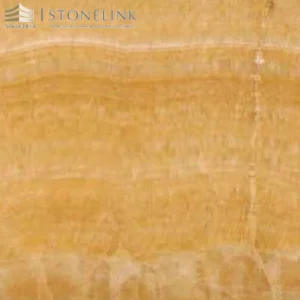
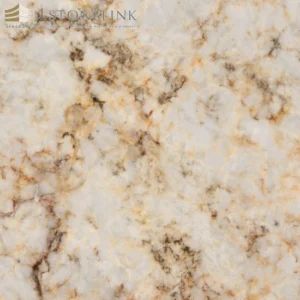
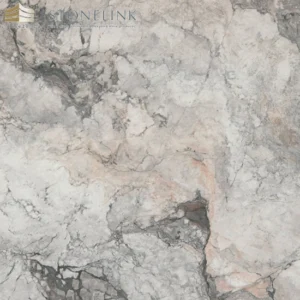
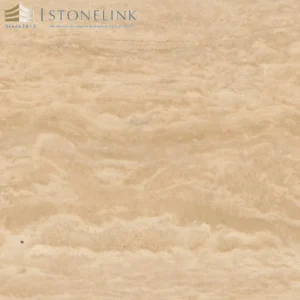
Calacatta marble is the white stone most buyers picture when they say “luxury marble.” It is the material behind the dramatic kitchen islands in five-star hotels, the feature walls in flagship retail stores, and the sculptural vanities in high-end residential bathrooms. Unlike the quieter, more common Italian whites, Calacatta is defined by bold movement: a bright white ground cut by thick grey veins and warm gold or brown highlights that read as art rather than background.
If you are an importer, fabricator, or project specifier, Calacatta rewards careful buying. The look varies enormously from block to block, the names get used loosely across origins, and the difference between a great slab and a disappointing one often comes down to what you specify before you order. Stonelink has sourced and processed Calacatta since 2012 from our Shuitou & Xiamen bases, with 60,000 m² of inventory across 2,000+ designs and direct shipping to 80+ countries. This guide walks through what the stone actually is, how it differs from its Italian cousins, and how to buy it well.
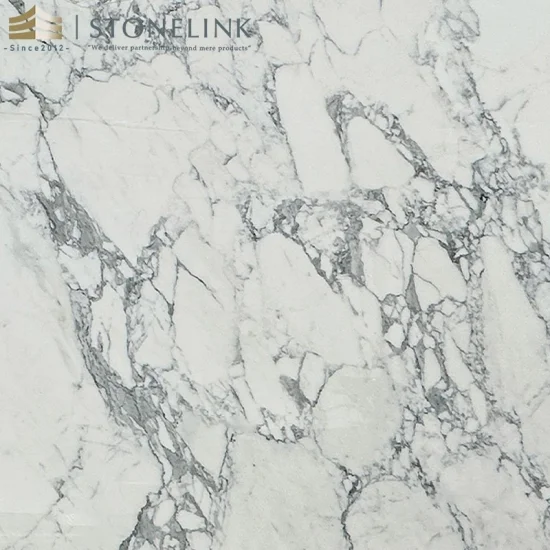
What Is Calacatta Marble?
Calacatta is a natural metamorphic marble quarried in the Apuan Alps of northern Tuscany, Italy, the same mountain range that produces Carrara and Statuario. Geologically it is a recrystallized limestone: over millions of years, heat and pressure reorganized calcium carbonate into the dense, polishable stone we call marble. The white ground comes from the purity of the original carbonate; the veining comes from mineral impurities, mainly graphite and iron oxides, that were introduced along fractures and bedding planes as the rock formed.
What separates Calacatta from other Apuan whites is the density and contrast of those impurities. The veins are thicker, less regular, and more colorful than in Carrara or Statuario, which is exactly why designers pay a premium for the movement. Every slab is effectively a one-off, and that uniqueness is part of the product’s value.
Appearance: The Signature Look
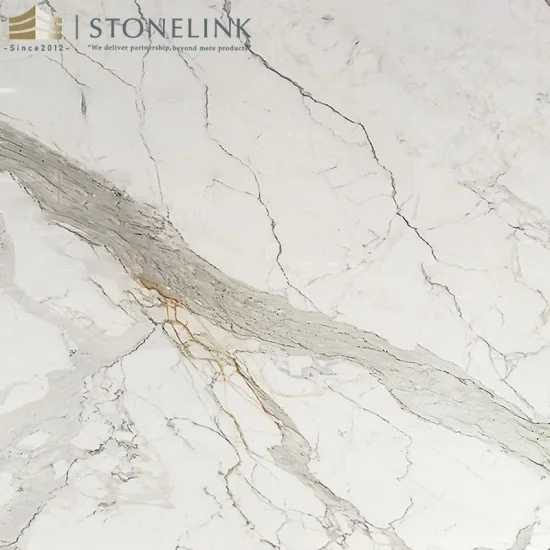
The defining trait of Calacatta is contrast. The base is a clean, often warm white, sometimes with a faint cream undertone that makes gold veining feel at home. Across that ground run bold grey veins, frequently accompanied by gold, honey, or light brown highlights. The veins are not a uniform mesh; they are interrupted, dramatic, and artistic, with large quiet areas of white broken by striking movement. In the trade this is called “book-matched drama,” and it is the reason Calacatta is chosen for statement surfaces rather than subtle ones.
Because the pattern is so individual, two slabs from the same block can look related but never identical. For importers, this means the photo of the exact slab matters more than the name on the invoice. Always buy from real slab images, not a generic catalog shot.
Calacatta vs Carrara vs Statuario
All three come from the Apuan Alps, and all three are white marble, but they occupy different positions on the spectrum of color, veining, and price. Knowing the difference protects your margin and your client relationships.
Carrara is the most common and the most affordable of the three. It has a cooler, sometimes greyish white ground and fine, soft, feathery grey veining that reads as quiet and uniform. It is the workhorse Italian white, ideal when a project needs marble character without a bold statement or a premium price.
Statuario sits at the refined end: a bright, almost optical white with thin, linear, disciplined grey veining and little to no gold. It reads as crisp and architectural, and it is the rarest and usually the most expensive because the quarries yield less usable large-format material. See our dedicated comparison in Calacatta vs Statuario for the full breakdown.
Calacatta is the dramatic middle-to-top: warmer white, bold and gold-toned veins, and strong visual movement. It is more widely available than Statuario in various sub-varieties, which is why you see more Calacatta products on the market, yet it still commands a premium over Carrara. For side-by-side detail on the quieter cousin, read our guide to Carrara marble, and for the refined alternative, our Statuario marble overview.
Popular Calacatta Varieties
The Calacatta name covers several distinct varieties, each with its own character. The three most requested in international projects are:
- Calacatta Gold — The flagship variety. A warm white ground with pronounced gold and honey veining over grey. It pairs naturally with brass, wood, and cream palettes, which is why it dominates luxury kitchens and hospitality interiors.
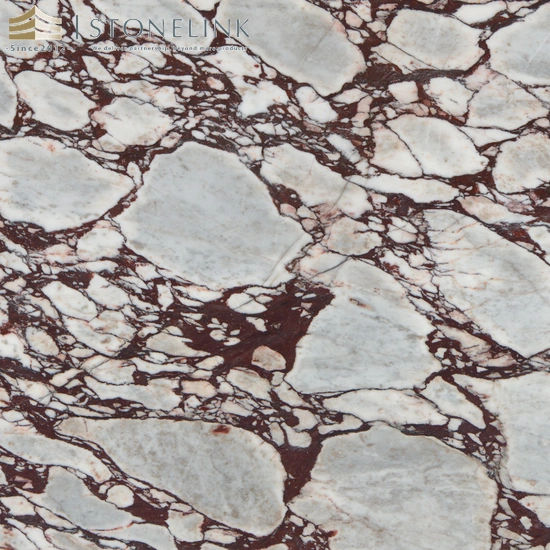
- Calacatta Viola — A bold, dramatic variant defined by deep violet and purple veins against white. It is the choice for maximalist, statement-driven design and commands attention on feature walls and vanities. Explore it as a product in our Calacatta Violet Marble listing.
- Calacatta White — The cleanest expression of the family: a bright white ground with restrained grey veining and minimal gold. It delivers the Calacatta name with a calmer, more versatile hand, suitable for projects that want prestige without overwhelming pattern.
Ideal Applications
Calacatta is a statement material, so it performs best where its movement can be seen and appreciated at scale. The most common high-value uses are:
- Kitchen islands and countertops — The single largest application. A full Calacatta island is the centerpiece of a luxury kitchen, and book-matched slabs turn the surface into a continuous piece of art. For more on choosing the right stone for this job, see our guide to the best marble for kitchens.
- Feature walls and backsplashes — Large vertical surfaces show the veining at its most dramatic, especially when book-matched so the pattern mirrors across the center.
- Luxury bathrooms — Vanities, shower surrounds, and bathtub decks where the warm white and gold read as spa-level indulgence.
- Flooring and stair treads — Used selectively in lobbies and high-end residences where the budget supports full slab flooring rather than tile.
Because the stone is visually busy, designers often pair it with calm surroundings: plain cabinetry, muted metals, and neutral wall colors that let the marble lead. Over-designing around Calacatta risks competing with it.
Durability and Maintenance
Calacatta is marble, and marble is a calcium carbonate stone. That single fact drives every maintenance decision. Calacatta is reasonably hard and polishes to a mirror depth, but it is not a maintenance-free surface like quartz or porcelain.
Acid etching. The most important behavior to understand: Calacatta reacts with acids. Lemon juice, vinegar, wine, tomato, and many cleaning products will etch the surface, leaving a dull mark even on a sealed slab. Etching is a chemical change in the stone, not a stain, so it cannot be wiped away; it must be re-honed or re-polished. In a kitchen, this means acidic spills must be cleared immediately and the client must accept some patina over time.
Staining. Calacatta is less porous than many stones but still absorbs oils and pigments if left. Sealing is essential. A quality penetrating sealer slows absorption and gives time to clean spills; it does not make the stone acid-proof.
Honed vs polished. Polished Calacatta has the deep, reflective shine that shows the veining most vividly, and it is the standard for islands and walls. Honed Calacatta has a matte, soft finish that hides etching and fingerprints better, making it a practical choice for busy bathrooms and floors. Honed surfaces show less drama but wear more gracefully in high-traffic areas.
Care routine. Use a pH-neutral stone cleaner, avoid acidic or abrasive products, reseal on a schedule recommended for the traffic level (commonly annually for kitchens), and use trivets and cutting boards. With that routine, Calacatta stays beautiful for decades.
Price Drivers
Calacatta sits in the premium tier of natural stone, and its price is driven by factors buyers can learn to read:
- Variety and rarity — Calacatta Gold and Calacatta Viola typically cost more than plain Calacatta White because the desired veining is rarer to yield.
- Background whiteness — A cleaner, brighter white with minimal cloudiness commands a premium over slabs with grey or beige muddiness.
- Vein contrast and artistry — Bold, balanced, book-matchable movement is worth more than chaotic or weak patterning.
- Block yield and slab size — Large, defect-free slabs suitable for a single island without seams carry a higher per-square-meter price.
- Origin and supply — Italian-quarried material carries a different price and lead-time story than equivalents sourced or processed elsewhere.
- Finish and fabrication — Book-matching, edge profiling, and cut-to-template work add cost on top of the raw slab.
For importers, the practical takeaway is to specify by slab photo and measurements, not by the word “Calacatta” alone, because that word spans a very wide price range.
How to Buy: What to Specify
Buying Calacatta well is mostly about specifying precisely and verifying before you commit. Here is the practical checklist Stonelink uses with importers:
- Confirm the exact variety. State Calacatta Gold, Calacatta White, or Calacatta Viola, and back it with a slab photo so there is no ambiguity about what ships.
- Specify slab dimensions. Standard large-format slabs run about 300 x 180 cm or 320 x 200 cm. Confirm the size you need for your islands and walls so you can plan seams and book-matches before cutting.
- Request book-matching. For feature surfaces, ask for adjacent slabs from the same block, laid so the veining mirrors across the center. This is the difference between a good install and a showpiece.
- Set finish and edge. Polished or honed, and the edge profile (e.g., eased, mitred, bullnose), so fabrication matches the design intent.
- Confirm quantity and MOQ. Minimum order quantities vary by variety and slab availability; align your project volume with what the yard can hold so you receive consistent material for the whole job.
- Plan container shipping. Slabs move in containers, packed and strapped to A-frames. Coordinate slab count, crate dimensions, and destination port early so the order consolidates efficiently and arrives intact.
At Stonelink, our 60,000 m² inventory and 2,000+ designs let us put the actual slabs you are buying in front of you, photographed and measured, before anything ships. With operations since 2012 in Shuitou and Xiamen and delivery to 80+ countries, we handle the full chain from selection to container loading. Learn more about our background on the about page, or review our capability as a marble manufacturer in China.
Sourcing Calacatta as an Importer
Because Calacatta varies block to block, the safest sourcing model is inventory you can see, not promises you have to trust. Holding stock and showing real slabs matters more than trading on the name. Whether you need Italian-sourced material or a processed equivalent from our yards, the principle is the same: compare background, veining, and price against the actual slabs before you commit.
For buyers new to cross-border stone, our guides to importing natural stone from China and working with a marble manufacturer in China cover logistics, MOQ, payment, and quality control in detail. If your budget does not stretch to Italian Calacatta, there are strong alternative whites that read close enough for many commercial jobs, and we can show you the comparison in person.
Frequently Asked Questions
Is Calacatta real marble or quartz?
Calacatta is real natural marble, a metamorphic limestone quarried in the Apuan Alps of Italy. “Calacatta” quartz or quartzite surfaces exist as engineered mimics, but true Calacatta is a natural stone with the veining, etching behavior, and uniqueness that only a quarried material has. Always confirm whether a quote is for natural marble or an engineered look-alike.
What is the difference between Calacatta, Carrara, and Statuario?
All three are white Italian marbles from the same region, but they differ in look and price. Carrara is the most common and affordable, with a cool greyish white and fine, soft veining. Statuario is the rarest and usually priciest, with a bright white and thin, linear grey veins and little gold. Calacatta sits in between with a warmer white and bold grey-and-gold veins and dramatic movement. The names are used loosely, so always verify by slab photo.
How much does Calacatta marble cost?
Calacatta is a premium marble, and price varies widely by variety, whiteness, vein artistry, slab size, and origin. Calacatta Gold and Calacatta Viola typically sit above plain Calacatta White, and large book-matchable slabs cost more per square meter than smaller or flawed ones. Because the range is broad, the reliable way to budget is to specify the exact variety and review real slab photos and measurements with your supplier rather than quoting on the name alone.
Does Calacatta stain and etch?
Yes to both, as with all marble. Calacatta etches on contact with acids like lemon, vinegar, and wine, leaving a dull mark that must be re-honed, not wiped. It can also stain from oils and pigments if left unsealed. A penetrating sealer slows absorption but does not stop etching. The fix is immediate spill cleanup, pH-neutral cleaners, regular resealing, and accepting some natural patina over time, especially in kitchens.
Which finish is best for Calacatta marble?
Polished is best where you want maximum drama and shine, such as kitchen islands and feature walls, because it shows the veining most vividly. Honed is best for busy bathrooms and floors, where its matte surface hides etching and fingerprints and wears more gracefully. The choice depends on traffic and the client’s tolerance for patina rather than on the stone’s quality.
Can I import Calacatta marble from China?
Yes. Many international buyers source Calacatta through established manufacturers who hold inventory, process slabs, and handle container shipping to global ports. A reputable supplier lets you verify real slabs by photo and measurement before ordering, manages book-matching and fabrication, and consolidates shipments efficiently. Review logistics, MOQ, and quality control in our guides to importing natural stone from China and working with a marble manufacturer in China.
Related guides: Top 10 Marble Suppliers · Project Case Studies
Explore Our Stone Collection
Looking for the right slab for your project? Browse Stonelink’s inventory of 2,000+ designs across marble, granite, quartzite, travertine, onyx and limestone.
- Calacatta vs Statuario: How to Tell Them Apart
- Calacatta Violet Marble
- Best Marble for Kitchen Countertops
Ready to Source Marble?
Contact the Stonelink team to compare Calacatta slabs side by side, or to request book-matched layouts and alternative whites for your budget. We ship from Shuitou & Xiamen to 80+ countries with 60,000 m² of inventory across six stone families.
Frequently Asked Questions
How can I import natural stone from China?
Most overseas buyers work with Stonelink in four clear steps. (1) Share your project specifications, drawings or inspiration photos, or choose directly from our 60,000 m² inventory of 2,000+ designs. (2) We send whole-slab high-resolution photos and short video so you can verify exact veining, color and finish before committing — bookmatching and sequence are confirmed at this stage. (3) We handle export packing (foam-protected, fumigated wooden crates), container booking and ocean freight from Xiamen or Shuitou port. (4) Goods arrive at your destination port with the full document set (commercial invoice, packing list, Bill of Lading, certificate of origin, insurance). We support both full-container-load and LCL shipments, and all communication is in English.
What is your minimum order quantity (MOQ) and lead time?
MOQ typically starts from one container (about 20–27 tons depending on slab size and thickness), and mixed sizes or products are accepted so you can consolidate an entire project in one shipment. For smaller trials we can sometimes ship an LCL (less-than-container) batch of a few slabs, though the per-unit freight is higher; ask us and we will quote both options. Standard lead time is about 15–25 days after order confirmation for in-stock materials, or longer for custom cutting and special finishes. Before shipment we provide whole-slab photos and video so you know exactly what you receive, and we can hold stock for phased deliveries. For recurring orders we offer reserved inventory and rolling production schedules to keep your supply chain steady, and we quote both FOB Xiamen/Shuitou and delivered CIF or DDP to your port.
Can you send stone samples before I place an order?
Yes. We provide samples — offcuts or small slabs — so you can verify color, finish and quality before committing to a full shipment. Samples ship worldwide by courier (DHL, FedEx or UPS), typically within 3–7 days, and the sample cost is usually credited against your first container order. For large projects we can also send a full digital package — high-resolution whole-slab photos and short videos — so your designers can spec with confidence before any physical sample moves. Tell us the exact application, dimensions and finish you need and we will pick the most representative pieces rather than random offcuts, so the sample truly reflects the batch you would receive.
Do you provide quality control and certifications?
Yes. Stonelink is a China-based natural stone manufacturer and exporter operating from the Xiamen and Shuitou stone hub since 2012, with a 60,000 m² inventory spanning 2,000+ designs and direct quarry access, shipping to 80+ countries. Every shipment is inspected for packing and quality before loading — slabs are checked for cracks, bow, thickness tolerance and finish, then crated in foam-protected, fumigated wooden packaging. We can arrange third-party inspection (SGS, Intertek and similar) and supply the documentation your destination requires: commercial invoice, packing list, Bill of Lading, certificate of origin and, where relevant, CE marking or material test reports. Tell us your certification and labeling needs (for example the EU, US, Australia or Middle East) and we will match them and pre-clear the paperwork so customs clearance goes smoothly.
How do I choose the right natural stone for my project?
Start with the application: floors and high-traffic areas favor harder stones (granite, quartzite), while marble and onyx shine in lower-abuse, design-led spaces such as feature walls and vanities. Match the finish to the mood — polished for drama, honed for calm, leathered for texture — and confirm color stability under your actual lighting, since natural stone shifts with light. For wet areas choose a denser, well-sealing material and an appropriate finish, and review whole-slab photos or video with our team before you buy. We advise free of charge based on your project’s traffic, budget and aesthetic, so you avoid expensive mismatches and rework.
What shipping terms and documents are included?
We ship FOB Xiamen or Shuitou as standard and can also quote CIF or DDP to your port, so you control insurance and freight or let us handle it end to end. We manage export packing, container booking and ocean freight, and provide the full document set: commercial invoice, packing list, Bill of Lading, certificate of origin and cargo insurance. Both full-container-load and LCL (less-than-container-load) shipments are supported, and for landlocked destinations we can arrange door-to-door multimodal transport. Tell us your delivery address and incoterm preference and we will quote a landed cost, not just an ex-works price, so there are no surprises at the border.