
For most of the 2010s, travertine sat in the shadow of engineered quartz and polished marble. In 2026 it is back on specification sheets, and not as a budget filler. Designers are choosing travertine for its matte, organic surface and the way it reads as honest, tactile stone. For importers and fabricators, the revival is a chance to stock a material with strong margins and a clear design story, provided the supply side is handled correctly.
Why Travertine Fell Out of Favour
The earlier travertine wave was hurt by inconsistent quality. Lots arrived with heavy tonal variation, weak filling, and finishes that looked dated next to the high-gloss marble of the era. Many buyers associated travertine with cheap remodels rather than considered design. Those problems were sourcing problems, not material problems.
The stone itself never changed. What changed is how it is cut, filled and finished, and the aesthetic that surrounds it. Quiet, textured interiors make travertine look right again.
Cross-Cut Is Driving the Comeback
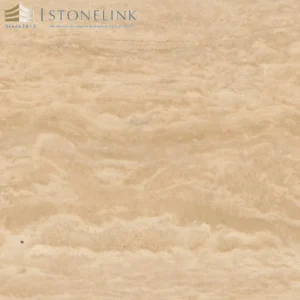
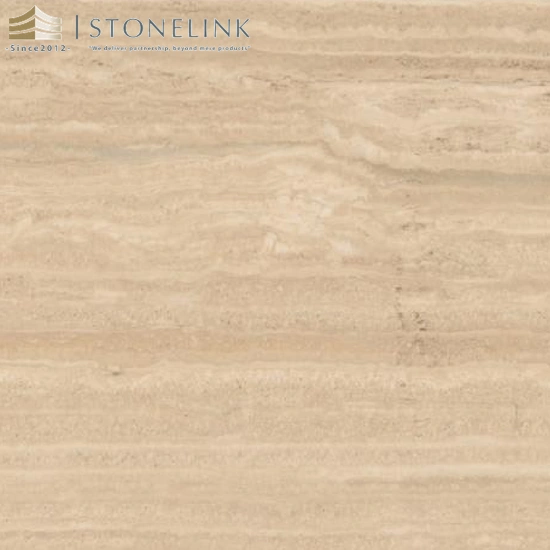
The biggest shift is the cut. Traditional travertine is vein-cut, showing linear striations. The 2026 version designers want is cross-cut, which reveals the stone’s circular, cloud-like markings. Cross-cut travertine reads as soft and contemporary, closer to a limestone or a honed marble than to the old striped look.
Cross-cut also changes how you buy. The circular pattern needs careful slab layout so the markings flow across a wall or floor. A supplier who just ships random cross-cut slabs will not give you that result. You need someone selecting slabs for pattern continuity, which is exactly the kind of handling Stonelink builds into its travertine program from Shuitou and Xiamen.
Finishes: Filled and Honed vs Unfilled
Travertine’s open pores are now a feature, not a defect. Two finishes dominate:
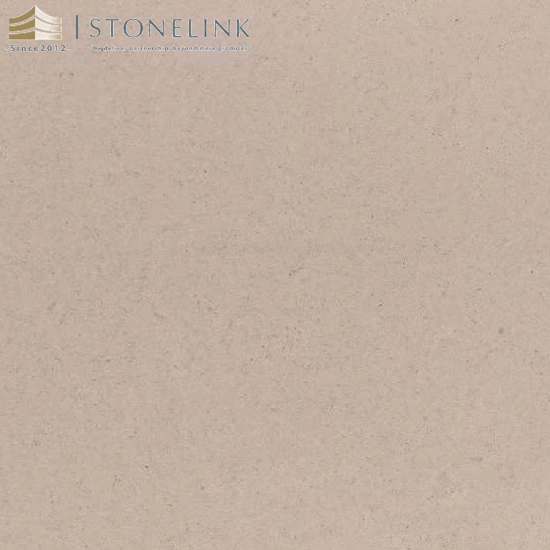
- Filled and honed for interior floors, walls and vanities. The pores are resin-filled and the surface is matte, easy to maintain and comfortable underfoot.
- Unfilled (natural) for feature walls, shower surrounds and exterior cladding, where the raw texture is the point.
For commercial jobs, filled and honed is the safer specification. Unfilled travertine looks striking but collects dust and needs more care, so reserve it for low-contact surfaces.
Where It Sells Best in 2026
Travertine is strongest in three applications right now:
- Hospitality and retail — lobbies, feature walls and reception desks where the matte surface photographs well and resists glare.
- Bathrooms — honed travertine showers and vanities fit the spa aesthetic without the coldness of polished stone.
- Exterior paving and pools — travertine stays cool underfoot and performs well in freeze-thaw when specified with the right finish.
Importers should note that pool and exterior travertine is a separate grading from interior slab. Do not mix the two in a quote without confirming the finish and thickness.
Sourcing Consistency Is the Real Challenge
Travertine tone shifts noticeably between quarries and even between blocks from the same quarry. A distributor who ships a slightly different beige on reorder will hear about it. Holding colour means controlling the block and reserving material per project.
Stonelink works with travertine sources across Italy, Iran, Turkey and China, and our 60,000 m² standing inventory lets us match and hold a tone across repeat orders. For a buyer building a travertine line, that continuity is more valuable than a one-time low price.
Pairing Travertine With Other Stone
Designers rarely use travertine alone. Common pairings are a warm travertine floor with a bookmatched marble wall, or travertine cladding against a leathered granite countertop. Stocking travertine alongside marble and granite in one container simplifies logistics for overseas buyers and keeps freight cost down.
Frequently Asked Questions
Is travertine durable enough for kitchen counters?
It can work, but it needs sealing and accepts more patina than granite or quartzite. For busy kitchens, most designers place travertine on backsplashes and islands faces rather than the main prep surface, or pair it with a harder stone for the work zone.
Cross-cut or vein-cut travertine for a modern project?
Cross-cut is the 2026 choice for a contemporary, soft look. Vein-cut still suits classical or rustic schemes. Confirm the cut before ordering because the slab layout and yield are different.
How do I keep travertine colour consistent across orders?
Buy from a supplier who controls the block and reserves stock per project. Random lots from open blocks will drift in tone. Stonelink holds travertine by colour and reorders against reserved material.
Does travertine need sealing?
Yes. Honed and filled travertine should be sealed at fabrication and resealed on a maintenance cycle. Unfilled travertine needs a penetrating sealer and is best kept out of heavy-soil areas.
Explore Our Stone Collection
Looking for the right slab for your project? Browse Stonelink’s inventory of 2,000+ designs across marble, granite, quartzite, travertine, onyx and limestone.
Ready to Source Travertine?
Contact the Stonelink team to review Italy, Iran, Turkey and China travertine in cross-cut and vein-cut, filled or natural finishes. Since 2012 we have supplied six stone families from our Shuitou and Xiamen yards to 80+ countries.
Frequently Asked Questions
How can I import natural stone from China?
Most overseas buyers work with Stonelink in four clear steps. (1) Share your project specifications, drawings or inspiration photos, or choose directly from our 60,000 m² inventory of 2,000+ designs. (2) We send whole-slab high-resolution photos and short video so you can verify exact veining, color and finish before committing — bookmatching and sequence are confirmed at this stage. (3) We handle export packing (foam-protected, fumigated wooden crates), container booking and ocean freight from Xiamen or Shuitou port. (4) Goods arrive at your destination port with the full document set (commercial invoice, packing list, Bill of Lading, certificate of origin, insurance). We support both full-container-load and LCL shipments, and all communication is in English.
What is your minimum order quantity (MOQ) and lead time?
MOQ typically starts from one container (about 20–27 tons depending on slab size and thickness), and mixed sizes or products are accepted so you can consolidate an entire project in one shipment. For smaller trials we can sometimes ship an LCL (less-than-container) batch of a few slabs, though the per-unit freight is higher; ask us and we will quote both options. Standard lead time is about 15–25 days after order confirmation for in-stock materials, or longer for custom cutting and special finishes. Before shipment we provide whole-slab photos and video so you know exactly what you receive, and we can hold stock for phased deliveries. For recurring orders we offer reserved inventory and rolling production schedules to keep your supply chain steady, and we quote both FOB Xiamen/Shuitou and delivered CIF or DDP to your port.
Can you send stone samples before I place an order?
Yes. We provide samples — offcuts or small slabs — so you can verify color, finish and quality before committing to a full shipment. Samples ship worldwide by courier (DHL, FedEx or UPS), typically within 3–7 days, and the sample cost is usually credited against your first container order. For large projects we can also send a full digital package — high-resolution whole-slab photos and short videos — so your designers can spec with confidence before any physical sample moves. Tell us the exact application, dimensions and finish you need and we will pick the most representative pieces rather than random offcuts, so the sample truly reflects the batch you would receive.
Do you provide quality control and certifications?
Yes. Stonelink is a China-based natural stone manufacturer and exporter operating from the Xiamen and Shuitou stone hub since 2012, with a 60,000 m² inventory spanning 2,000+ designs and direct quarry access, shipping to 80+ countries. Every shipment is inspected for packing and quality before loading — slabs are checked for cracks, bow, thickness tolerance and finish, then crated in foam-protected, fumigated wooden packaging. We can arrange third-party inspection (SGS, Intertek and similar) and supply the documentation your destination requires: commercial invoice, packing list, Bill of Lading, certificate of origin and, where relevant, CE marking or material test reports. Tell us your certification and labeling needs (for example the EU, US, Australia or Middle East) and we will match them and pre-clear the paperwork so customs clearance goes smoothly.
How do I choose the right natural stone for my project?
Start with the application: floors and high-traffic areas favor harder stones (granite, quartzite), while marble and onyx shine in lower-abuse, design-led spaces such as feature walls and vanities. Match the finish to the mood — polished for drama, honed for calm, leathered for texture — and confirm color stability under your actual lighting, since natural stone shifts with light. For wet areas choose a denser, well-sealing material and an appropriate finish, and review whole-slab photos or video with our team before you buy. We advise free of charge based on your project’s traffic, budget and aesthetic, so you avoid expensive mismatches and rework.
What shipping terms and documents are included?
We ship FOB Xiamen or Shuitou as standard and can also quote CIF or DDP to your port, so you control insurance and freight or let us handle it end to end. We manage export packing, container booking and ocean freight, and provide the full document set: commercial invoice, packing list, Bill of Lading, certificate of origin and cargo insurance. Both full-container-load and LCL (less-than-container-load) shipments are supported, and for landlocked destinations we can arrange door-to-door multimodal transport. Tell us your delivery address and incoterm preference and we will quote a landed cost, not just an ex-works price, so there are no surprises at the border.