
The Client Who Wants Marble But Fears the Damage
Marble sells on looks. The grey-and-white movement of Carrara or Calacatta is why designers spec it for bathrooms, feature walls, and pastry islands. The problem is performance. Marble is metamorphosed limestone built on calcite, which sits at about 3 on the Mohs scale. That is soft enough to scratch with a knife, and it etches on contact with anything acidic — a splash of lemon, a ring of wine, a dropped tomato.
We hear the same request from importers: “My customer loves the marble look but refuses to baby the counter.” Quartzite is the answer most of them have not been shown.
Marble vs Quartzite: Where They Split
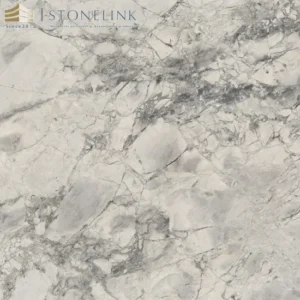
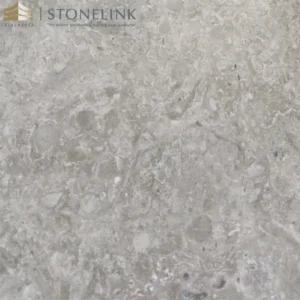
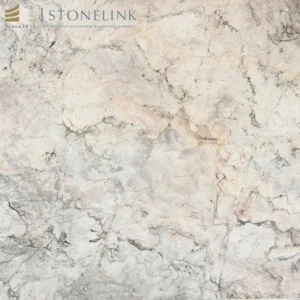
Both can show soft grey-and-white veining, which is exactly why quartzite fools the eye into reading as marble. Under the surface they are different materials with different limits.
| Property | Marble | Quartzite |
|---|---|---|
| Rock type | Metamorphosed limestone (calcite) | Metamorphosed quartz sandstone |
| Mohs hardness | ~3 (calcite) | ~7 |
| Acid etching | Etches easily from lemon, wine, vinegar | Resists common household acids |
| Scratch resistance | Scratches with a knife | Knife leaves no mark |
| Typical look | Grey-white veining, cool and classic | Grey-white veining, often with more dramatic movement |
| Sealing | Needed, and etching still shows | Needed, but far more forgiving |
| Relative price | Varies; some whites command high prices | Usually priced higher than standard marble |
The key point for a buyer: quartzite gives the marble face with roughly double the hardness and none of the acid anxiety. A client who treats the island like a kitchen, not a showroom, gets the look they wanted without the etch rings.
Price: Quartzite Usually Costs More
There is a trade-off. Quartzite typically carries a higher price than common marble, for two reasons. First, genuine quartzite is less common than marble at the quarry level, and the hard stone is slower and more expensive to cut and polish. Second, the dramatic, book-matchable slabs that designers chase command a premium.
When we quote, we frame it as a value question rather than a price one: a marble island may need refinishing within a year of real cooking, while a quartzite island holds its face. For a project that must look good on handover day and still look good two years later, the higher material cost often pays back in avoided repair and complaint calls.
Where Each Material Belongs
Use the right stone for the right room:
- Marble: low-traffic, low-acid spaces — bathroom vanities, fireplace surrounds, decorative walls, and pastry or display islands where no one cooks with citrus or tomatoes. Seal it and set expectations.
- Quartzite: working kitchens, bars, and any surface that meets heat, knives, and acidic food. It keeps the pale veined look while taking daily abuse.
If the surface will ever meet a lemon, a glass of red wine, or a hot pan, steer the client to quartzite. If it is a sealed showpiece that no one will cook on, marble earns its place.
How We Position This for Importers
We give our buyers a simple script for their own customers: “Marble looks like this; quartzite looks like this too, but it will not etch.” Sample sets help — a marble offcut next to a quartzite offcut, with a lemon-juice test run on both, settles the debate faster than any brochure. For the white-marble specifier who wants names, our Carrara vs Calacatta vs Statuario guide breaks down the marbles, and Is Marble Good for Kitchens covers where marble still works.
Frequently Asked Questions
Does quartzite really look like marble?
Many grey-and-white quartzites read as marble at a glance, especially in honed finish. The veining is natural and often more dramatic, but the pale, cool palette is close enough that most clients accept it as the “marble look.”
Will quartzite etch like marble?
No. Marble etches because calcite reacts with acid. Quartzite is quartz, which does not react to household acids, so lemon, wine, and vinegar leave no etch marks.
Is quartzite more expensive than marble?
Usually yes. Genuine quartzite costs more to quarry and fabricate, and premium book-matched slabs carry a further premium. Standard marbles are often cheaper, though rare whites can rival quartzite pricing.
Can I use marble in a kitchen at all?
Yes, in low-acid roles: a sealed vanity, a display island, or a baking station kept away from citrus and tomatoes. For a working cooktop perimeter, quartzite is the safer choice.
Which needs more maintenance?
Both need sealing. Marble also needs polishing to fix etch marks after they appear, while quartzite mostly needs routine cleaning and periodic sealing.
About the Source
STONELINK is a natural stone manufacturer and exporter supplying marble, granite, quartzite, and other natural stone slabs, tiles, and cut-to-size pieces to importers, wholesalers, and project contractors worldwide. For material selection support or a tailored quotation, contact our team.
Explore Related Stone Products
- Raggio Verde Green Marble Slab — a bold green marble with white veining for feature walls and luxury counters.
- Four Seasons Cherry Blossom Marble Slab — soft pink-and-cream marble inspired by cherry blossom tones.
- Diana Royal Beige Marble Tile — consistent beige tile suited to floors and large-format wall cladding.
- Babylon Grey Natural Marble Slab — a cool grey marble slab for modern, low-contrast interiors.