

BUYER’S REFERENCE · Updated 2026 · For importers, wholesalers & project specifiers
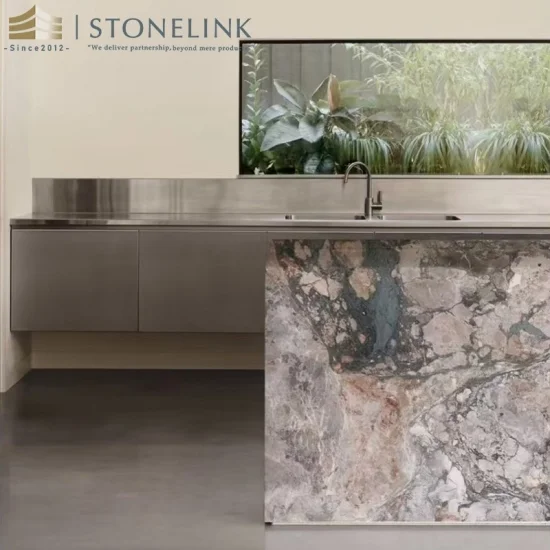
Four Seasons white/grey marble used for kitchen islands and countertops — a classic marble application.
Common Marble Types & Colors
| Color family | Typical look | Popular uses |
|---|---|---|
| White / grey | Subtle grey veining on white (e.g., Four Seasons style) | Kitchen islands, bathrooms, walls |
| Green | Deep emerald to verde tones (e.g., Raggio Verde) | Feature islands, bars, vanities |
| Pink / rose | Warm pink with soft veining (e.g., Rosa Aurora) | Vanities, hospitality interiors |
| Black | Dramatic dark stone with white/gold veins | Accent walls, luxury bathrooms |
| Exotic / bookmatch | High-contrast dramatic veining | Statement feature walls |
Standard Slab Sizes & Thicknesses
| Dimension | Typical range | Notes |
|---|---|---|
| Length | 2400–3200 mm | Jumbo slabs up to ~3200+ mm available |
| Width | 1200–2000 mm | Varies by quarry and block |
| Thickness | 18 / 20 mm (2 cm), 30 mm (3 cm) | 20 mm common for tops; 30 mm for heavy use |
| Tile format | 300×300 to 800×800 mm+ | Used for floors and walls |
Exact sizes vary by material and supplier. Confirm available jumbo dimensions and your project’s yield before ordering.
Surface Finishes
- Polished Glossy, color-enhancing — most common for interiors.
- Honed Matte, low-sheen — softer look, fewer visible etch marks.
- Leathered Textured, tactile — hides fingerprints and water spots.
- Brushed / antique Rustic finish for floors and outdoor-look features.
Typical Applications
- Countertops & islands — kitchens and bathrooms (seal and avoid acids).
- Flooring — lobbies, bathrooms, and low-traffic luxury areas.
- Wall cladding — feature walls and fireplace surrounds.
- Bathrooms — vanities, shower walls, and tub surrounds.
Marble etches on contact with lemon, vinegar, and many cleaners. For busy kitchens, consider quartzite (marble look, harder) or specify honed marble with a strong sealer.
Buyer Checklist
- Confirm color/lot consistency across all slabs needed.
- Request samples and pre-shipment batch photos.
- Specify finish, thickness, and quantities (with waste allowance).
- Plan sealing and maintenance with your fabricator.
Frequently Asked Questions
What thickness marble slab should I choose?
20 mm (2 cm) is standard for most countertops; 30 mm (3 cm) suits heavy-use or unsupported overhangs. Tiles are thinner and used for floors/walls.
Is marble good for kitchen countertops?
Yes for aesthetics, but it scratches and etches more easily than granite or quartzite. Use cutting boards, avoid acids, and seal regularly.
What is a jumbo slab?
A larger-than-standard slab (often 3200 mm+ long) that reduces seams on big islands and improves yield for bookmatching.
How do I match marble color lots?
Buy from a single block or carefully sorted lot, request layout/bookmatch photos, and inspect batch photos before shipment.
Polished or honed for bathrooms?
Polished looks luxe but can be slippery when wet; honed is safer underfoot and shows fewer etch marks. Choose per safety and style needs.
About the Source
STONELINK is a natural stone manufacturer and exporter supplying marble, granite, quartzite, and other natural stone products to importers, wholesalers, and project contractors worldwide. For procurement support or a tailored quotation, contact our team.
This guide is educational. Always request current batch photos, samples, and a written quotation before ordering.