
When you start shopping for a stone surface, the sheer number of names can be overwhelming. Before you compare colors and prices, it helps to understand the basic types of natural stone and how they are grouped. Every stone on the market belongs to one of three rock families formed by different geological processes, and that origin determines how hard it is, how it reacts to water and acid, and where it should be installed. This guide walks through the main types of natural stone you will meet as a buyer, from marble and granite to quartzite, travertine, limestone, sandstone, slate, onyx, and more, with the practical facts that actually matter at specification time rather than the geology textbook version.
The Three Rock Families Behind Every Type of Natural Stone
Geologists sort all stone into three categories: igneous, metamorphic, and sedimentary. This is not just academic trivia. A granite countertop and a travertine floor behave nothing alike because they formed under completely different conditions, and once you know which family a stone belongs to, you can predict its performance with surprising accuracy.
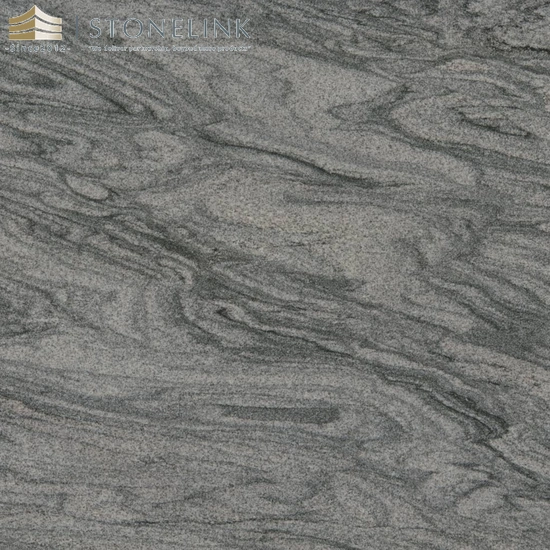
Igneous stone forms when molten rock cools and solidifies. Granite is the classic example, an intrusive igneous rock that cooled slowly underground, giving it large, visible crystals. Because it never re-formed under pressure, it is dense, hard, and highly resistant to scratching and weathering.
Metamorphic stone starts as one rock and is transformed by heat and pressure deep in the earth. Marble begins as limestone and is re-crystallized into calcite. Quartzite begins as sandstone and is fused into nearly pure quartz. Slate begins as shale. These stones are often beautifully patterned and, in the case of quartzite, extremely hard.
Sedimentary stone forms from layers of mineral particles or organic material compressed over time. Limestone, travertine, and sandstone are all sedimentary. They tend to be softer and more porous than igneous and metamorphic stone, which is why they usually need sealing and careful placement in the right environment.
Keeping this three-family map in your head is the fastest way to make sense of any stone yard. When a salesperson names a material you have never heard of, ask which family it belongs to, and half the performance questions answer themselves.
Marble: The Metamorphic Classic
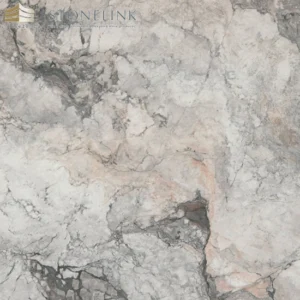
Marble is a metamorphic rock made mostly of calcite. Its Mohs hardness sits around 3 to 4, which means it is relatively soft and can be scratched by harder materials like steel or quartz. The downside everyone mentions is that calcite reacts with acid, so lemon, vinegar, wine, or even some citrus-scented cleaners will etch the surface if left to sit. The upside is its unmistakable beauty: soft translucency, dramatic veining, and a cool, luxurious tone that has defined interiors for centuries.
Marble is best used where it will not face heavy abuse: bathroom vanities, feature walls, fireplace surrounds, and low-traffic flooring. In kitchens it works beautifully but demands sealing and a tolerance for patina. With proper care it remains a premium choice, and many designers actively prefer the lived-in character marble develops over time.
Popular marble varieties include Carrara with its soft grey veining, Calacatta with bolder gold and grey patterning, and Statuario with dramatic contrast. Each carries a different price point, but all share the same calcite chemistry and the same care rules.
Granite: The Igneous Workhorse
Granite is an intrusive igneous rock with a Mohs hardness of about 6 to 7. Those coarse crystals you see are feldspar, quartz, and mica. Granite resists scratches, heat, and weathering better than almost any other natural stone, which is why it has long been the default for busy kitchen countertops and outdoor applications. It is less prone to etching than marble, though it still benefits from sealing to prevent staining from oils and wines.
Granite comes in an enormous range of colors because its mineral mix varies by quarry, from near-black with gold flecks to soft whites and deep reds. For a durable, low-maintenance surface that still looks natural and rich, it is hard to beat. It is also the most common choice for exterior cladding and memorial work because it shrugs off freeze-thaw cycles.
Quartzite: Harder Than Marble, Looks Like It Too
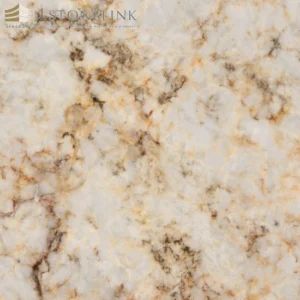
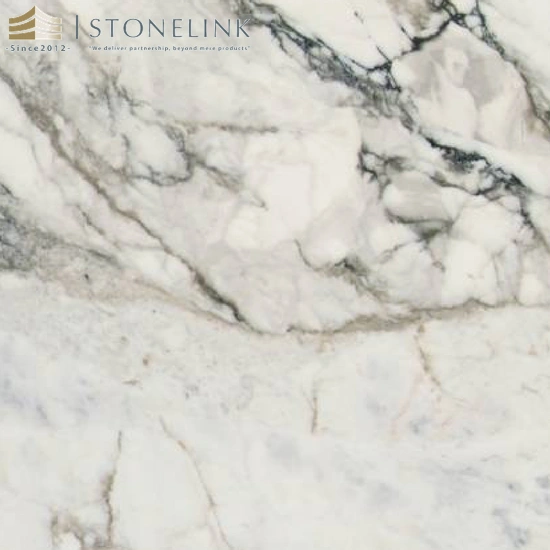
Quartzite is a metamorphic rock that starts as sandstone and is fused by heat and pressure into a stone dominated by quartz, scoring about 7 on the Mohs scale. True quartzite is one of the hardest natural stones available, far more scratch and acid resistant than marble, while still offering the flowing veining that buyers love. It is the bridge between the look of marble and the durability of granite, which explains why demand has surged in recent years.
A word of caution: the market sometimes labels softer, marble-like stones as “quartzite.” A simple hardness test at the slab stage separates the genuine article from look-alikes. When you want marble’s appearance with far less maintenance, quartzite is the answer, and it performs especially well in kitchens and high-traffic floors.
Travertine and Limestone: Calcium Carbonate Sediments
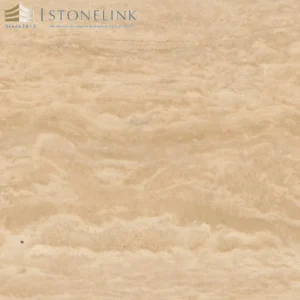
Both travertine and limestone are sedimentary rocks made of calcium carbonate, the same family as marble geologically but far softer and more porous. Travertine forms in mineral hot springs and is famous for its voids and banded, earthy tone. Limestone is finer and more uniform. Both etch in acid and must be sealed, especially in wet areas.
These stones shine in flooring, wall cladding, and outdoor paving where their warm, matte character fits Mediterranean and contemporary designs alike. They are not ideal for heavy-duty prep counters but are excellent for low-traffic, decorative, and landscape uses such as pool decks and patio surfaces.
Sandstone, Slate, and Onyx: The Rest of the Palette
Sandstone is a sedimentary rock of compacted sand grains. It is relatively soft, with a gritty, natural texture that makes it a favorite for landscape paving and rustic wall features.
Slate is a fine-grained metamorphic rock that splits into thin, flat layers. Its low water absorption and slip resistance make it a traditional choice for roofing, pool surrounds, and outdoor steps.
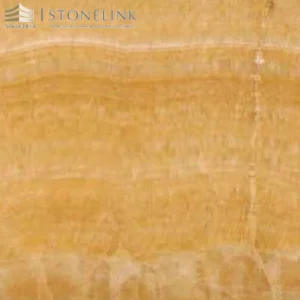
Onyx is a banded, translucent calcite stone that glows when backlit. It is dramatic and luxurious but soft and delicate, best reserved for feature walls, bars, and reception desks rather than working surfaces.
Together these seven groups, marble, granite, quartzite, travertine, limestone, sandstone, slate, plus onyx, cover essentially every natural stone you will be offered. Knowing which box a stone falls into tells you ninety percent of what you need to know about living with it.
Quick Selection Guide by Type of Natural Stone
Here is the one-line takeaway for each major type of natural stone, useful when you are standing in a showroom with a deadline:
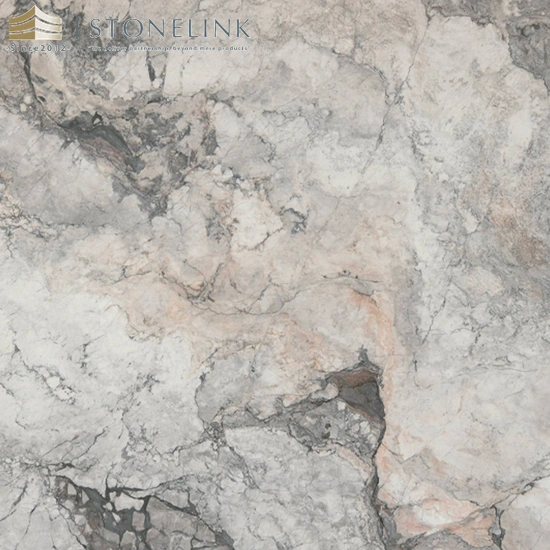
Marble for beauty in low-abuse areas; seal and accept patina. Granite for durable, low-maintenance counters and outdoors. Quartzite for marble looks with granite toughness. Travertine and limestone for warm, sealed floors and walls. Sandstone for natural landscape paving. Slate for slip-resistant outdoor and roofing use. Onyx for backlit feature pieces.
If you are unsure which direction fits your project, start from the environment first. Wet and outdoor spaces favor dense igneous or textured sedimentary stone. Dramatic interior statements favor metamorphic marble or quartzite. Let the location lead, and the material follows.
How Stonelink Helps You Choose
At Stonelink we have supplied all of these families to importers and fabricators across 80+ countries since 2012. From our Xiamen and Shuitou bases, with direct quarry access and 60,000 m² of inventory spanning 2,000+ designs, we help buyers match the right stone type to the right project rather than guessing from a photo. Because we handle both the metamorphic classics like marble and quartzite and the sedimentary landscape stones like travertine and limestone, we can show comparisons side by side and advise on sealing, packing, and ocean freight in one conversation.
The geology never lies: igneous, metamorphic, or sedimentary, every stone tells you how to use it if you know how to read it. Start with the family, confirm the hardness and porosity, and specify with confidence.
Frequently Asked Questions
What are the main types of natural stone?
The main types are marble, granite, quartzite, travertine, limestone, sandstone, slate, and onyx. They fall into three geological groups, igneous, metamorphic, and sedimentary, which explain their hardness, porosity, and best uses.
Which natural stone is the most durable?
Granite and true quartzite are the most durable for everyday surfaces, scoring about 6 to 7 on the Mohs scale. They resist scratches, heat, and acid far better than marble, travertine, or limestone.
Is marble or granite better for a kitchen?
Granite is the lower-maintenance choice for a working kitchen because it resists etching and scratching. Marble is preferred when the visual is the priority and the owner accepts some patina and a stricter cleaning routine.
What is the difference between quartzite and marble?
Quartzite is a metamorphic quartz-dominated rock that is hard and acid resistant, while marble is a calcite rock that is softer and etches in acid. They can look similar, which is why testing at the slab stage matters.
Explore Our Stone Collection
Looking for the right slab for your project? Browse Stonelink’s inventory of 2,000+ designs across marble, granite, quartzite, travertine, onyx and limestone.
Ready to Source Natural Stone?
Contact the Stonelink team to compare slabs from our 60,000 m² inventory and get an export quote for your next project.
Frequently Asked Questions
How can I import natural stone from China?
Most overseas buyers work with Stonelink in four clear steps. (1) Share your project specifications, drawings or inspiration photos, or choose directly from our 60,000 m² inventory of 2,000+ designs. (2) We send whole-slab high-resolution photos and short video so you can verify exact veining, color and finish before committing — bookmatching and sequence are confirmed at this stage. (3) We handle export packing (foam-protected, fumigated wooden crates), container booking and ocean freight from Xiamen or Shuitou port. (4) Goods arrive at your destination port with the full document set (commercial invoice, packing list, Bill of Lading, certificate of origin, insurance). We support both full-container-load and LCL shipments, and all communication is in English.
What is your minimum order quantity (MOQ) and lead time?
MOQ typically starts from one container (about 20–27 tons depending on slab size and thickness), and mixed sizes or products are accepted so you can consolidate an entire project in one shipment. For smaller trials we can sometimes ship an LCL (less-than-container) batch of a few slabs, though the per-unit freight is higher; ask us and we will quote both options. Standard lead time is about 15–25 days after order confirmation for in-stock materials, or longer for custom cutting and special finishes. Before shipment we provide whole-slab photos and video so you know exactly what you receive, and we can hold stock for phased deliveries. For recurring orders we offer reserved inventory and rolling production schedules to keep your supply chain steady, and we quote both FOB Xiamen/Shuitou and delivered CIF or DDP to your port.
Can you send stone samples before I place an order?
Yes. We provide samples — offcuts or small slabs — so you can verify color, finish and quality before committing to a full shipment. Samples ship worldwide by courier (DHL, FedEx or UPS), typically within 3–7 days, and the sample cost is usually credited against your first container order. For large projects we can also send a full digital package — high-resolution whole-slab photos and short videos — so your designers can spec with confidence before any physical sample moves. Tell us the exact application, dimensions and finish you need and we will pick the most representative pieces rather than random offcuts, so the sample truly reflects the batch you would receive.
Do you provide quality control and certifications?
Yes. Stonelink is a China-based natural stone manufacturer and exporter operating from the Xiamen and Shuitou stone hub since 2012, with a 60,000 m² inventory spanning 2,000+ designs and direct quarry access, shipping to 80+ countries. Every shipment is inspected for packing and quality before loading — slabs are checked for cracks, bow, thickness tolerance and finish, then crated in foam-protected, fumigated wooden packaging. We can arrange third-party inspection (SGS, Intertek and similar) and supply the documentation your destination requires: commercial invoice, packing list, Bill of Lading, certificate of origin and, where relevant, CE marking or material test reports. Tell us your certification and labeling needs (for example the EU, US, Australia or Middle East) and we will match them and pre-clear the paperwork so customs clearance goes smoothly.
How do I choose the right natural stone for my project?
Start with the application: floors and high-traffic areas favor harder stones (granite, quartzite), while marble and onyx shine in lower-abuse, design-led spaces such as feature walls and vanities. Match the finish to the mood — polished for drama, honed for calm, leathered for texture — and confirm color stability under your actual lighting, since natural stone shifts with light. For wet areas choose a denser, well-sealing material and an appropriate finish, and review whole-slab photos or video with our team before you buy. We advise free of charge based on your project’s traffic, budget and aesthetic, so you avoid expensive mismatches and rework.
What shipping terms and documents are included?
We ship FOB Xiamen or Shuitou as standard and can also quote CIF or DDP to your port, so you control insurance and freight or let us handle it end to end. We manage export packing, container booking and ocean freight, and provide the full document set: commercial invoice, packing list, Bill of Lading, certificate of origin and cargo insurance. Both full-container-load and LCL (less-than-container-load) shipments are supported, and for landlocked destinations we can arrange door-to-door multimodal transport. Tell us your delivery address and incoterm preference and we will quote a landed cost, not just an ex-works price, so there are no surprises at the border.