
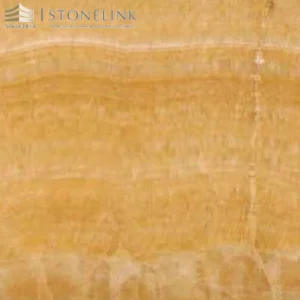
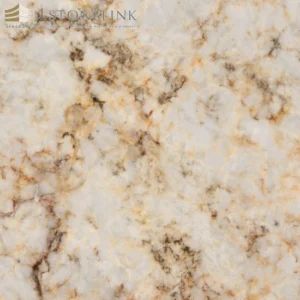
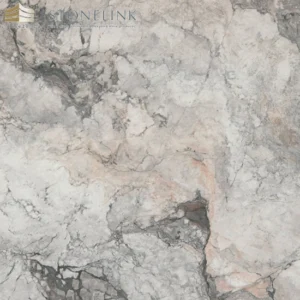

Grey is the safest, most versatile color in natural stone, which is exactly why searches for grey marble grey granite stay high. Grey reads as modern, hides daily wear better than white, and pairs with almost any cabinet or metal. But “grey stone” splits into two very different rocks: grey marble, which is elegant and acid-sensitive, and grey granite, which is tough and low-maintenance. Picking the wrong one means either a counter that etches or a floor that cost more than it needed to. This guide compares the popular grey marbles and grey granites so you can match the stone to the job.
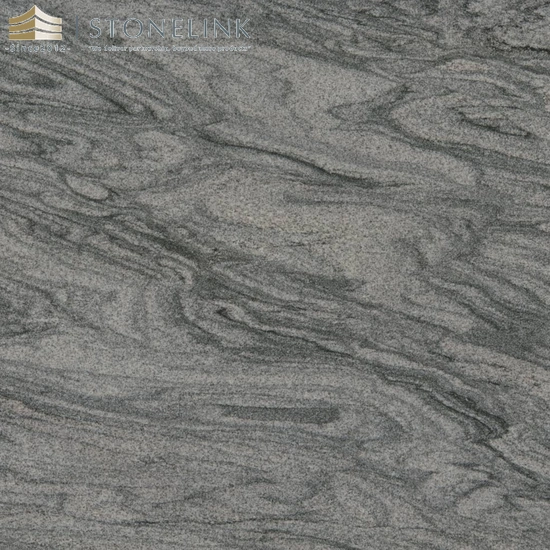
Grey Marble: Elegant and Architectural
Grey marble covers a wide family of calcium-carbonate stones with silver, charcoal, or taupe grounds and soft to bold veining. Two names dominate specification. Breccia Lunare is an Italian-style grey marble built from angular breccia fragments, giving a broken, graphic pattern in greys and whites that looks striking on feature walls and book-matched panels. Tundra Grey is a lighter, calmer grey marble with gentle veining, a go-to for bathrooms and floors where a uniform, restful grey is the goal.
Like all marble, grey marble etches from acid and needs sealing, but its darker ground hides etching and water marks far better than white marble. That makes grey marble a smart compromise: the luxury of real marble with less visible patina. It shines on walls, vanities, and low-traffic counters, while busier prep areas favor granite.
Grey Granite: Tough and Practical
Grey granite is an igneous rock, formed from cooled magma, and it is one of the hardest, most durable stones you can specify. Two workhorses lead the category. Viscount White (often called Viscount White granite) is a light grey granite with a fine, cloudy speckle that reads almost like a soft quartzite, making it a favorite for counters that need to look calm yet survive heavy use. Buffalo granite is a deeper grey with stronger movement and a slightly exotic feel, popular for islands and commercial tops.
Because granite resists acid, scratching, and heat far better than marble, grey granite is the default for busy kitchens, bars, and high-traffic floors. It still benefits from sealing, but the schedule is longer and the consequences of a missed wipe are minor.
Side-by-Side: Grey Marble vs Grey Granite
The core difference is rock type and what it means for care. Grey marble gives finer, more artistic veining and a softer, more luxurious hand, but it etches and needs closer maintenance. Grey granite gives speckled, sometimes more uniform pattern, superior durability, and near-zero acid worry. Price follows use: abundant grey granites are often cost-competitive with or cheaper than premium grey marbles, while decorative breccias command more.
For most homeowners the split is simple. Choose grey marble for walls, fireplaces, vanities, and show islands where beauty leads. Choose grey granite for everyday counters, stair treads, and commercial floors where performance leads. Many projects use both, marble on the feature wall and granite on the working top, to get looks and longevity in one room.
Grey Quartzite: The Middle Option
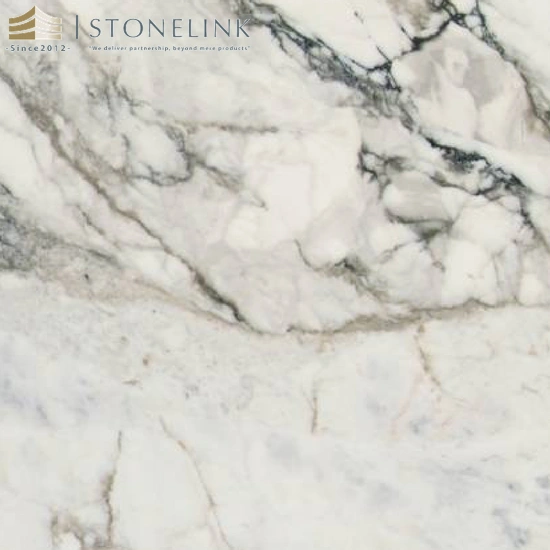
Between marble and granite sits grey quartzite, a metamorphic sandstone that looks like misty grey marble but resists etching like granite. Stones in the grey quartzite family give the soft, flowing movement designers love in marble with far better daily durability, which is why they appear in many “grey stone” mood boards. If you want a grey surface that reads like marble but behaves like granite, grey quartzite is worth comparing before you decide.
Modern Minimalist Pairings
Grey stone is the backbone of minimalist and industrial-modern interiors. Pair Tundra Grey marble with white oak and matte black hardware for a Scandinavian calm. Use Breccia Lunare on a book-matched wall behind a TV or bed for quiet drama. Set Viscount White granite on a counter with stainless or brushed nickel for a clean, timeless kitchen. Buffalo granite’s stronger movement holds its own against bold cabinet colors. The neutral ground means grey stone rarely clashes, which is why designers reach for it as a safe-yet-sophisticated base.
Choosing Finish and Thickness
Grey marble often looks best honed or leathered, which softens veining and hides etching; granite takes a high polish beautifully and stays glossy with little effort. Standard slab thickness is 2 cm or 3 cm, with 3 cm preferred for unsupported island overhangs. For floors, a honed or textured grey granite improves slip resistance, while a polished grey marble floor suits dry, low-traffic areas. Always view full slabs, because grey stones vary from near-white to near-charcoal within the same name.
Stonelink’s Grey Stone Inventory
Stonelink has supplied grey marbles and grey granites to 80+ countries since 2012, from our Xiamen and Shuitou bases with direct quarry access and global sourcing. Across our 60,000 m² inventory and 2,000+ designs, buyers can stand Breccia Lunare and Tundra Grey marbles next to Viscount White and Buffalo granites, plus grey quartzites, and book the exact slabs they see. For large floors or facades we can hold matched batches so the grey stays consistent across the whole install.
Frequently Asked Questions
Which is more durable, grey marble or grey granite?
Grey granite is far more durable. It resists acid etching, scratching, and heat better than marble, so it is the better pick for busy counters and floors. Grey marble is best where looks lead and traffic is light.
Does grey marble show etching less than white marble?
Yes. The darker ground hides etch marks and water spots far better than white marble, which is why grey marble is a popular low-maintenance-looking alternative that still keeps real marble character.
What is Viscount White granite used for?
Viscount White is a light grey granite with a fine speckle, commonly used for kitchen counters, islands, and floors where a calm, durable surface is needed. It pairs with most cabinet colors.
Is there a grey stone that looks like marble but is tougher?
Yes, grey quartzite offers marble-like flowing movement with granite-level acid resistance. It is a strong choice for counters when you want the grey-marble look without the etching risk.
Grey Stone for Floors, Stairs, and Facades
Grey stone earns its keep on large surfaces. Grey granite floors and stairs are a default for airports, malls, and busy homes because they shrug off abrasion and need little care; a honed or textured finish improves grip. Grey marble floors suit calmer, drier interiors and look elegant honed, though they need sealing and a no-acid rule. For exterior facades and cladding, grey granite wins on freeze-thaw resistance, while grey marble is best kept indoors or under cover. Specifiers often mix the two: granite on the working floor, marble on the feature wall, for looks and longevity in one project.
Common Sourcing Mistakes With Grey Stone
The biggest mistake is assuming all “grey marble” performs the same; Breccia Lunare and Tundra Grey differ in pattern and porosity, so confirm the exact name and a test for absorption. The second is buying on a small sample and finding the full slab far darker or busier than expected, which matters for grey because the range from near-white to charcoal is wide. The third is under-sealing a honed grey marble floor, then wondering why it dulls. Work from full-slab photos, agree on finish and thickness in writing, and hold matched batches for big areas so the grey stays consistent from room to room.
Sample vs Full Slab: A Note on Grey
Grey stone varies more than buyers expect, so a 10 cm sample can lie. A Tundra Grey sample might look pale and calm while the booked slab turns out busier, or a Viscount White sample might read light when the full slab carries stronger dark movement. Always ask for full-slab photos or a video, and for large areas request a “first-quality” grade with a stated tolerance for vein and tone variation. If the project needs continuity, such as a book-matched wall or a long corridor floor, have your supplier hold adjacent slabs from the same block so the grey flows without jarring seams. This single step prevents most grey-stone disappointments.
Grey Stone and Property Appeal
Grey stone is the safe-yet-stylish choice that appeals to the widest range of buyers, which is why it dominates resale-minded renovations. A grey granite kitchen reads as clean and move-in ready, while a grey marble bath feels quietly upscale without scaring off minimalists. Because grey hides wear and pairs with any cabinet color, it rarely dates a home the way a bold color might. For landlords and flippers, grey granite counters offer the best return, durable and neutral. For owners staying put, a grey marble feature wall adds personality that still reads as broadly tasteful when it is time to sell.
Explore Our Stone Collection
Looking for the right slab for your project? Browse Stonelink’s inventory of 2,000+ designs across marble, granite, quartzite, travertine, onyx and limestone.
Ready to Source Grey Stone?
Contact the Stonelink team to compare slabs from our 60,000 m² inventory and get an export quote for your next project.
Frequently Asked Questions
How can I import natural stone from China?
Most overseas buyers work with Stonelink in four clear steps. (1) Share your project specifications, drawings or inspiration photos, or choose directly from our 60,000 m² inventory of 2,000+ designs. (2) We send whole-slab high-resolution photos and short video so you can verify exact veining, color and finish before committing — bookmatching and sequence are confirmed at this stage. (3) We handle export packing (foam-protected, fumigated wooden crates), container booking and ocean freight from Xiamen or Shuitou port. (4) Goods arrive at your destination port with the full document set (commercial invoice, packing list, Bill of Lading, certificate of origin, insurance). We support both full-container-load and LCL shipments, and all communication is in English.
What is your minimum order quantity (MOQ) and lead time?
MOQ typically starts from one container (about 20–27 tons depending on slab size and thickness), and mixed sizes or products are accepted so you can consolidate an entire project in one shipment. For smaller trials we can sometimes ship an LCL (less-than-container) batch of a few slabs, though the per-unit freight is higher; ask us and we will quote both options. Standard lead time is about 15–25 days after order confirmation for in-stock materials, or longer for custom cutting and special finishes. Before shipment we provide whole-slab photos and video so you know exactly what you receive, and we can hold stock for phased deliveries. For recurring orders we offer reserved inventory and rolling production schedules to keep your supply chain steady, and we quote both FOB Xiamen/Shuitou and delivered CIF or DDP to your port.
Can you send stone samples before I place an order?
Yes. We provide samples — offcuts or small slabs — so you can verify color, finish and quality before committing to a full shipment. Samples ship worldwide by courier (DHL, FedEx or UPS), typically within 3–7 days, and the sample cost is usually credited against your first container order. For large projects we can also send a full digital package — high-resolution whole-slab photos and short videos — so your designers can spec with confidence before any physical sample moves. Tell us the exact application, dimensions and finish you need and we will pick the most representative pieces rather than random offcuts, so the sample truly reflects the batch you would receive.
Do you provide quality control and certifications?
Yes. Stonelink is a China-based natural stone manufacturer and exporter operating from the Xiamen and Shuitou stone hub since 2012, with a 60,000 m² inventory spanning 2,000+ designs and direct quarry access, shipping to 80+ countries. Every shipment is inspected for packing and quality before loading — slabs are checked for cracks, bow, thickness tolerance and finish, then crated in foam-protected, fumigated wooden packaging. We can arrange third-party inspection (SGS, Intertek and similar) and supply the documentation your destination requires: commercial invoice, packing list, Bill of Lading, certificate of origin and, where relevant, CE marking or material test reports. Tell us your certification and labeling needs (for example the EU, US, Australia or Middle East) and we will match them and pre-clear the paperwork so customs clearance goes smoothly.
How do I choose the right natural stone for my project?
Start with the application: floors and high-traffic areas favor harder stones (granite, quartzite), while marble and onyx shine in lower-abuse, design-led spaces such as feature walls and vanities. Match the finish to the mood — polished for drama, honed for calm, leathered for texture — and confirm color stability under your actual lighting, since natural stone shifts with light. For wet areas choose a denser, well-sealing material and an appropriate finish, and review whole-slab photos or video with our team before you buy. We advise free of charge based on your project’s traffic, budget and aesthetic, so you avoid expensive mismatches and rework.
What shipping terms and documents are included?
We ship FOB Xiamen or Shuitou as standard and can also quote CIF or DDP to your port, so you control insurance and freight or let us handle it end to end. We manage export packing, container booking and ocean freight, and provide the full document set: commercial invoice, packing list, Bill of Lading, certificate of origin and cargo insurance. Both full-container-load and LCL (less-than-container-load) shipments are supported, and for landlocked destinations we can arrange door-to-door multimodal transport. Tell us your delivery address and incoterm preference and we will quote a landed cost, not just an ex-works price, so there are no surprises at the border.