
Blue natural stone is the rarest, most conversation-starting corner of the stone world. When a designer specifies blue, the room stops being safe and starts being memorable. But “blue stone” is not one material, and the names get blurred. The practical blue stones are blue quartzites such as Azul Macaubas and Blue Roma, the ultramarine gemstone sodalite (often sold as “blue granite” though it is not granite), and the iridescent blue labradorite. Each has a different hardness, a different best use, and a very different price. This guide explains the main blue natural stones so you can choose with eyes open.
Blue Quartzite: Durable and Desirable
Blue quartzite is the most usable blue stone for real surfaces. It is a metamorphic sandstone, typically hard (near 7 on the Mohs scale) and acid-resistant, so it performs like other quartzites while bringing extraordinary color. Azul Macaubas is a Brazilian blue quartzite with deep sky-to-cobalt tones and soft white veining; it is the blue stone most often seen on luxury islands and feature walls. Blue Roma is a lighter, powder-blue quartzite with gentle movement, prized for breezy, coastal, or spa-like interiors.
Because blue quartzite is tough, it can go on kitchen counters, vanities, and walls without the etching fears of marble. It polishes to a luminous depth and, in the paler varieties, can be backlit for a glow. For buyers who want blue that lasts, blue quartzite is the smart first stop.
Sodalite: The Ultramarine Gemstone
Sodalite is a deep ultramarine blue gemstone, usually veined with white calcite and sometimes gold pyrite. It is often marketed as “blue granite,” but it is not granite, it is a softer, more fragile mineral assembly. What sodalite does better than anything else is color: a true, saturated royal blue that no quartzite matches. It is also translucent, so backlit sodalite panels glow like stained glass.
That beauty comes with care. Sodalite is softer than granite and can scratch and etch, so it is best used as a backlit feature panel, a reception wall, a vanity splash, or a decorative slab rather than a heavy-work counter. With proper support and sealing it becomes the showpiece of a lobby or bath. Never assume “blue granite” labeling means granite toughness; verify the material.
Blue Labradorite: Iridescent and Exotic
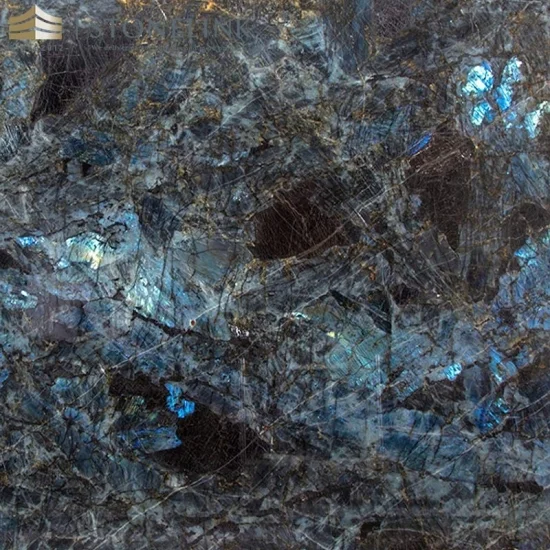
Blue labradorite is a feldspar-rich stone famous for labradorescence, a shifting iridescent flash of blue, green, and gold that appears as you move past it. In slab form, such as Lemurian blue labradorite, it reads as a dark, mysterious stone that lights up at angles. Labradorite is harder than sodalite and suitable for counters and feature panels, though its value is the optical effect rather than a flat blue color. It suits moody, luxe interiors where movement and light matter more than a uniform hue.
Is There True Blue Marble?
Genuine blue marble exists but is uncommon and usually a decorative, lighter blue-grey rather than a vivid royal blue. Most “blue marble” in the market is either a blue quartzite or a sodalite sold under a loose name. If a supplier says blue marble, ask for the rock type and an acid test; a true marble will etch, while a quartzite will not. Knowing this prevents surprises on both price and performance.
Backlighting Blue Stone
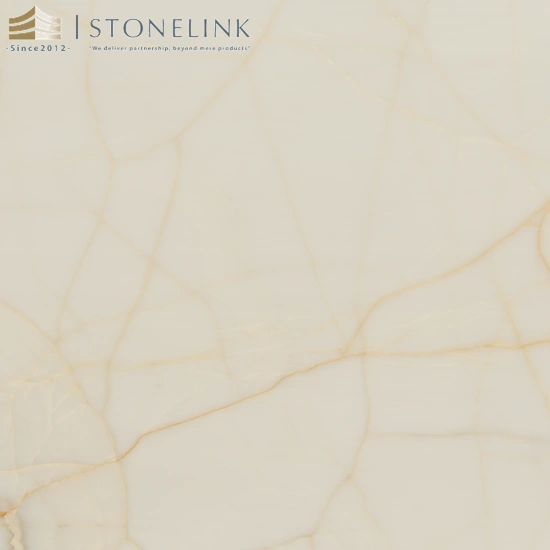
Blue stone’s magic is strongest when lit from behind. Sodalite and pale blue quartzite glow richly with even LED panels and a diffuser; the result is a living wall of color. Onyx-style white or blue translucent slabs share this trait, which is why backlit stone bars and reception features are rising in hotels. Plan the lighting early, use a diffuser to avoid hot spots, and let the fabricator size the slab so it does not flex. Backlit blue sodalite behind a hotel desk is, frankly, unforgettable.
Rarity, Price, and Sourcing
Blue stones are rarer than whites, greys, or even greens, so expect premium pricing and limited block sizes. Azul Macaubas and Blue Roma quartzites are sought after and can sell out of top batches. Sodalite and labradorite depend on specific mines and vary in quality, so slab selection matters more than with common stones. Because supply is thin, book early, confirm the exact slabs with photos, and agree on packing that protects fragile sodalite edges in transit.
Stonelink’s Blue Stone Supply
Stonelink has sourced blue quartzites, sodalite, and labradorite for clients in 80+ countries since 2012, from our Xiamen and Shuitou bases with direct quarry access and global sourcing. Across our 60,000 m² inventory and 2,000+ designs, buyers can compare Azul Macaubas and Blue Roma quartzites against sodalite and labradorite panels, and we can advise on which blue stone fits a counter versus a backlit feature. For rare blues we help secure matched slabs and safe ocean freight so the color arrives as specified.
Frequently Asked Questions
What is the most durable blue natural stone?
Blue quartzite such as Azul Macaubas or Blue Roma is the most durable blue stone for counters, resisting scratches and acid etching. Sodalite and some “blue granite” labels are softer and better as backlit feature panels.
Is sodalite the same as blue granite?
No. Sodalite is a soft ultramarine gemstone often marketed as blue granite, but it is not granite and is more fragile. It excels as a backlit decorative panel rather than a heavy-work surface.
Can blue quartzite be used on a kitchen counter?
Yes. Blue quartzite is hard and acid-resistant, so it handles kitchen use well while delivering vivid blue color, making it the most practical true-blue option for working tops.
Why are blue stones more expensive?
Blue rocks are rarer than common whites and greys, with limited mines and smaller block yields. Premium quartzites sell out fast, and sodalite or labradorite quality varies, so scarcity and selection drive the higher price.
Blue Stone for Floors and Stairs
Blue quartzite is the only blue stone most buyers should put on a working floor or stair, because it resists wear and acid while keeping its color. Azul Macaubas or Blue Roma slabs on a lobby floor become an instant signature, especially with a honed finish for grip. Sodalite and labradorite are too precious and, in sodalite’s case, too soft for heavy foot traffic, so they belong on vertical feature walls and backlit panels instead. If a blue floor is the goal, budget for quartzite, specify a textured or honed surface for safety, and seal on a schedule to protect the vivid tone.
Common Mistakes When Buying Blue Stone
The first mistake is trusting a “blue granite” label and expecting granite toughness; sodalite is not granite and can scratch or etch, so confirm the rock type. The second is skipping backlighting planning for sodalite or pale blue quartzite, then losing the glow that makes blue stone special. The third is booking rare blues from a tiny sample and receiving slabs with very different intensity, since blue blocks vary block to block. The fix is simple: view and photograph the actual slabs, agree on the material and finish in writing, and let your supplier hold matched pieces for the whole install so the blue stays consistent.
Blue Stone Care Basics
Blue quartzite is low-fuss: wipe with pH-neutral cleaner, seal on a normal schedule, and enjoy. Sodalite and labradorite need more care, treat them like fine marble. Keep acids off, dust often because the deep blue shows particles, and avoid abrasive pads that could scratch the iridescent surface. For backlit sodalite panels, check the LED units occasionally since a failed strip leaves a dark patch in the glow. With basic habits, blue stone stays vivid for years and remains the piece every guest asks about. The small extra effort is worth it for a material this rare and striking.
Blue Stone and Property Appeal
Blue stone is the ultimate differentiator. A backlit sodalite reception wall or an Azul Macaubas island is the kind of detail that appears in magazine spreads and sticks in a buyer’s memory, lifting a property above comparable listings. Because true blue stone is rare, it signals custom, high-end specification rather than a builder-grade finish. For luxury rentals and boutique hotels, blue stone drives both nightly rates and social shares. The caveat is care: keep sodalite as a protected feature, not a worktop, so the blue stays flawless for the next owner. Done right, blue stone is a lasting signature, not a passing fad.
Explore Our Stone Collection
Looking for the right slab for your project? Browse Stonelink’s inventory of 2,000+ designs across marble, granite, quartzite, travertine, onyx and limestone.
Ready to Source Blue Stone?
Contact the Stonelink team to compare slabs from our 60,000 m² inventory and get an export quote for your next project.
Frequently Asked Questions
How can I import natural stone from China?
Most overseas buyers work with Stonelink in four clear steps. (1) Share your project specifications, drawings or inspiration photos, or choose directly from our 60,000 m² inventory of 2,000+ designs. (2) We send whole-slab high-resolution photos and short video so you can verify exact veining, color and finish before committing — bookmatching and sequence are confirmed at this stage. (3) We handle export packing (foam-protected, fumigated wooden crates), container booking and ocean freight from Xiamen or Shuitou port. (4) Goods arrive at your destination port with the full document set (commercial invoice, packing list, Bill of Lading, certificate of origin, insurance). We support both full-container-load and LCL shipments, and all communication is in English.
What is your minimum order quantity (MOQ) and lead time?
MOQ typically starts from one container (about 20–27 tons depending on slab size and thickness), and mixed sizes or products are accepted so you can consolidate an entire project in one shipment. For smaller trials we can sometimes ship an LCL (less-than-container) batch of a few slabs, though the per-unit freight is higher; ask us and we will quote both options. Standard lead time is about 15–25 days after order confirmation for in-stock materials, or longer for custom cutting and special finishes. Before shipment we provide whole-slab photos and video so you know exactly what you receive, and we can hold stock for phased deliveries. For recurring orders we offer reserved inventory and rolling production schedules to keep your supply chain steady, and we quote both FOB Xiamen/Shuitou and delivered CIF or DDP to your port.
Can you send stone samples before I place an order?
Yes. We provide samples — offcuts or small slabs — so you can verify color, finish and quality before committing to a full shipment. Samples ship worldwide by courier (DHL, FedEx or UPS), typically within 3–7 days, and the sample cost is usually credited against your first container order. For large projects we can also send a full digital package — high-resolution whole-slab photos and short videos — so your designers can spec with confidence before any physical sample moves. Tell us the exact application, dimensions and finish you need and we will pick the most representative pieces rather than random offcuts, so the sample truly reflects the batch you would receive.
Do you provide quality control and certifications?
Yes. Stonelink is a China-based natural stone manufacturer and exporter operating from the Xiamen and Shuitou stone hub since 2012, with a 60,000 m² inventory spanning 2,000+ designs and direct quarry access, shipping to 80+ countries. Every shipment is inspected for packing and quality before loading — slabs are checked for cracks, bow, thickness tolerance and finish, then crated in foam-protected, fumigated wooden packaging. We can arrange third-party inspection (SGS, Intertek and similar) and supply the documentation your destination requires: commercial invoice, packing list, Bill of Lading, certificate of origin and, where relevant, CE marking or material test reports. Tell us your certification and labeling needs (for example the EU, US, Australia or Middle East) and we will match them and pre-clear the paperwork so customs clearance goes smoothly.
How do I choose the right natural stone for my project?
Start with the application: floors and high-traffic areas favor harder stones (granite, quartzite), while marble and onyx shine in lower-abuse, design-led spaces such as feature walls and vanities. Match the finish to the mood — polished for drama, honed for calm, leathered for texture — and confirm color stability under your actual lighting, since natural stone shifts with light. For wet areas choose a denser, well-sealing material and an appropriate finish, and review whole-slab photos or video with our team before you buy. We advise free of charge based on your project’s traffic, budget and aesthetic, so you avoid expensive mismatches and rework.
What shipping terms and documents are included?
We ship FOB Xiamen or Shuitou as standard and can also quote CIF or DDP to your port, so you control insurance and freight or let us handle it end to end. We manage export packing, container booking and ocean freight, and provide the full document set: commercial invoice, packing list, Bill of Lading, certificate of origin and cargo insurance. Both full-container-load and LCL (less-than-container-load) shipments are supported, and for landlocked destinations we can arrange door-to-door multimodal transport. Tell us your delivery address and incoterm preference and we will quote a landed cost, not just an ex-works price, so there are no surprises at the border.