
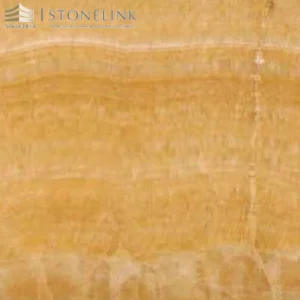
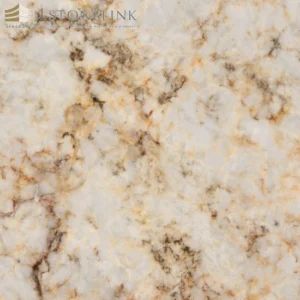
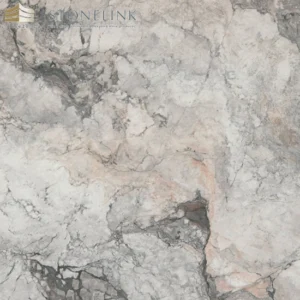
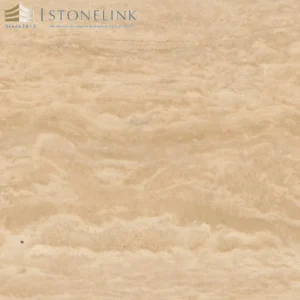
A marble fireplace surround is one of the fastest ways to give a living room a timeless, architectural focal point. Few materials carry the same quiet luxury as natural stone, and a marble surround frames the fire with veining that no two rooms will share. Whether you are renovating a period home or building a clean-lined modern interior, understanding how marble behaves around heat, which finishes to specify, and how to pair the surround with adjacent materials will help you avoid costly mistakes. This guide walks through styles, material selection, installation realities, and everyday care so your marble fireplace looks intentional for decades.
Why Choose a Marble Fireplace Surround?
Marble has been the stone of choice for fireplaces since the great European mantel workshops of the 17th and 18th centuries, and for good reason. It is dense enough to read as solid and permanent, it can be carved and honed to crisp detail, and its colour range spans from near-white Carrara to dramatic Nero Marquina and warm Breccia. A marble fireplace works equally well in a classic carved mantel or a minimal slab surround, which makes it one of the most versatile materials you can specify.
Compared with wood, marble will not char, warp, or catch flame. Compared with painted plaster, it resists the slow smoke staining and yellowing that builds up around a working hearth. And unlike tile, a full marble surround delivers a seamless, monolithic look with no grout lines breaking the surface.
Heat Resistance: What Marble Actually Tolerates
Here is the fact that matters most for a marble fireplace: natural marble is itself heat-resistant. The stone is formed under immense geological heat and pressure, so the material will not melt, crack, or combust from the warmth radiating off a normal fire or gas insert. A marble surround sitting a safe distance from the flame opening is perfectly stable.
The nuance buyers miss is the sealer. The protective impregnating sealer applied to marble is what can degrade under prolonged, direct, high heat. That is why a marble fireplace surround should be detailed so the stone is not in direct contact with a constant extreme heat source; the mantel shelf sits above the opening, and a proper firebox recess keeps flames away from the slab face. With normal radiant heat and a sensible gap, the sealer holds fine. Avoid placing a hot fireplace tool directly against the marble, and never let embers rest on the stone.
Modern vs Classic Design Styles
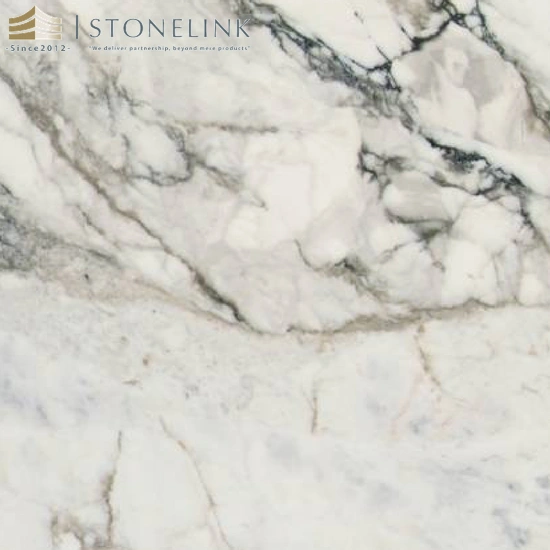
Classic surrounds lean on symmetry: a carved mantel with corbels or a raised keystone, often in a soft white or creamy marble such as Carrara or a Paonazzo-style slab with grey-gold movement. These read formal and pair naturally with panelled walls, traditional mouldings, and brass accents.
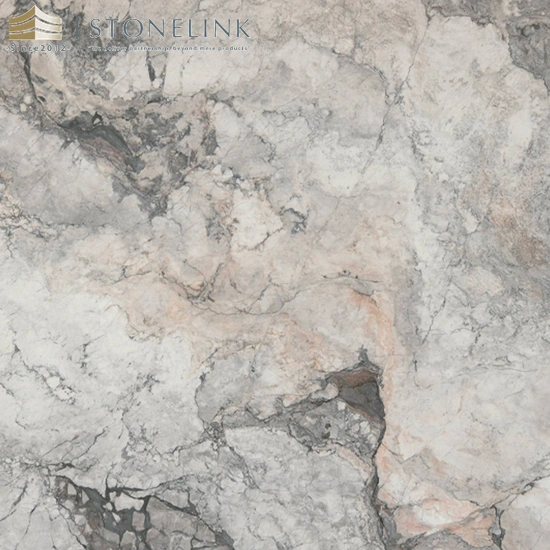
Modern surrounds strip the detail back. A single honed slab with a waterfall edge, or a floating mantel shelf over a plaster or stone-clad wall, gives a gallery feel. Here, a bold marble like Breccia Lunare or a dramatic black-and-white Nero Marquina becomes the art. Bookmatching two slabs so the veining mirrors across the opening is a popular contemporary move that turns the fireplace into a statement piece.
Choosing the Right Marble and Finish
Finish choice changes both the look and the upkeep. A polished marble fireplace is mirror-sharp and reflective, which flatters dramatic veining but shows dust and fine scratches more readily. A honed (matte) finish is softer and more forgiving, and it hides any minor etching or scuffing around a working hearth far better. For most family homes we recommend honed marble for the surround, reserving polish for low-traffic decorative mantels.
Colour-wise, lighter marbles make a room feel larger and brighter; darker marbles feel moody and architectural. If your hearth sees real use, lighter honed stones disguise soot and ash better than high-contrast blacks.
Pairing Marble with Wood and Metal
A marble fireplace rarely stands alone. The most successful schemes layer it with a second material: a timber beam mantel for warmth, blackened steel for an industrial edge, or brushed brass for a hint of glamour. Because marble is a cool, neutral canvas, it absorbs almost any metal tone without clashing. Keep the surround stone as the hero and let wood or metal play a supporting role in trims, inset panels, or the hearth base.
Installation and Sealing Tips
Marble fireplace surrounds are heavy and must be fixed to a sound substrate, typically with adhesive and mechanical anchors depending on the weight and wall build-up. The mantel shelf needs adequate support so it cannot sag. Fabricators should mitre edges cleanly and fill seams with colour-matched resin so joints disappear. Before installation, the marble should be sealed with a quality impregnator; because the surround is mostly vertical and away from water, it needs resealing far less often than a kitchen counter, often only every couple of years or when water stops beading on the surface.
Sourcing matters too. Stonelink, a natural stone manufacturer and exporter based in Xiamen and Shuitou since 2012, holds a 60,000 m² inventory with 2,000+ designs and ships to more than 80 countries, so specifying a matching slab for your surround and any adjoining flooring or wall is straightforward through direct quarry access and global sourcing.
Everyday Care for a Marble Fireplace
Care is simple. Wipe ash and dust with a soft dry or lightly damp cloth and a pH-neutral cleaner; never use vinegar, lemon, or abrasive powders, which will etch the marble. If a log rolls and leaves a mark, address it early rather than letting soot sit. With that small routine, a marble fireplace surround stays beautiful for generations.
Sizing, Proportion, and the Right Scale
Proportion is what separates a marble fireplace that feels designed from one that feels stuck on. As a rule, the surround should relate to the room and the opening, not fight them. In a standard living room, a mantel width of roughly 1.2 to 1.8 metres suits most openings, while a double-height space can carry a floor-to-ceiling marble chimney breast. The mantel shelf depth is usually 15 to 20 cm so it reads as a ledge without protruding into the room. If you are building new, decide the firebox size first, then design the marble frame around it so the stone never crowds the flame. For gas or electric inserts, confirm the manufacturer’s clearance to combustible and non-combustible materials, because even though marble is non-combustible the surrounding joinery may not be.
Common Mistakes to Avoid
A few recurring errors are worth flagging. First, specifying a polished surround in a working fireplace and then being surprised by etching from ash or cleaning products; honed is the safer everyday call. Second, forgetting the hearth base, the stone slab on the floor in front of the fire, which should match or complement the surround for a finished look. Third, poor lighting; a marble surround lit by a single downlight looks flat, while grazing light from a picture light or LED strip reveals its veining. Finally, buying on a small sample alone; veining at mantel scale is very different from a swatch, so view the full slab or a large offcut before committing. Taking these points seriously keeps the project on budget and the result polished.
Frequently Asked Questions
Is marble safe to use around a fireplace?
Yes. Marble itself is heat-resistant and will not burn or crack from normal radiant heat. Keep the stone a safe distance from direct flame and avoid resting hot tools or embers on the surface so the protective sealer is not degraded by prolonged extreme heat.
Should a marble fireplace surround be polished or honed?
For a working fireplace, honed marble is usually the better choice: the matte finish hides soot, light scuffs, and minor etching far better than a polished surface. Reserve polished marble for decorative, low-use mantels where you want maximum reflectivity.
Does a marble fireplace need sealing?
It should be sealed at installation. Because the surround is vertical and away from water, it needs resealing much less often than a countertop, typically every year or two, or whenever water stops beading on the stone.
Which marble colour works best for a fireplace?
It depends on the room. Lighter marbles such as Carrara or Paonazzo make a space feel brighter and disguise ash, while darker stones like Nero Marquina or Breccia create a dramatic, architectural focal point in moody interiors.
Explore Our Stone Collection
Looking for the right slab for your project? Browse Stonelink’s inventory of 2,000+ designs across marble, granite, quartzite, travertine, onyx and limestone.
Ready to Source Marble for Your Project?
Contact the Stonelink team to compare slabs from our 60,000 m² inventory and get an export quote for your next project.
Frequently Asked Questions
How can I import natural stone from China?
Most overseas buyers work with Stonelink in four clear steps. (1) Share your project specifications, drawings or inspiration photos, or choose directly from our 60,000 m² inventory of 2,000+ designs. (2) We send whole-slab high-resolution photos and short video so you can verify exact veining, color and finish before committing — bookmatching and sequence are confirmed at this stage. (3) We handle export packing (foam-protected, fumigated wooden crates), container booking and ocean freight from Xiamen or Shuitou port. (4) Goods arrive at your destination port with the full document set (commercial invoice, packing list, Bill of Lading, certificate of origin, insurance). We support both full-container-load and LCL shipments, and all communication is in English.
What is your minimum order quantity (MOQ) and lead time?
MOQ typically starts from one container (about 20–27 tons depending on slab size and thickness), and mixed sizes or products are accepted so you can consolidate an entire project in one shipment. For smaller trials we can sometimes ship an LCL (less-than-container) batch of a few slabs, though the per-unit freight is higher; ask us and we will quote both options. Standard lead time is about 15–25 days after order confirmation for in-stock materials, or longer for custom cutting and special finishes. Before shipment we provide whole-slab photos and video so you know exactly what you receive, and we can hold stock for phased deliveries. For recurring orders we offer reserved inventory and rolling production schedules to keep your supply chain steady, and we quote both FOB Xiamen/Shuitou and delivered CIF or DDP to your port.
Can you send stone samples before I place an order?
Yes. We provide samples — offcuts or small slabs — so you can verify color, finish and quality before committing to a full shipment. Samples ship worldwide by courier (DHL, FedEx or UPS), typically within 3–7 days, and the sample cost is usually credited against your first container order. For large projects we can also send a full digital package — high-resolution whole-slab photos and short videos — so your designers can spec with confidence before any physical sample moves. Tell us the exact application, dimensions and finish you need and we will pick the most representative pieces rather than random offcuts, so the sample truly reflects the batch you would receive.
Do you provide quality control and certifications?
Yes. Stonelink is a China-based natural stone manufacturer and exporter operating from the Xiamen and Shuitou stone hub since 2012, with a 60,000 m² inventory spanning 2,000+ designs and direct quarry access, shipping to 80+ countries. Every shipment is inspected for packing and quality before loading — slabs are checked for cracks, bow, thickness tolerance and finish, then crated in foam-protected, fumigated wooden packaging. We can arrange third-party inspection (SGS, Intertek and similar) and supply the documentation your destination requires: commercial invoice, packing list, Bill of Lading, certificate of origin and, where relevant, CE marking or material test reports. Tell us your certification and labeling needs (for example the EU, US, Australia or Middle East) and we will match them and pre-clear the paperwork so customs clearance goes smoothly.
How do I choose the right natural stone for my project?
Start with the application: floors and high-traffic areas favor harder stones (granite, quartzite), while marble and onyx shine in lower-abuse, design-led spaces such as feature walls and vanities. Match the finish to the mood — polished for drama, honed for calm, leathered for texture — and confirm color stability under your actual lighting, since natural stone shifts with light. For wet areas choose a denser, well-sealing material and an appropriate finish, and review whole-slab photos or video with our team before you buy. We advise free of charge based on your project’s traffic, budget and aesthetic, so you avoid expensive mismatches and rework.
What shipping terms and documents are included?
We ship FOB Xiamen or Shuitou as standard and can also quote CIF or DDP to your port, so you control insurance and freight or let us handle it end to end. We manage export packing, container booking and ocean freight, and provide the full document set: commercial invoice, packing list, Bill of Lading, certificate of origin and cargo insurance. Both full-container-load and LCL (less-than-container-load) shipments are supported, and for landlocked destinations we can arrange door-to-door multimodal transport. Tell us your delivery address and incoterm preference and we will quote a landed cost, not just an ex-works price, so there are no surprises at the border.