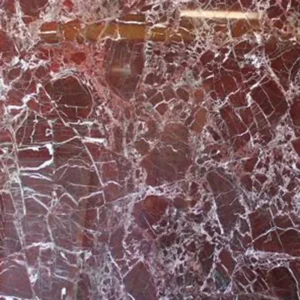

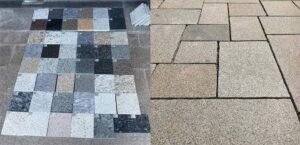
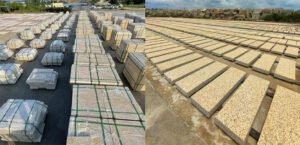
Granite, as a common igneous rock, is widely used in fields such as architecture, carving, and decoration due to its hardness, wear resistance, and rich color. The pattern of granite not only affects its aesthetics, but also directly relates to its physical properties and performance.
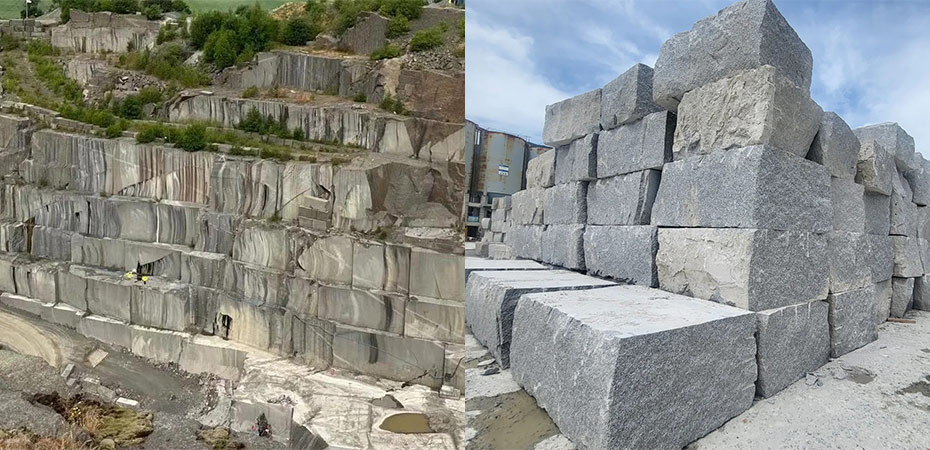
1. The Formation Process of Granite
The formation of granite is mainly related to the cooling and crystallization of lava during geological processes. The magma deep in the earth’s crust rises due to changes in temperature and pressure, and after millions of years of cooling, eventually forms granite. The formation process can be divided into the following stages:
1) Magma formation: The formation of granite begins with the formation of magma, usually deep in the Earth’s crust. Due to changes in temperature and pressure, some crustal materials melt into liquid magma.
2) Rise of magma: Under the action of buoyancy, magma gradually moves upwards. As the depth changes, the temperature and pressure of magma also change, which can affect the crystallization of minerals.
3) Crystallization process: During the cooling process of magma, minerals begin to crystallize. Granite is mainly composed of minerals such as quartz, feldspar, and mica, and the crystallization order and mode of different minerals will affect the final texture and structure.
4) Cooling rate: Cooling rate is an important factor affecting the texture of granite. Slow cooling magma allows for the formation of larger crystals, resulting in more distinct patterns; However, rapid cooling leads to smaller crystals and less distinct patterns.
2. Factors affecting the texture of granite
1) Mineral composition
The main components of granite include quartz, feldspar, and mica. The proportion and distribution of different minerals have a significant impact on the texture. For example, quartz crystals typically exhibit a transparent or semi transparent appearance, while feldspar has diverse colors that may affect the overall color tone and texture of the rock.
2) Cooling conditions
The cooling conditions of granite directly affect the size and distribution of crystals. When the cooling rate is slow, the crystal has enough time to grow and form coarse patterns; In a rapidly cooling environment, the crystals formed are smaller and the patterns appear blurry.
3) Geological environment
The geological environment in which granite is formed also affects its texture. For example, granite formed on the continental margin or in areas of plate collision is often influenced by more crustal movements, resulting in unique bands or deformation features in its patterns.
4) Erosion and weathering
Over time, the surface of granite will be affected by weathering and erosion. These external effects not only alter the surface morphology of granite, but may also make the original patterns more prominent or disappear. For example, the erosion of rocks by water flow can make the patterns more pronounced, while weathering may lead to uneven surfaces.
5) The role of groundwater
The presence and flow of groundwater can also affect the texture of granite. In some cases, minerals in groundwater can react with minerals in granite to form new minerals, changing the original patterns and colors. In addition, the flow of groundwater may form tiny cracks in granite, thereby affecting its overall structure and texture.
3. Classification of Granite Patterns
The patterns of granite can be classified based on their morphology, color, and mineral composition:
1) Pattern morphology
– Striped pattern: formed by alternating cooling of different mineral layers, commonly found in granite subjected to metamorphic processes.
– Spotted pattern: formed due to the uneven distribution of minerals such as feldspar in rocks, usually with uneven color distribution.
– Diagonal pattern: Due to crustal movement or pressure, mineral crystals exhibit an oblique arrangement.
2) Color classification
According to the different mineral compositions, the color of granite can be divided into white, gray, pink, and black. Granite of different colors has unique patterns, for example, pink granite has a higher content of feldspar, while black granite may be rich in biotite.
3) Mineral composition
The mineral composition of granite can affect its texture expression. For example, granite containing more quartz exhibits better reflection effects and more distinct patterns under light.
4. The application value of granite patterns
The diversity of granite patterns is not only a focus of geological research, but also an important consideration in the fields of engineering and art. Granite with different patterns can present different styles and visual effects in architecture and decoration. For example, granite with striped patterns is often used as decorative material for exterior facades in modern architecture, while granite with dotted patterns has unique expressive power in carved works.
The formation of granite patterns is a complex process influenced by various factors, including mineral composition, cooling conditions, geological environment, erosion, and weathering. These factors not only determine the appearance characteristics of granite, but also have a profound impact on its physical properties and application value.
In practical applications, understanding the role of these factors can better utilize the characteristics of granite and create works with higher aesthetics and practicality. Through in-depth research on the patterns of granite, we can better understand the mysteries of nature and unleash its unique value in fields such as science, art, and engineering.
Frequently Asked Questions
How can I import natural stone from China?
Most overseas buyers work with Stonelink in four clear steps. (1) Share your project specifications, drawings or inspiration photos, or choose directly from our 60,000 m² inventory of 2,000+ designs. (2) We send whole-slab high-resolution photos and short video so you can verify exact veining, color and finish before committing — bookmatching and sequence are confirmed at this stage. (3) We handle export packing (foam-protected, fumigated wooden crates), container booking and ocean freight from Xiamen or Shuitou port. (4) Goods arrive at your destination port with the full document set (commercial invoice, packing list, Bill of Lading, certificate of origin, insurance). We support both full-container-load and LCL shipments, and all communication is in English.
What is your minimum order quantity (MOQ) and lead time?
MOQ typically starts from one container (about 20–27 tons depending on slab size and thickness), and mixed sizes or products are accepted so you can consolidate an entire project in one shipment. For smaller trials we can sometimes ship an LCL (less-than-container) batch of a few slabs, though the per-unit freight is higher; ask us and we will quote both options. Standard lead time is about 15–25 days after order confirmation for in-stock materials, or longer for custom cutting and special finishes. Before shipment we provide whole-slab photos and video so you know exactly what you receive, and we can hold stock for phased deliveries. For recurring orders we offer reserved inventory and rolling production schedules to keep your supply chain steady, and we quote both FOB Xiamen/Shuitou and delivered CIF or DDP to your port.
Can you send stone samples before I place an order?
Yes. We provide samples — offcuts or small slabs — so you can verify color, finish and quality before committing to a full shipment. Samples ship worldwide by courier (DHL, FedEx or UPS), typically within 3–7 days, and the sample cost is usually credited against your first container order. For large projects we can also send a full digital package — high-resolution whole-slab photos and short videos — so your designers can spec with confidence before any physical sample moves. Tell us the exact application, dimensions and finish you need and we will pick the most representative pieces rather than random offcuts, so the sample truly reflects the batch you would receive.
Do you provide quality control and certifications?
Yes. Stonelink is a China-based natural stone manufacturer and exporter operating from the Xiamen and Shuitou stone hub since 2012, with a 60,000 m² inventory spanning 2,000+ designs and direct quarry access, shipping to 80+ countries. Every shipment is inspected for packing and quality before loading — slabs are checked for cracks, bow, thickness tolerance and finish, then crated in foam-protected, fumigated wooden packaging. We can arrange third-party inspection (SGS, Intertek and similar) and supply the documentation your destination requires: commercial invoice, packing list, Bill of Lading, certificate of origin and, where relevant, CE marking or material test reports. Tell us your certification and labeling needs (for example the EU, US, Australia or Middle East) and we will match them and pre-clear the paperwork so customs clearance goes smoothly.
How do I choose the right natural stone for my project?
Start with the application: floors and high-traffic areas favor harder stones (granite, quartzite), while marble and onyx shine in lower-abuse, design-led spaces such as feature walls and vanities. Match the finish to the mood — polished for drama, honed for calm, leathered for texture — and confirm color stability under your actual lighting, since natural stone shifts with light. For wet areas choose a denser, well-sealing material and an appropriate finish, and review whole-slab photos or video with our team before you buy. We advise free of charge based on your project’s traffic, budget and aesthetic, so you avoid expensive mismatches and rework.
What shipping terms and documents are included?
We ship FOB Xiamen or Shuitou as standard and can also quote CIF or DDP to your port, so you control insurance and freight or let us handle it end to end. We manage export packing, container booking and ocean freight, and provide the full document set: commercial invoice, packing list, Bill of Lading, certificate of origin and cargo insurance. Both full-container-load and LCL (less-than-container-load) shipments are supported, and for landlocked destinations we can arrange door-to-door multimodal transport. Tell us your delivery address and incoterm preference and we will quote a landed cost, not just an ex-works price, so there are no surprises at the border.