class=”txt newm”>

Among many building materials, stone has long been favored for its natural texture and feel. However, as time passes and usage frequency increases, even hard stone will lose its original luster and color, appearing dull. At this point, professional stone cleaning becomes particularly important as it can effectively restore and enhance the beautiful appearance of the stone, extending its service life.
There are various reasons for stone to become dirty or worn, including dust deposition, stain adsorption, moisture erosion, and human wear and tear. In response to these issues, stone cleaning work usually follows a series of professional processes to ensure that the stone is properly handled and maintained.
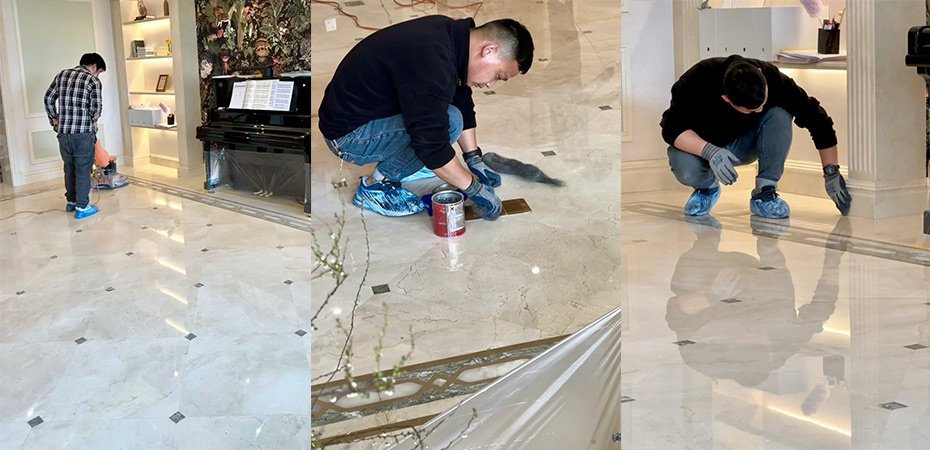
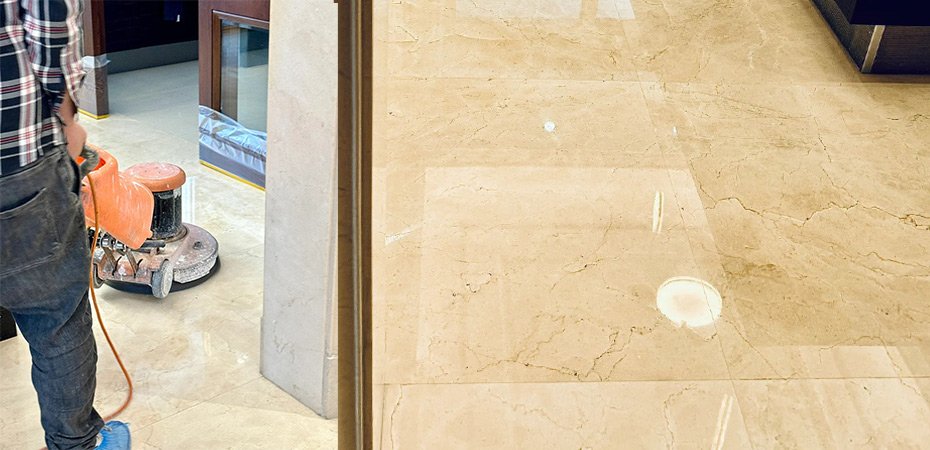
Cleaning is the most basic and important step in stone maintenance. Professional cleaning personnel will use mild cleaning agents and soft bristled brushes to clean the surface of the stone, removing attached dust and impurities. This process requires care and patience to ensure that the surface of the stone is not damaged.
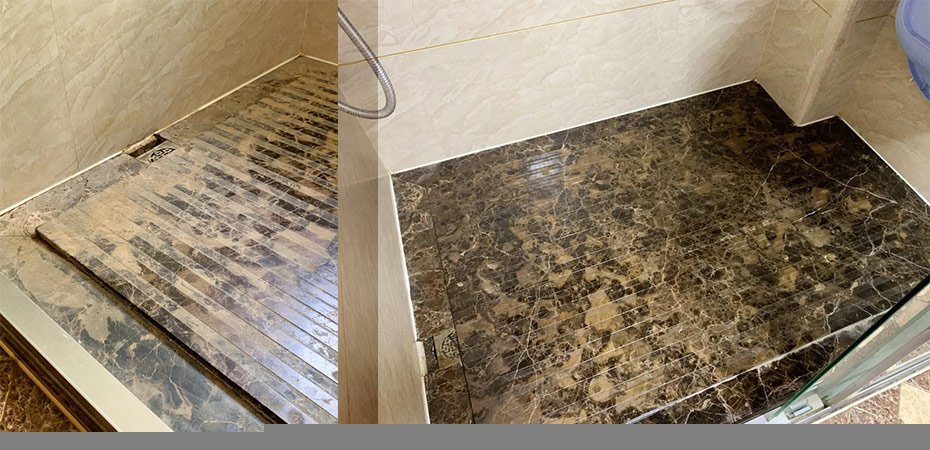
For stones that have already been stained or discolored, deep cleaning is required. This may involve the use of cleaning agents with specific chemical components that can penetrate the interior of the stone and decompose stain molecules. When necessary, grinding or sandblasting can also be used to remove stubborn stains, but this requires great caution to avoid damaging the surface of the stone.
After cleaning, the next steps are repair and polishing. For stones with scratches or cracks, they can be repaired with fillers and then floor flat to restore a smooth surface. Polishing is the process of using grinding wheels of different fineness to rub the stone, gradually grinding it from coarse to fine until the surface of the stone becomes smooth and shiny.
In order to maintain the beauty of the stone in the long term, regular sealing and protection are also necessary. After cleaning and polishing, stone will form many tiny pores, which are easy to absorb new stains. By applying professional sealants, a protective layer can be formed to reduce the penetration of pollutants, while also adding an additional layer of protection to the stone.
In addition to regular cleaning procedures, daily care is equally important. Avoiding prolonged exposure of stone to damp environments, promptly cleaning up spills, and using floor mats to reduce wear and tear are all effective methods for maintaining stone.
Stone cleaning is not just about simple cleaning and wiping, it involves a profound understanding of material properties, as well as a comprehensive mastery of cleaning, repairing, polishing, and protection techniques. Only through professional maintenance can we maximize the beauty of stone, allowing it to still emit its charming radiance even after years of baptism.
In home decoration and public buildings, stone brings us unique natural beauty. However, this beauty is conditional, which requires us to maintain it through continuous stone cleaning. Through professional maintenance techniques, we can not only make the stone floor shine again, but also extend its lifespan, enhance its value, and make beauty not just stay on the surface, but become a lasting quality guarantee.
Frequently Asked Questions
How can I import natural stone from China?
Most overseas buyers work with Stonelink in four clear steps. (1) Share your project specifications, drawings or inspiration photos, or choose directly from our 60,000 m² inventory of 2,000+ designs. (2) We send whole-slab high-resolution photos and short video so you can verify exact veining, color and finish before committing — bookmatching and sequence are confirmed at this stage. (3) We handle export packing (foam-protected, fumigated wooden crates), container booking and ocean freight from Xiamen or Shuitou port. (4) Goods arrive at your destination port with the full document set (commercial invoice, packing list, Bill of Lading, certificate of origin, insurance). We support both full-container-load and LCL shipments, and all communication is in English.
What is your minimum order quantity (MOQ) and lead time?
MOQ typically starts from one container (about 20–27 tons depending on slab size and thickness), and mixed sizes or products are accepted so you can consolidate an entire project in one shipment. For smaller trials we can sometimes ship an LCL (less-than-container) batch of a few slabs, though the per-unit freight is higher; ask us and we will quote both options. Standard lead time is about 15–25 days after order confirmation for in-stock materials, or longer for custom cutting and special finishes. Before shipment we provide whole-slab photos and video so you know exactly what you receive, and we can hold stock for phased deliveries. For recurring orders we offer reserved inventory and rolling production schedules to keep your supply chain steady, and we quote both FOB Xiamen/Shuitou and delivered CIF or DDP to your port.
Can you send stone samples before I place an order?
Yes. We provide samples — offcuts or small slabs — so you can verify color, finish and quality before committing to a full shipment. Samples ship worldwide by courier (DHL, FedEx or UPS), typically within 3–7 days, and the sample cost is usually credited against your first container order. For large projects we can also send a full digital package — high-resolution whole-slab photos and short videos — so your designers can spec with confidence before any physical sample moves. Tell us the exact application, dimensions and finish you need and we will pick the most representative pieces rather than random offcuts, so the sample truly reflects the batch you would receive.
Do you provide quality control and certifications?
Yes. Stonelink is a China-based natural stone manufacturer and exporter operating from the Xiamen and Shuitou stone hub since 2012, with a 60,000 m² inventory spanning 2,000+ designs and direct quarry access, shipping to 80+ countries. Every shipment is inspected for packing and quality before loading — slabs are checked for cracks, bow, thickness tolerance and finish, then crated in foam-protected, fumigated wooden packaging. We can arrange third-party inspection (SGS, Intertek and similar) and supply the documentation your destination requires: commercial invoice, packing list, Bill of Lading, certificate of origin and, where relevant, CE marking or material test reports. Tell us your certification and labeling needs (for example the EU, US, Australia or Middle East) and we will match them and pre-clear the paperwork so customs clearance goes smoothly.
How do I choose the right natural stone for my project?
Start with the application: floors and high-traffic areas favor harder stones (granite, quartzite), while marble and onyx shine in lower-abuse, design-led spaces such as feature walls and vanities. Match the finish to the mood — polished for drama, honed for calm, leathered for texture — and confirm color stability under your actual lighting, since natural stone shifts with light. For wet areas choose a denser, well-sealing material and an appropriate finish, and review whole-slab photos or video with our team before you buy. We advise free of charge based on your project’s traffic, budget and aesthetic, so you avoid expensive mismatches and rework.
What shipping terms and documents are included?
We ship FOB Xiamen or Shuitou as standard and can also quote CIF or DDP to your port, so you control insurance and freight or let us handle it end to end. We manage export packing, container booking and ocean freight, and provide the full document set: commercial invoice, packing list, Bill of Lading, certificate of origin and cargo insurance. Both full-container-load and LCL (less-than-container-load) shipments are supported, and for landlocked destinations we can arrange door-to-door multimodal transport. Tell us your delivery address and incoterm preference and we will quote a landed cost, not just an ex-works price, so there are no surprises at the border.