
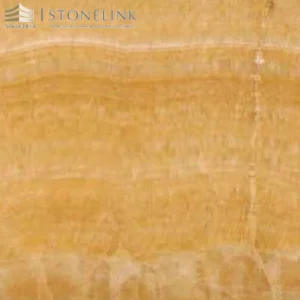
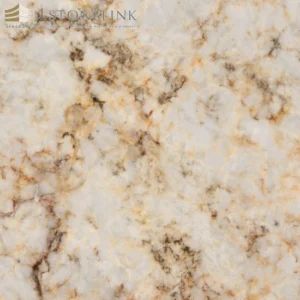
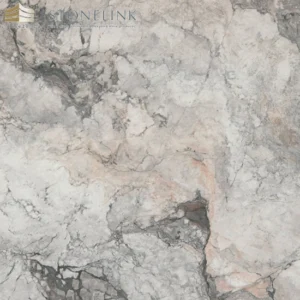
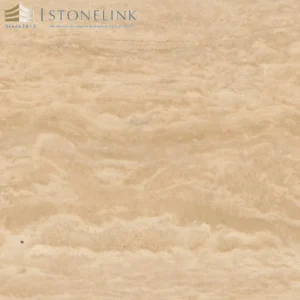
Specifying stone for the outdoors is a different game from indoor work. Freeze-thaw cycles, pooled water, UV, and foot traffic all test a material in ways a living-room floor never will. The good news is that two natural stones handle exterior use beautifully: travertine and, when chosen carefully, marble. This guide explains where each shines, how to make it slip-resistant and weatherproof, and what to specify so your patio, pool deck, or garden path looks good for decades rather than seasons.
Why Travertine Is the Outdoor Favourite
Travertine is a form of limestone deposited by mineral springs, and its structure makes it close to ideal for exterior flooring. First, it stays cool underfoot even in direct sun, which is why it is the default choice around pools. Second, its naturally textured, slightly open surface is non-slip even when wet, a critical safety factor for pool coping and shower areas. Third, travertine expands and contracts with temperature far more gracefully than many dense stones, so it copes with seasonal movement.
For patios and pool decks, travertine in a tumbled or honed finish is the practical sweet spot. The beige, silver, and walnut tones age into a soft, sun-warmed look that complements planting and water alike. Stonelink, a Xiamen and Shuitou stone exporter since 2012 with 60,000 m² of inventory and direct quarry access, supplies travertine in both Turkish and Italian varieties across 2,000+ designs for projects in 80+ countries.
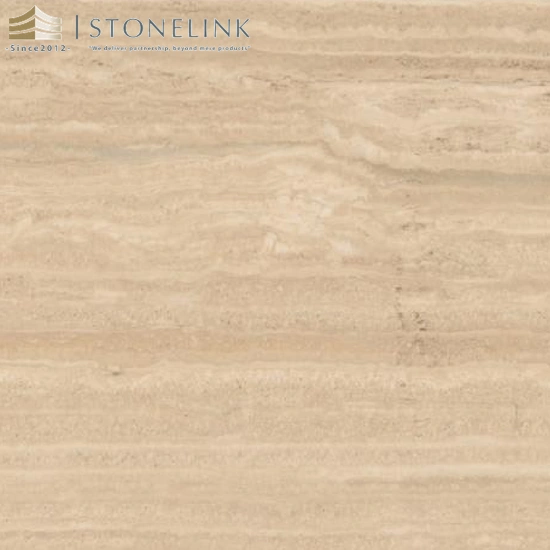
Travertine for Pool Coping and Patios
Pool coping is the capstone that frames the pool edge, and travertine is a standout here because it grips bare wet feet and does not get scalding hot. Specify a bullnose or half-bullnose edge for the coping so the lip is smooth and safe. For the patio itself, 12×12 inch or larger tiles in a honed, filled finish read clean and contemporary, while tumbled unfilled travertine feels rustic and old-world.
One spec note: travertine is sold “filled” or “unfilled.” Filled travertine has its natural pits resin-filled for a smoother plane; unfilled keeps the open texture. Around pools, a filled honed surface is easier to clean and still slip-resistant when wet.
Can You Use Marble Outdoors?
Yes, but with caveats. Marble is stunning outside, from classical colonnades to modern garden steps, yet not every marble is up to the weather. The rule is to choose a dense, low-porosity variety and always seal it. Soft, highly veined white marbles can absorb water and may weather or stain in exposed conditions, so they suit covered areas, feature walls, or low-traffic garden accents better than open pool decks.
Denser marbles such as Crema Marfil-type limestones, some grey marbles, and certain honed marbles perform well as outdoor flooring and cladding when properly sealed and textured. The key is the finish: a polished outdoor marble is a slip hazard when wet, so outdoors you want honed, sandblasted, or flamed marble for grip.
Freeze-Thaw: The Cold-Climate Factor
If you live where temperatures swing below freezing, freeze-thaw is the make-or-break issue. Water enters a stone’s pores, freezes, expands, and over repeated cycles can spall or crack weaker material. Dense, low-absorption stones survive this far better than porous ones. Travertine performs respectably in freeze-thaw when it is filled and sealed, but in harsh continental winters choose the densest grade and ensure proper slope and drainage so water never pools on the surface. Avoid highly porous unfilled travertine in these climates.
Slip Resistance and Finishes
Safety outdoors comes down to finish. Specify:
Honed — smooth matte, good for covered patios. Tumbled — softly worn edges and a textured face, excellent grip. Flamed (for granite or suitable marble) — a torch finish that roughens the surface for maximum traction. Sandblasted — an even non-slip tooth. Whatever you pick, test a sample with bare wet feet before committing to a large area.
Sealing Outdoor Stone
Exterior stone needs a penetrating impregnator, and because it faces weather and UV it will need resealing more often than indoor stone, commonly every 1–2 years depending on exposure. A quality outdoor sealer also helps resist organic staining from leaves and prevents the stone from darkening with water. Re-apply when water stops beading on the surface. Note that no sealer makes a polished stone safe when wet; slip resistance comes from texture, not coating.
Installation Essentials
Outdoor stone must be set on a proper, well-drained base, typically a full mortar bed or a correctly sloped concrete substrate with movement joints. Poor drainage is the number-one cause of failed exterior stone, because trapped water does the damage. Use a polymer-modified outdoor adhesive, leave expansion joints, and detail the coping so water sheds away from the building. A skilled installer who understands stone movement will save you a rebuild later.
Marble vs Travertine Outdoors: Quick Comparison
Choose travertine for pool decks, patios, and anywhere bare feet meet wet stone, thanks to its cool touch and grip. Choose marble for feature walls, steps, and covered or low-traffic exterior surfaces where you want dramatic veining, always in a textured, sealed, dense variety. Both reward you with natural beauty no concrete or tile can match.
Choosing Travertine Grade and Colour
Travertine is graded by density, colour consistency, and how it is filled. Premium grades are denser with fewer voids and a more uniform beige or silver tone, while standard grades show more natural pitting and colour movement, which some buyers actually prefer for a rustic feel. Colour-wise, classic Roman beige suits traditional and Mediterranean schemes, silver travertine reads more contemporary, and walnut tones add warmth. Whatever the grade, insist on a filled and honed face for pool and patio use so the surface is comfortable underfoot and easy to keep clean. View several crates together before accepting delivery, because travertine’s tone can shift between batches more than marble does.
Travertine vs Concrete and Porcelain
Alternatives to travertine outdoors include poured concrete and large-format porcelain. Concrete is cheap and seamless but cracks with movement and stains easily unless sealed hard. Porcelain is incredibly durable and non-porous, yet it can look flat and artificial, and its edges chip in a way stone does not. Travertine splits the difference: natural beauty and genuine slip resistance with manageable maintenance. Marble, as noted, is the choice when you want dramatic veining on a feature wall or a covered step rather than across a sun-baked pool deck. Matching the material to the exact location is what protects both your budget and your safety.
Drainage and Long-Term Value
The single biggest determinant of how long outdoor stone lasts is not the stone itself but the ground beneath it. A properly sloped, well-drained base prevents the water ingress that causes staining, lifting, and freeze damage. Spend the money on the substrate and the setting system, and a travertine patio will look good for twenty years; skimp on drainage and even the best stone fails in five. Factor periodic resealing and an occasional professional clean into the lifetime cost, and natural stone remains one of the best-value premium surfaces you can put outside.
Batch Matching and Sample Approval
Because travertine and marble both vary between quarry blocks, always approve a representative set of slabs or tiles before the full order ships. Ask to see several crates side by side and select the tonal range you will accept, then have the supplier crate only material within that range. For a large patio this avoids the patchwork effect of mixed tones. Keep one approved sample on site during installation so the laying team can blend pieces for an even result. A few minutes of sample control at the front end prevents an expensive re-lay later, and it is standard practice on professional outdoor stone jobs.
Frequently Asked Questions
Is travertine good around a pool?
Yes, it is one of the best choices. Travertine stays cool underfoot, is naturally non-slip when wet, and resists the temperature swings of a pool environment. Use a filled honed or tumbled finish for safety and easy cleaning.
Can marble be used outside?
It can, but choose a dense, low-porosity variety, keep it in a textured honed or flamed finish for grip, and seal it. Softer white marbles are better in covered or low-traffic areas than on open pool decks.
How does freeze-thaw affect outdoor stone?
Water trapped in pores expands when it freezes and can crack weaker stone over repeated cycles. In cold climates, use dense, low-absorption stone with good drainage and slope, and avoid porous unfilled travertine.
How often should outdoor stone be sealed?
Typically every 1–2 years depending on sun, rain, and foot traffic. Reseal when water stops beading on the surface. Proper sealing also prevents leaf staining and water darkening.
Explore Our Stone Collection
Looking for the right slab for your project? Browse Stonelink’s inventory of 2,000+ designs across marble, granite, quartzite, travertine, onyx and limestone.
Ready to Source Marble for Your Project?
Contact the Stonelink team to compare slabs from our 60,000 m² inventory and get an export quote for your next project.
Frequently Asked Questions
How can I import natural stone from China?
Most overseas buyers work with Stonelink in four clear steps. (1) Share your project specifications, drawings or inspiration photos, or choose directly from our 60,000 m² inventory of 2,000+ designs. (2) We send whole-slab high-resolution photos and short video so you can verify exact veining, color and finish before committing — bookmatching and sequence are confirmed at this stage. (3) We handle export packing (foam-protected, fumigated wooden crates), container booking and ocean freight from Xiamen or Shuitou port. (4) Goods arrive at your destination port with the full document set (commercial invoice, packing list, Bill of Lading, certificate of origin, insurance). We support both full-container-load and LCL shipments, and all communication is in English.
What is your minimum order quantity (MOQ) and lead time?
MOQ typically starts from one container (about 20–27 tons depending on slab size and thickness), and mixed sizes or products are accepted so you can consolidate an entire project in one shipment. For smaller trials we can sometimes ship an LCL (less-than-container) batch of a few slabs, though the per-unit freight is higher; ask us and we will quote both options. Standard lead time is about 15–25 days after order confirmation for in-stock materials, or longer for custom cutting and special finishes. Before shipment we provide whole-slab photos and video so you know exactly what you receive, and we can hold stock for phased deliveries. For recurring orders we offer reserved inventory and rolling production schedules to keep your supply chain steady, and we quote both FOB Xiamen/Shuitou and delivered CIF or DDP to your port.
Can you send stone samples before I place an order?
Yes. We provide samples — offcuts or small slabs — so you can verify color, finish and quality before committing to a full shipment. Samples ship worldwide by courier (DHL, FedEx or UPS), typically within 3–7 days, and the sample cost is usually credited against your first container order. For large projects we can also send a full digital package — high-resolution whole-slab photos and short videos — so your designers can spec with confidence before any physical sample moves. Tell us the exact application, dimensions and finish you need and we will pick the most representative pieces rather than random offcuts, so the sample truly reflects the batch you would receive.
Do you provide quality control and certifications?
Yes. Stonelink is a China-based natural stone manufacturer and exporter operating from the Xiamen and Shuitou stone hub since 2012, with a 60,000 m² inventory spanning 2,000+ designs and direct quarry access, shipping to 80+ countries. Every shipment is inspected for packing and quality before loading — slabs are checked for cracks, bow, thickness tolerance and finish, then crated in foam-protected, fumigated wooden packaging. We can arrange third-party inspection (SGS, Intertek and similar) and supply the documentation your destination requires: commercial invoice, packing list, Bill of Lading, certificate of origin and, where relevant, CE marking or material test reports. Tell us your certification and labeling needs (for example the EU, US, Australia or Middle East) and we will match them and pre-clear the paperwork so customs clearance goes smoothly.
How do I choose the right natural stone for my project?
Start with the application: floors and high-traffic areas favor harder stones (granite, quartzite), while marble and onyx shine in lower-abuse, design-led spaces such as feature walls and vanities. Match the finish to the mood — polished for drama, honed for calm, leathered for texture — and confirm color stability under your actual lighting, since natural stone shifts with light. For wet areas choose a denser, well-sealing material and an appropriate finish, and review whole-slab photos or video with our team before you buy. We advise free of charge based on your project’s traffic, budget and aesthetic, so you avoid expensive mismatches and rework.
What shipping terms and documents are included?
We ship FOB Xiamen or Shuitou as standard and can also quote CIF or DDP to your port, so you control insurance and freight or let us handle it end to end. We manage export packing, container booking and ocean freight, and provide the full document set: commercial invoice, packing list, Bill of Lading, certificate of origin and cargo insurance. Both full-container-load and LCL (less-than-container-load) shipments are supported, and for landlocked destinations we can arrange door-to-door multimodal transport. Tell us your delivery address and incoterm preference and we will quote a landed cost, not just an ex-works price, so there are no surprises at the border.