
When specifying natural stone, one comparison comes up more than almost any other: Italian marble vs Chinese marble. Designers, distributors, and homeowners want to know whether the famous Italian names are worth the premium, or whether Chinese marble — supplied through the massive Shuitou hub — delivers the same look for less. The answer is nuanced, and the right choice depends on your budget, timeline, and the story you want the stone to tell.
This article compares the two origins on quality, price, supply, and best-use cases, and explains how a China-based supplier like Stonelink bridges both worlds for international buyers.
Why Italian Marble Has the Reputation It Does
Italian marble — especially from the Carrara region in Tuscany — has been quarried for over two thousand years and supplied the Renaissance. Names like Calacatta, Statuario, and Carrara are not just geological labels; they are heritage brands. Italian quarries are famous for:
- Classic, dramatic veining: the bold gold-and-grey Calacatta veins and the stark white-on-white Statuario are reference points for the entire industry.
- Consistent white background: Italian white marbles are prized for a clean, luminous ground color.
- Prestige: specifying “Italian Calacatta” carries marketing weight in luxury projects.
That prestige is real, but it is also priced in. Italian marble typically carries a significant origin premium over visually similar material from other countries.
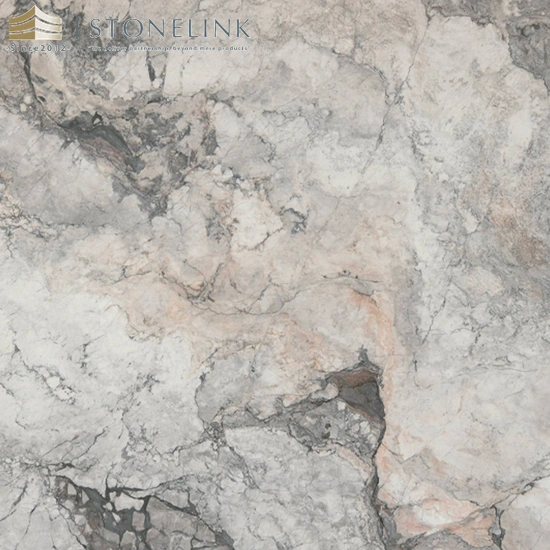
What Chinese Marble Brings to the Table
China is the world’s largest stone producer and processor, and the town of Shuitou in Fujian province is the largest stone trading hub on earth. Chinese marble has evolved far beyond the “cheap alternative” label:
- Strong value: comparable aesthetics — including Calacatta-style whites and richly veined greys — at a fraction of the Italian price.
- Fast supply: enormous processing capacity and inventory mean shorter lead times and reliable fulfillment.
- Broad range: Chinese quarries and global sourcing give access to whites, greys, greens, and blacks in consistent volumes.
For many commercial and residential projects, a Chinese-sourced marble achieves the intended design at a budget that Italian stone simply cannot meet.
Italian Marble vs Chinese Marble: Side-by-Side
| Factor | Italian Marble | Chinese Marble |
|---|---|---|
| Price | Premium (high origin markup) | Strong value |
| Lead time | Longer, quarry-dependent | Fast via Shuitou hub |
| Veining character | Iconic, dramatic classics | Wide range, often similar looks |
| Brand story | Heritage prestige | Value & availability |
| Best for | Luxury hero pieces | Volume & budget-sensitive projects |
Is Chinese Marble Lower Quality? Not Necessarily
A common myth is that Italian marble is “better stone.” Geologically, both are true marbles (metamorphosed limestone). Quality differences exist between individual blocks and quarries in every country. A well-graded Chinese Calacatta-style slab can look stunning next to an Italian one, and modern Chinese processing — gangsaw cutting, resin filling, precise polishing — produces a finished slab that meets international standards. The honest difference is often provenance and the consistency of the very top grades, not fundamental material quality.
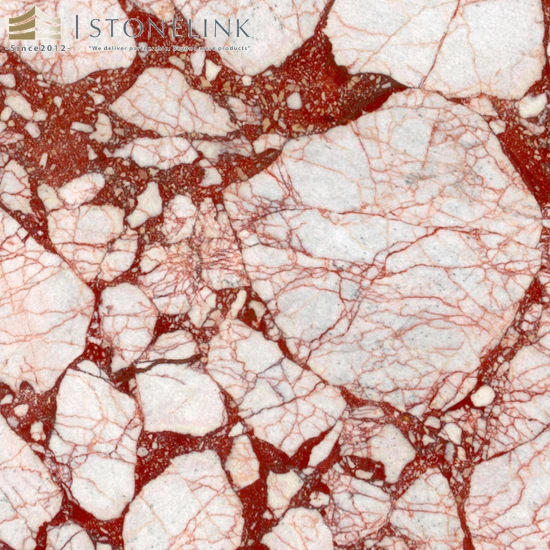
How to Choose Between Them
Ask these questions before deciding:
- Does the client specifically require Italian provenance? If a specification names “Calacatta Oro from Carrara,” then substitution is not an option.
- What is the budget per square foot? If the Italian number blows the budget, a Chinese Calacatta-style marble delivers the look affordably.
- What is the timeline? Shuitou’s inventory and processing speed help when deadlines are tight.
- Is the marble a hero piece or a background material? Hero pieces may justify Italian premiums; large background areas rarely need them.
Stonelink: Bridging Italian and Chinese Supply
Stonelink, a China-based natural stone manufacturer and exporter since 2012, is headquartered in the Xiamen and Shuitou stone district. With direct quarry access plus global sourcing, a 60,000 m² inventory, 2,000+ designs, and shipments to 80+ countries, the company can offer buyers both Italian-sourced and Chinese-sourced marbles under one roof. That means a single partner can quote an Italian Calacatta for a luxury lobby and a Chinese Calacatta-style marble for the surrounding areas — keeping the design coherent while optimizing cost. For anyone weighing italian marble vs chinese marble, having both options from one transparent supplier removes much of the guesswork.
Caring for Marble Regardless of Origin
Whether Italian or Chinese, all marble is calcium carbonate and reacts the same way to acid. Etching from lemon, vinegar, or wine is a chemistry fact, not a quality defect. Both origins need the same care: pH-neutral cleaning, periodic sealing, and prompt wiping of spills. When comparing italian marble vs chinese marble, do not let origin distract from the universal maintenance rules that protect your investment.
Verifying Provenance and Quality
If provenance matters to your client, ask for documentation. Reputable suppliers can state the quarry and country of origin, and provide test reports for hardness and water absorption. For an Italian-specified job, request the specific quarry name and, where relevant, certificates of origin. For Chinese material, judge the actual slab through full photos and video rather than assuming lower quality from the label alone.
Common Misconceptions
- “Chinese marble is fake.” No — it is genuine natural marble from Chinese quarries, not an imitation.
- “Italian marble never etches.” It etches exactly like any marble because the mineral is the same.
- “Price equals quality.” Price often reflects brand and scarcity more than measurable performance differences between comparable blocks.
Making the Smart Spec
The most successful projects treat origin as one variable among many. A designer might specify Italian Calacatta for a reception desk that photographs well, then use a Chinese Calacatta-style marble for adjacent wall cladding where the eye reads “matching white marble” without paying the Italian premium on every square foot. A supplier with both origins — like Stonelink, bridging Italian and Chinese supply from its Xiamen/Shuitou base — makes that blended specification simple to execute and easy to reorder.
Cost of Ownership Over Time
Initial price is only part of the story. Both Italian and Chinese marble share the same long-term care costs: sealing every year or two, pH-neutral cleaning, and protection from acidic spills. Neither origin is “lower maintenance” than the other. Where they diverge is replacement risk — if a slab is damaged years later and you need a match, an Italian quarry’s limited top grade may be harder to replenish than a high-volume Chinese line. For phased projects, discuss continuity of supply with your supplier up front.
A Practical Blended Specification
Consider a hotel lobby: the reception desk front is the photograph moment, so an Italian Calacatta makes the statement. The surrounding floor and wall cladding, seen from a distance, use a Chinese Calacatta-style marble that reads as the same family of white stone. The result is a coherent, luxurious space at a material cost far below an all-Italian specification. This blended approach is where a single supplier with both origins — Stonelink, from its Xiamen/Shuitou base — adds real value, handling both materials and consolidating them into one shipment.
Quality Control and Consistency
Whichever origin you choose, insist on consistent grading. Reputable suppliers sort slabs by quality tier and can mark each slab with a batch or block number so reorders match. For Italian marble, verify the quarry and grade; for Chinese marble, verify the specific line and finish. A supplier that photographs and labels individual slabs — as Stonelink does across its 60,000 m² inventory — removes much of the uncertainty from cross-origin specification, letting you confidently mix Italian and Chinese marble within a single coordinated project.
Frequently Asked Questions
Is Chinese marble as good as Italian marble?
For many applications, yes. Both are genuine natural marble. Chinese marble offers strong value and fast supply, while Italian marble carries heritage prestige and iconic veining. The best choice depends on budget, provenance requirements, and project role.
Why is Italian marble more expensive?
The premium reflects brand heritage, limited top-grade output from famous quarries, and the marketing value of “Italian” provenance — not necessarily a fundamental difference in the stone’s composition for many varieties.
Can I mix Italian and Chinese marble in one project?
Yes, and it is common. Designers often use Italian marble for a hero island or feature wall and Chinese marble for surrounding floors or cladding to manage budget while keeping a cohesive look.
Does Stonelink supply Italian marble?
Stonelink combines direct quarry access with global sourcing from its Xiamen/Shuitou base, allowing it to source Italian and other origin marbles as well as Chinese material for international clients.
Explore Our Stone Collection
Looking for the right slab for your project? Browse Stonelink’s inventory of 2,000+ designs across marble, granite, quartzite, travertine, onyx and limestone.
Ready to Source Italian & Chinese Marble?
Contact the Stonelink team to compare slabs from our 60,000 m² inventory and get an export quote for your next project.
Frequently Asked Questions
How can I import natural stone from China?
Most overseas buyers work with Stonelink in four clear steps. (1) Share your project specifications, drawings or inspiration photos, or choose directly from our 60,000 m² inventory of 2,000+ designs. (2) We send whole-slab high-resolution photos and short video so you can verify exact veining, color and finish before committing — bookmatching and sequence are confirmed at this stage. (3) We handle export packing (foam-protected, fumigated wooden crates), container booking and ocean freight from Xiamen or Shuitou port. (4) Goods arrive at your destination port with the full document set (commercial invoice, packing list, Bill of Lading, certificate of origin, insurance). We support both full-container-load and LCL shipments, and all communication is in English.
What is your minimum order quantity (MOQ) and lead time?
MOQ typically starts from one container (about 20–27 tons depending on slab size and thickness), and mixed sizes or products are accepted so you can consolidate an entire project in one shipment. For smaller trials we can sometimes ship an LCL (less-than-container) batch of a few slabs, though the per-unit freight is higher; ask us and we will quote both options. Standard lead time is about 15–25 days after order confirmation for in-stock materials, or longer for custom cutting and special finishes. Before shipment we provide whole-slab photos and video so you know exactly what you receive, and we can hold stock for phased deliveries. For recurring orders we offer reserved inventory and rolling production schedules to keep your supply chain steady, and we quote both FOB Xiamen/Shuitou and delivered CIF or DDP to your port.
Can you send stone samples before I place an order?
Yes. We provide samples — offcuts or small slabs — so you can verify color, finish and quality before committing to a full shipment. Samples ship worldwide by courier (DHL, FedEx or UPS), typically within 3–7 days, and the sample cost is usually credited against your first container order. For large projects we can also send a full digital package — high-resolution whole-slab photos and short videos — so your designers can spec with confidence before any physical sample moves. Tell us the exact application, dimensions and finish you need and we will pick the most representative pieces rather than random offcuts, so the sample truly reflects the batch you would receive.
Do you provide quality control and certifications?
Yes. Stonelink is a China-based natural stone manufacturer and exporter operating from the Xiamen and Shuitou stone hub since 2012, with a 60,000 m² inventory spanning 2,000+ designs and direct quarry access, shipping to 80+ countries. Every shipment is inspected for packing and quality before loading — slabs are checked for cracks, bow, thickness tolerance and finish, then crated in foam-protected, fumigated wooden packaging. We can arrange third-party inspection (SGS, Intertek and similar) and supply the documentation your destination requires: commercial invoice, packing list, Bill of Lading, certificate of origin and, where relevant, CE marking or material test reports. Tell us your certification and labeling needs (for example the EU, US, Australia or Middle East) and we will match them and pre-clear the paperwork so customs clearance goes smoothly.
How do I choose the right natural stone for my project?
Start with the application: floors and high-traffic areas favor harder stones (granite, quartzite), while marble and onyx shine in lower-abuse, design-led spaces such as feature walls and vanities. Match the finish to the mood — polished for drama, honed for calm, leathered for texture — and confirm color stability under your actual lighting, since natural stone shifts with light. For wet areas choose a denser, well-sealing material and an appropriate finish, and review whole-slab photos or video with our team before you buy. We advise free of charge based on your project’s traffic, budget and aesthetic, so you avoid expensive mismatches and rework.
What shipping terms and documents are included?
We ship FOB Xiamen or Shuitou as standard and can also quote CIF or DDP to your port, so you control insurance and freight or let us handle it end to end. We manage export packing, container booking and ocean freight, and provide the full document set: commercial invoice, packing list, Bill of Lading, certificate of origin and cargo insurance. Both full-container-load and LCL (less-than-container-load) shipments are supported, and for landlocked destinations we can arrange door-to-door multimodal transport. Tell us your delivery address and incoterm preference and we will quote a landed cost, not just an ex-works price, so there are no surprises at the border.