
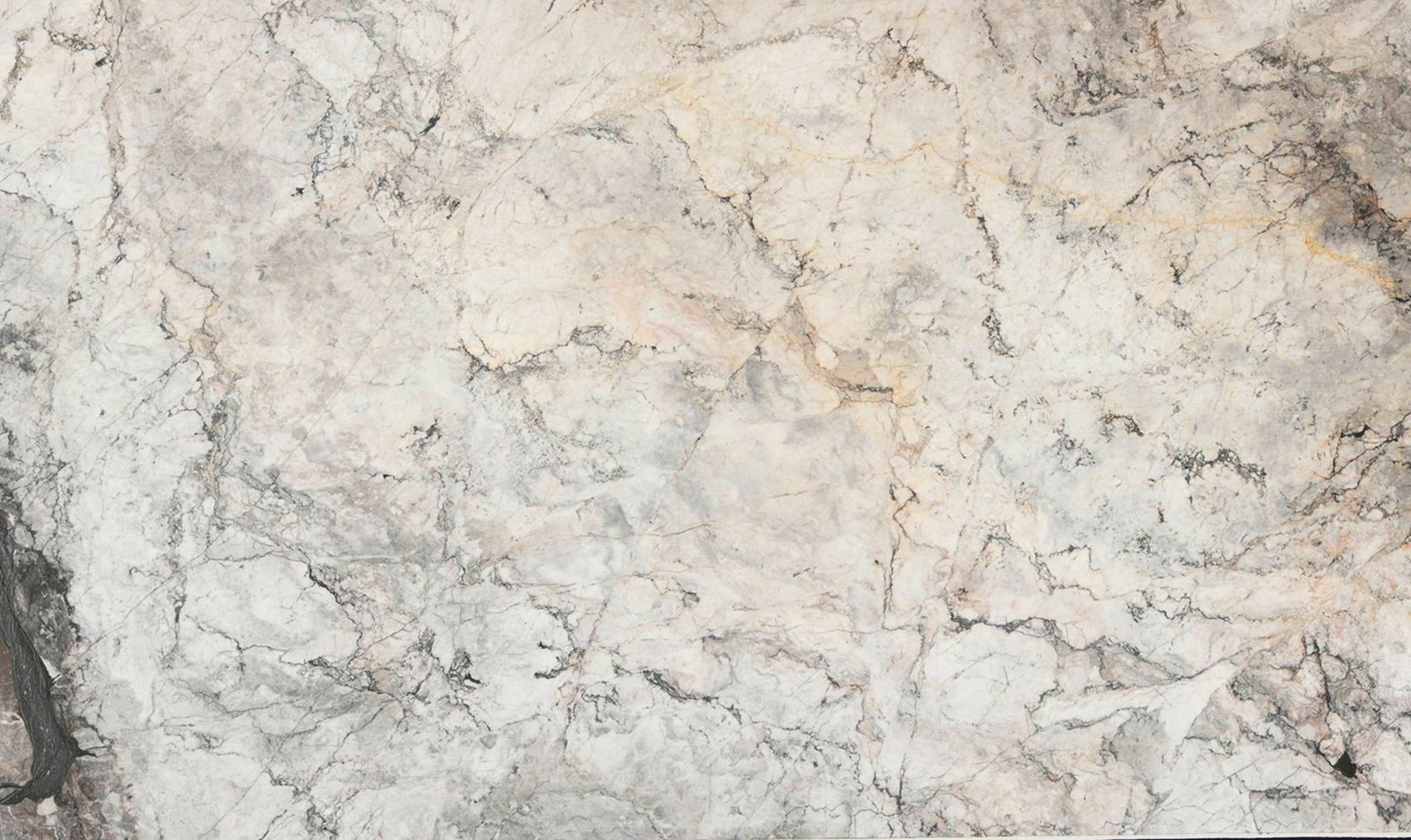
If you are shopping for natural stone, you have probably seen the term breccia marble and wondered how it differs from regular marble. The short answer: breccia is not a different material — it is a textural variety of marble (or limestone) where visible angular rock fragments are embedded in the surface. Think of it as marble with a story written into its face. Below is a clear breakdown of what breccia is, how it forms, when to choose it over homogeneous stone, and which projects suit it best.
Quick Answer
Breccia is any natural stone (marble, limestone, or dolomite) that contains large, visible angular fragments (clasts) cemented together in a contrasting matrix. Regular marble has a uniform crystalline structure with veining but no distinct fragments. Choose breccia when you want texture, geological character, and a conversation-starting surface; choose standard marble when you want clean, flowing patterns or a more predictable look.
How Breccia Forms (The Geology in Plain English)
Breccia forms in three main ways, all involving breakage followed by re-cementation:
- Tectonic breccia — rock is shattered along fault lines by earthquake movement, then mineral-rich water cements the fragments back together over millions of years.
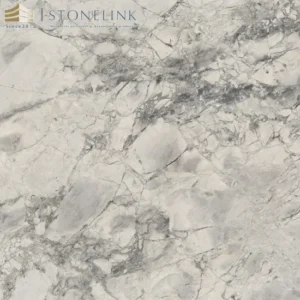
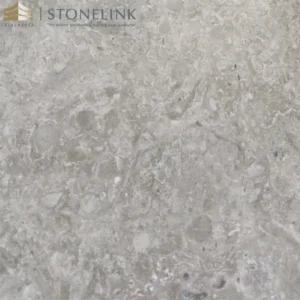
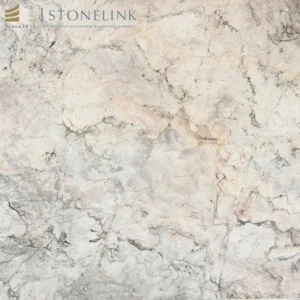
- Impact breccia — a meteorite strike shatters rock; the resulting “lunar-style” fragmented texture is what gives stones like Breccia Lunare their moon-surface appearance.
- Sedimentary breccia — rock fragments accumulate at the base of a cliff or in a stream bed and are later compressed and cemented into solid stone.
The key visual marker: you can see individual angular pieces (clasts) with your eyes, surrounded by a darker or lighter matrix. That is what makes breccia instantly recognizable.

Breccia vs Regular Marble: Side-by-Side
| Factor | Breccia Marble | Regular Marble (e.g. Carrara) |
|---|---|---|
| Texture | Angular fragments visible; 3D depth | Uniform crystalline; smooth flow |
| Veining style | Fragment + matrix pattern | Linear or cloud-like veins |
| Visual energy | High — each slab is unique | Low to medium — predictable |
| Hardness / durability | Same as equivalent non-breccia stone | Varies by type (calcite ~3, dolomite ~4) |
| Best for | Feature walls, statements, conversation pieces | Floors, kitchens, large-format calm areas |
| Price range | Mid to premium (rarity-driven) | Wide range (entry to luxury) |
Common Types of Breccia Stone
- Breccia marble — metamorphic limestone/dolomite with calcite/dolomite cement; includes Italian Breccia, Breccia Lunare, Rosso Verona.
- Breccia limestone — sedimentary origin, often warmer tones (yellow, red, brown); common in Mediterranean architecture.
- Onice brecciato — translucent onyx with fragmentary structure; used for backlit feature panels.
When to Pick Breccia Over Standard Marble
- You want a feature wall or fireplace surround that guests will stop and examine up close.
- Your design calls for “geological storytelling” — a surface that looks like a piece of planetary history.
- hospitality or retail project where uniqueness drives brand perception.
- You need a stone that hides minor wear better than pure white marble (the fragmentary pattern camouflages light etching).
When Standard Marble Is the Better Choice
- The project requires large-format flooring with a calm, unifying field (use Carrara, Bianco Oro, or Calacatta).
- Your client wants predictable, repeatable patterns across many slabs.
- Budget is constrained and you need an entry-level natural stone option.
Care & Maintenance
Breccia marble requires identical care to non-breccia marble of the same mineral base: seal annually with a penetrating impregnator, wipe spills promptly, use pH-neutral cleaners, and avoid prolonged acid contact. The fragmentary texture does not make it weaker or more porous — it is purely a visual characteristic.
FAQ
Q: Is breccia more expensive than regular marble?
A: It depends on rarity and quarry exclusivity. Some breccias are mid-range; exotic varieties like high-contrast Breccia Lunare sit at the premium end.
Q: Can breccia be bookmatched?
A: Yes, and the results can be spectacular — mirrored fragmentary patterns create symmetrical abstract art. Request bookmatched pairs from your supplier.
Q: Does breccia etch more easily?
A: No. Etching depends on mineral composition (calcite vs dolomite), not on whether the stone is breccia or not.
Q: Where can I see real breccia marble options?
A: Browse the Breccia Lunare product page for photos of all three variants, or read our complete buyer’s guide.
Explore Breccia Marble
Contact STONELINK for slab photos, samples, and sourcing options for Breccia Lunare and other premium breccia marbles.
Interested in this stone?
Get a tailored quote with slab photos, available sizes, and MOQ directly from STONELINK’s quarry supply.
For a closer look at its lunar-surface texture, see our Breccia Lunare natural stone guide.