

Black marble countertops are the definition of drama in a kitchen or bath. They turn a functional surface into a focal point, especially when lit and paired with brass or pale cabinetry. The two names buyers meet most are Nero Marquina, a Spanish black with white veins, and Portoro, an Italian black streaked with gold. But black marble is not the same as black granite or black quartzite, and the differences decide how the counter will age. This guide covers the main black marble types, how they compare to harder alternatives, and the design and care moves that keep them looking sharp.
Nero Marquina: The Black-and-White Icon
Nero Marquina is quarried in the Basque Country of Spain and is the black marble most people picture when they say “black marble countertops.” Its ground is an intense, near-ink black, crossed by thin, irregular white veins that can look like lightning or like fine spiderwebbing. The contrast is what sells it: the whiter and more linear the veins, the more prized the slab.
As a true marble, Nero Marquina is calcium carbonate, so it etches on contact with acid and needs sealing. A known care point is iron content in some veins, which can oxidize and show faint rust tones if the stone stays wet, so good sealing and dry wiping matter. Used as a countertop, it delivers unmatched graphic drama but asks for a little respect around citrus and wine.
Portoro: Black with Gold
Portoro, from Italy, is the luxury alternative. Its ground is a deep black shot through with golden-yellow and warm-brown veining, sometimes in broad diagonal bands. The gold makes it read as opulent rather than stark, and it pairs beautifully with brass, bronze, and dark wood. Portoro is rarer than Nero Marquina and priced accordingly, so it is often reserved for feature islands, powder-room vanities, and statement backsplashes rather than whole kitchens.
Both stones are marble and share the same acid sensitivity. The choice between them is mostly about mood: Nero Marquina for crisp black-and-white modernity, Portoro for warm, jewel-like richness.
Other Black and Near-Black Marbles
Beyond the headline pair, buyers will meet marbles such as Marquina Light (more white veining), Nero Portoro variants, and darker decorative marbles with green or grey undertones. There are also “black” stones that are not marble at all, such as Black Cosmic granite (a speckled dark granite with sparkle) and black quartzites, which we compare below. Knowing the rock type behind the label is the single most useful thing a buyer can do.
Black Marble vs Black Granite vs Black Quartzite
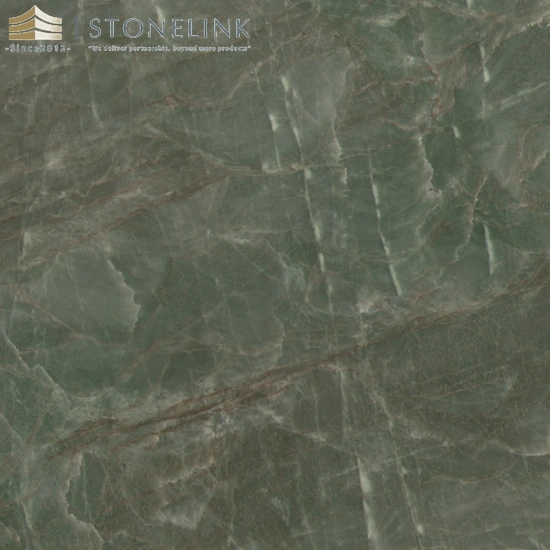
This is where black marble countertops meet reality. Granite is an igneous rock, far harder and far more acid-resistant than marble, so a black granite counter shrugs off lemon juice and busy cooking. Quartzite, a metamorphic sandstone, is also tough and resists etching, giving a black quartzite counter both drama and durability. Marble, by contrast, is the softest of the three for daily abuse but offers the deepest, most luminous black and the finest veining.
The practical takeaway: if the counter sees heavy acidic prep and you want zero worry, granite or quartzite wins. If the look is the priority and you accept that marble earns a patina, black marble is worth it, often placed on a baking island or a low-traffic bar where its beauty shines without constant acid exposure.
Design Ideas for Black Marble Countertops
Black marble loves contrast and light. Set Nero Marquina against white or cream cabinetry and it becomes graphic and architectural. Pair Portoro with brushed brass faucets and warm wood for a heritage-luxury feel. Waterfall edges let the veins run continuously down the side of an island, which is the most requested detail for statement kitchens. Under-cabinet lighting and a matte or honed finish can soften the look, while a high polish maximizes depth and reflection.
For small spaces, a black marble vanity top instantly adds weight and luxury without overwhelming the room. In open kitchens, one black marble island among pale perimeter counters creates a deliberate focal point that reads as designed, not decorated.
Lighting and Sealing
Black stone shows water marks and dust more than pale stone, so lighting and maintenance go together. Aim for even task lighting without hot spots, and wipe with a soft cloth and pH-neutral cleaner. Seal Nero Marquina and Portoro on a schedule (often every 6 to 24 months depending on finish and use), and avoid leaving wet glasses or acidic liquids on the surface. A honed black marble shows etching less than a mirror polish, which is why many designers specify honed finishes for working counters.
Stonelink’s Black Stone Supply
Stonelink has shipped black marbles and black granites to 80+ countries since 2012, from our Xiamen and Shuitou bases with direct quarry access and global sourcing. Across our 60,000 m² inventory and 2,000+ designs, buyers can compare Nero Marquina and Portoro marbles against Black Cosmic granite and black quartzites in one place, then book the exact slabs they see. For counters, we recommend viewing full slabs so vein layout and any iron-vein oxidation risk are clear before purchase.
Frequently Asked Questions
Are black marble countertops hard to maintain?
They need more care than granite or quartzite because marble etches from acid. With regular sealing, prompt wiping, and a pH-neutral cleaner, black marble counters stay beautiful; many owners choose a honed finish to hide minor etching.
Is Nero Marquina or Portoro better for a kitchen island?
Nero Marquina gives a bold black-and-white look and is more available; Portoro adds gold veining for a richer, rarer statement at a higher price. Both work best on low-traffic or feature islands rather than heavy prep counters.
Will black marble show water spots?
Yes, more than light stone. Dry wiping after use and even lighting reduce visible marks. A quality sealer also helps beads of water shed instead of sitting on the surface.
Can I get the black look without etching worries?
Yes. Compare black granite or black quartzite, which resist acid and scratching far better while keeping a dark, dramatic appearance. Stonelink can show both next to the marbles so you can decide.
Edge Profiles and Thickness for Black Marble
The edge profile changes how black marble reads. A simple eased or straight edge feels modern and keeps the slab looking thick and solid. A half-bullnose or ogee edge adds a traditional softness that suits Portoro’s opulent character. Standard thickness is 2 cm, often laminated to look like 4 cm, or a true 3 cm slab for islands with overhangs. For black marble, a thicker edge emphasizes the depth of the stone and reduces the chance of a fragile edge chipping during transport or install, so specify edge protection in the packing list.
Common Mistakes With Black Marble Counters
The first mistake is treating black marble like granite and leaving a lemon or tomato on it, which etches the surface. The second is skipping sealer on a honed finish, assuming matte means protected; honed marble is actually more porous and needs sealing more often. The third is poor lighting that turns a dramatic slab into a smear of water spots. Finally, buyers sometimes accept a slab with heavy iron-vein oxidation risk without asking how it was dried and stored. View the actual slab, agree on a sealing schedule, and keep acids off the surface, and black marble counters will stay striking for decades.
Black Marble in Small Spaces
Black marble is a secret weapon in compact rooms. A small Nero Marquina vanity top in a powder room reads as luxe and makes the space feel intentional rather than cramped. In a narrow kitchen, one black marble island among pale perimeter counters adds weight without closing the room in. Because black shows dust and water, small spaces are actually easier to keep pristine since the surface area is small and wiped often. Pair with a large mirror or good lighting and the black marble becomes the jewel of the room rather than a maintenance burden.
Pairing Black Marble With Metals and Wood
Hardware makes or breaks black marble. Warm brass and unlacquered bronze flatter both Nero Marquina and Portoro, leaning classic and luxe. Cool chrome and brushed nickel keep the look crisp and contemporary against Nero Marquina’s white veins. Warm woods like walnut and oak soften the drama for a livable feel, while pale oak keeps it Scandinavian. Avoid mixing too many metal tones on one counter; pick one and repeat it in the faucet, handles, and lighting. The right pairing turns a black marble top from a bold slab into a finished, intentional design moment.
Explore Our Stone Collection
Looking for the right slab for your project? Browse Stonelink’s inventory of 2,000+ designs across marble, granite, quartzite, travertine, onyx and limestone.
Ready to Source Black Marble?
Contact the Stonelink team to compare slabs from our 60,000 m² inventory and get an export quote for your next project.
Frequently Asked Questions
How can I import natural stone from China?
Most overseas buyers work with Stonelink in four clear steps. (1) Share your project specifications, drawings or inspiration photos, or choose directly from our 60,000 m² inventory of 2,000+ designs. (2) We send whole-slab high-resolution photos and short video so you can verify exact veining, color and finish before committing — bookmatching and sequence are confirmed at this stage. (3) We handle export packing (foam-protected, fumigated wooden crates), container booking and ocean freight from Xiamen or Shuitou port. (4) Goods arrive at your destination port with the full document set (commercial invoice, packing list, Bill of Lading, certificate of origin, insurance). We support both full-container-load and LCL shipments, and all communication is in English.
What is your minimum order quantity (MOQ) and lead time?
MOQ typically starts from one container (about 20–27 tons depending on slab size and thickness), and mixed sizes or products are accepted so you can consolidate an entire project in one shipment. For smaller trials we can sometimes ship an LCL (less-than-container) batch of a few slabs, though the per-unit freight is higher; ask us and we will quote both options. Standard lead time is about 15–25 days after order confirmation for in-stock materials, or longer for custom cutting and special finishes. Before shipment we provide whole-slab photos and video so you know exactly what you receive, and we can hold stock for phased deliveries. For recurring orders we offer reserved inventory and rolling production schedules to keep your supply chain steady, and we quote both FOB Xiamen/Shuitou and delivered CIF or DDP to your port.
Can you send stone samples before I place an order?
Yes. We provide samples — offcuts or small slabs — so you can verify color, finish and quality before committing to a full shipment. Samples ship worldwide by courier (DHL, FedEx or UPS), typically within 3–7 days, and the sample cost is usually credited against your first container order. For large projects we can also send a full digital package — high-resolution whole-slab photos and short videos — so your designers can spec with confidence before any physical sample moves. Tell us the exact application, dimensions and finish you need and we will pick the most representative pieces rather than random offcuts, so the sample truly reflects the batch you would receive.
Do you provide quality control and certifications?
Yes. Stonelink is a China-based natural stone manufacturer and exporter operating from the Xiamen and Shuitou stone hub since 2012, with a 60,000 m² inventory spanning 2,000+ designs and direct quarry access, shipping to 80+ countries. Every shipment is inspected for packing and quality before loading — slabs are checked for cracks, bow, thickness tolerance and finish, then crated in foam-protected, fumigated wooden packaging. We can arrange third-party inspection (SGS, Intertek and similar) and supply the documentation your destination requires: commercial invoice, packing list, Bill of Lading, certificate of origin and, where relevant, CE marking or material test reports. Tell us your certification and labeling needs (for example the EU, US, Australia or Middle East) and we will match them and pre-clear the paperwork so customs clearance goes smoothly.
How do I choose the right natural stone for my project?
Start with the application: floors and high-traffic areas favor harder stones (granite, quartzite), while marble and onyx shine in lower-abuse, design-led spaces such as feature walls and vanities. Match the finish to the mood — polished for drama, honed for calm, leathered for texture — and confirm color stability under your actual lighting, since natural stone shifts with light. For wet areas choose a denser, well-sealing material and an appropriate finish, and review whole-slab photos or video with our team before you buy. We advise free of charge based on your project’s traffic, budget and aesthetic, so you avoid expensive mismatches and rework.
What shipping terms and documents are included?
We ship FOB Xiamen or Shuitou as standard and can also quote CIF or DDP to your port, so you control insurance and freight or let us handle it end to end. We manage export packing, container booking and ocean freight, and provide the full document set: commercial invoice, packing list, Bill of Lading, certificate of origin and cargo insurance. Both full-container-load and LCL (less-than-container-load) shipments are supported, and for landlocked destinations we can arrange door-to-door multimodal transport. Tell us your delivery address and incoterm preference and we will quote a landed cost, not just an ex-works price, so there are no surprises at the border.