
Nothing signals a high-end interior in 2026 like a full wall of bookmatched veined marble. The look is unmistakable: two adjacent slabs opened like a book so their veins mirror across the join, forming one continuous pattern. It appears in luxury residential lobbies, hotel bathrooms and flagship retail, and it commands a premium because the result is genuinely one of a kind. For distributors and fabricators, bookmatched marble is a high-margin line, but only if the supply chain can deliver matched slabs as a set.
What Bookmatching Actually Requires
Bookmatching is not a finish, it is a cutting and selection discipline. You need sequential slabs sawn from the same block, then opened so the facing surfaces meet. If one slab is missing, or the sequence is broken, the mirror is gone and you are left with two ordinary pieces.
This is why most traders cannot reliably supply it. They buy what is open on the market and hope for a match. A supplier with quarry access and block control, by contrast, can reserve a sequence before it is cut and hold it as a unit. Stonelink’s direct quarry rights and 60,000 m² inventory in Shuitou and Xiamen are built for exactly this, reserving consecutive slabs for a project rather than selling them piecemeal.
Which Marbles Bookmatch Best
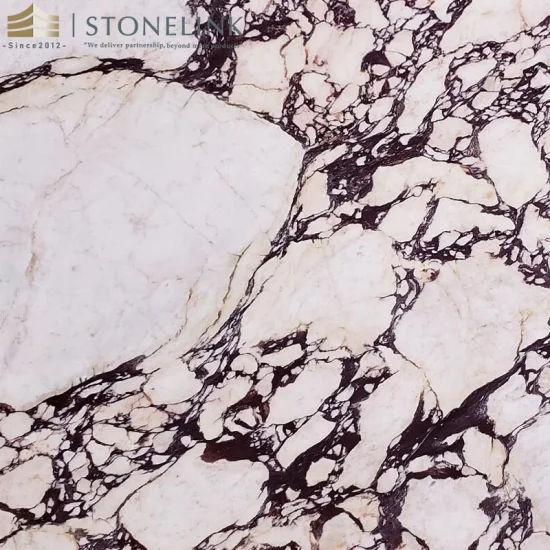
The strongest bookmatches come from marbles with bold, directional veining rather than uniform clouds. The standout choices for 2026:
- Calacatta and Calacatta Viola — dramatic diagonal veins that form clear mirrored figures.
- Portoro and Nero Marquina — black grounds with white or gold veins, high contrast and striking when opened.
- Breccia and Paonazzo types — chaotic patterns that read as abstract art across a bookmatch.
White and light marbles still lead volume, but coloured veined marbles are the growth segment because they photograph well and separate a project from the standard white-kitchen look.
Four-Slab and Full-Block Layouts
A two-slab mirror is the entry level. Larger installations use four, six or more slabs in a repeating bookmatch, or a full slab facing an entire wall. These need careful planning:
- Confirm the block yields enough sequential slabs for the layout.
- Agree the opening direction (veins up, down or centred) before cutting.
- Number every slab and ship them in cut order with the crate map.
Fabricators should receive the slabs numbered, not loose, or the installation turns into a puzzle solved on site. A supplier who cannot provide a crate map should not be quoting a bookmatch job.
Finish and Lighting Make or Break It
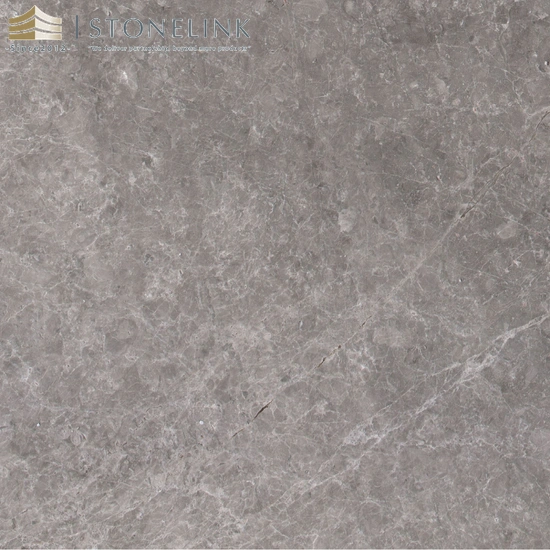
Bookmatched veining reads differently by finish. Polished surfaces sharpen the contrast and suit formal spaces; honed surfaces soften the pattern for a quieter statement. Backlighting works on translucent marbles and quartzites but not on dense grey marbles, so match the lighting plan to the stone.
Specifiers should see the actual slabs lit, not a sample chip. The whole point of a bookmatch is scale, and a chip cannot show it. Distributors who display a booked pair in the showroom close these sales far more often.
Cost and Lead Time Reality
Bookmatched marble costs more than random slabs for three reasons: the block portion is reserved (tying up inventory), yield drops because off-sequence slabs may not sell, and handling is heavier. Prices sit in an industry range above standard marble slab, widening with the drama of the vein and the size of the layout.
Lead time is the other factor. Reserving and cutting a sequence takes longer than grabbing stock slabs. Buyers planning a bookmatch should commit early, ideally before the block is opened, to lock both price and sequence.
Frequently Asked Questions
Can any marble be bookmatched?
Any block can be opened, but only marbles with strong directional veining produce a clear mirror. Uniform or cloudy stones show little effect. Calacatta, Portoro, Nero Marquina and breccia types are the reliable choices.
How many slabs do I need for a feature wall?
It depends on slab size and wall dimensions. A standard 2-slab bookmatch covers a modest panel; full walls usually need 4 to 8 sequential slabs. Confirm the layout with your fabricator and reserve the sequence as a set before cutting.
Why is bookmatched marble more expensive?
You pay for reserved block inventory, lower yield, and careful handling and crating. The premium reflects scarcity of the matched set more than the stone itself.
Can Stonelink supply matched slabs to my country?
Yes. We reserve consecutive slabs from a single block and ship numbered with a crate map to 80+ countries from our Shuitou and Xiamen operation, across our 2,000+ marble, granite, quartzite, travertine, onyx and limestone designs.
Explore Our Stone Collection
Looking for the right slab for your project? Browse Stonelink’s inventory of 2,000+ designs across marble, granite, quartzite, travertine, onyx and limestone.
Ready to Source Bookmatched Marble?
Contact the Stonelink team to reserve a sequential slab set, review Calacatta and veined marble options, and plan your bookmatch layout. Since 2012 we have shipped six stone families from Shuitou and Xiamen to 80+ countries.
Frequently Asked Questions
How can I import natural stone from China?
Most overseas buyers work with Stonelink in four clear steps. (1) Share your project specifications, drawings or inspiration photos, or choose directly from our 60,000 m² inventory of 2,000+ designs. (2) We send whole-slab high-resolution photos and short video so you can verify exact veining, color and finish before committing — bookmatching and sequence are confirmed at this stage. (3) We handle export packing (foam-protected, fumigated wooden crates), container booking and ocean freight from Xiamen or Shuitou port. (4) Goods arrive at your destination port with the full document set (commercial invoice, packing list, Bill of Lading, certificate of origin, insurance). We support both full-container-load and LCL shipments, and all communication is in English.
What is your minimum order quantity (MOQ) and lead time?
MOQ typically starts from one container (about 20–27 tons depending on slab size and thickness), and mixed sizes or products are accepted so you can consolidate an entire project in one shipment. For smaller trials we can sometimes ship an LCL (less-than-container) batch of a few slabs, though the per-unit freight is higher; ask us and we will quote both options. Standard lead time is about 15–25 days after order confirmation for in-stock materials, or longer for custom cutting and special finishes. Before shipment we provide whole-slab photos and video so you know exactly what you receive, and we can hold stock for phased deliveries. For recurring orders we offer reserved inventory and rolling production schedules to keep your supply chain steady, and we quote both FOB Xiamen/Shuitou and delivered CIF or DDP to your port.
Can you send stone samples before I place an order?
Yes. We provide samples — offcuts or small slabs — so you can verify color, finish and quality before committing to a full shipment. Samples ship worldwide by courier (DHL, FedEx or UPS), typically within 3–7 days, and the sample cost is usually credited against your first container order. For large projects we can also send a full digital package — high-resolution whole-slab photos and short videos — so your designers can spec with confidence before any physical sample moves. Tell us the exact application, dimensions and finish you need and we will pick the most representative pieces rather than random offcuts, so the sample truly reflects the batch you would receive.
Do you provide quality control and certifications?
Yes. Stonelink is a China-based natural stone manufacturer and exporter operating from the Xiamen and Shuitou stone hub since 2012, with a 60,000 m² inventory spanning 2,000+ designs and direct quarry access, shipping to 80+ countries. Every shipment is inspected for packing and quality before loading — slabs are checked for cracks, bow, thickness tolerance and finish, then crated in foam-protected, fumigated wooden packaging. We can arrange third-party inspection (SGS, Intertek and similar) and supply the documentation your destination requires: commercial invoice, packing list, Bill of Lading, certificate of origin and, where relevant, CE marking or material test reports. Tell us your certification and labeling needs (for example the EU, US, Australia or Middle East) and we will match them and pre-clear the paperwork so customs clearance goes smoothly.
How do I choose the right natural stone for my project?
Start with the application: floors and high-traffic areas favor harder stones (granite, quartzite), while marble and onyx shine in lower-abuse, design-led spaces such as feature walls and vanities. Match the finish to the mood — polished for drama, honed for calm, leathered for texture — and confirm color stability under your actual lighting, since natural stone shifts with light. For wet areas choose a denser, well-sealing material and an appropriate finish, and review whole-slab photos or video with our team before you buy. We advise free of charge based on your project’s traffic, budget and aesthetic, so you avoid expensive mismatches and rework.
What shipping terms and documents are included?
We ship FOB Xiamen or Shuitou as standard and can also quote CIF or DDP to your port, so you control insurance and freight or let us handle it end to end. We manage export packing, container booking and ocean freight, and provide the full document set: commercial invoice, packing list, Bill of Lading, certificate of origin and cargo insurance. Both full-container-load and LCL (less-than-container-load) shipments are supported, and for landlocked destinations we can arrange door-to-door multimodal transport. Tell us your delivery address and incoterm preference and we will quote a landed cost, not just an ex-works price, so there are no surprises at the border.