Marble versus quartz is not really a stone-versus-stone fight, because quartz countertops are not quarried at all. Marble is a natural metamorphic rock; quartz surfacing is an engineered product made from roughly 90% crushed quartz bound with resin. That single fact shapes everything about how the two compare, from look to lifespan to care. We supply natural marble to importers in 80+ countries from our Shuitou and Xiamen bases, and we also work with buyers who specify engineered quartz, so the comparison below is practical rather than promotional.
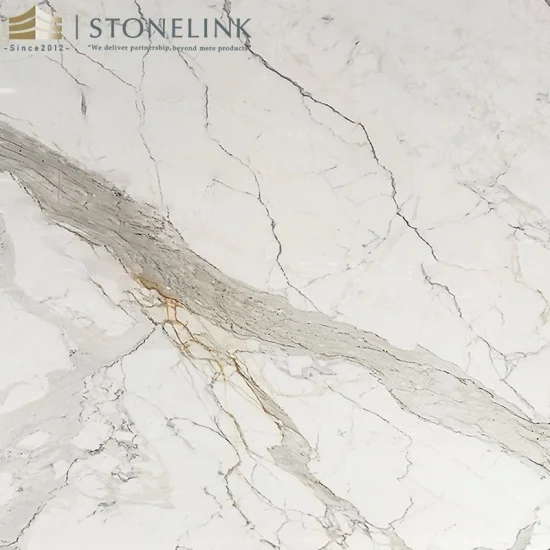
What Each Material Actually Is
Marble forms underground from limestone under heat and pressure, then gets cut into slabs. Every slab is unique, with veining no factory can exactly repeat. Engineered quartz is poured, compressed, and cured in a factory, so patterns are consistent and reproducible across batches.
Quick note for buyers mixing up terms: quartz (engineered) is not quartzite (natural). Quartzite is a natural stone we cover in our quartzite guides. This article is marble against engineered quartz only.
Durability and What “Lasts” Means
Engineered quartz is non-porous, so it does not need sealing and it resists stains without effort. It will not etch from lemon or wine. On pure stain-and-seal math, quartz is the lower-maintenance material by a clear margin.
Marble is porous and etches on acid, so it demands more care. But marble is also a genuinely natural stone that can be repolished and restored for decades. “Lasts” depends on the definition: quartz resists daily damage better, while marble can be renewed and keeps its value as a real stone.
Heat and Scratch Behavior
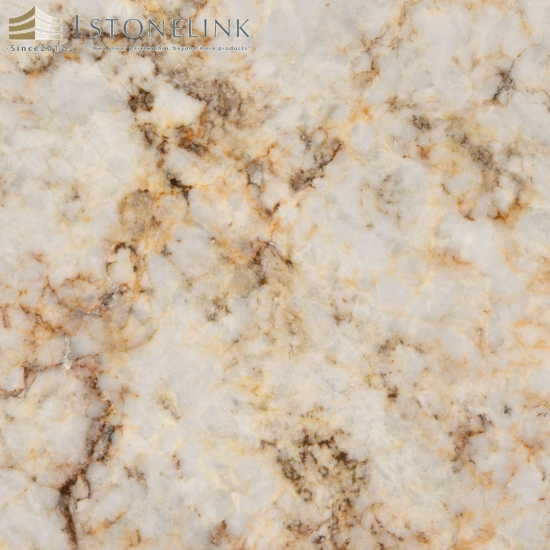
Quartz surfacing has a resin binder, and that binder can scorch under a hot pan, so trivets are mandatory. Marble handles heat better but scratches more easily than quartz. Neither is invincible; they fail in different ways.
Appearance and Feel
Marble has depth, translucency, and the irregular veining that designers chase. Engineered quartz has improved massively and now mimics marble well, but under close inspection the pattern repeats and lacks the natural stone’s depth. For a true Calacatta or Statuario look, natural marble is still the reference standard.
Maintenance
- Marble: seal regularly, wipe acidic spills fast, accept or restore patina, repolish over time.
- Quartz: no sealing, clean with mild soap, use trivets for heat, avoid abrasive pads.
Cost and Sourcing
As an industry range, engineered quartz commonly runs about USD 50 to 120 per square foot installed. Natural marble spans roughly USD 40 to 150 per square foot installed, with rare Italian varieties higher. The two overlap enough that look and maintenance, not price, should lead the decision.
At Stonelink, operating since 2012, our marble comes through direct quarry access and global sourcing, held in a 60,000 m² inventory across 2,000+ designs. We cover marble within our six stone families; engineered quartz sits outside the natural-stone program, which is worth knowing if you want a single supplier for a mixed specification.
Which Should You Choose?
Choose engineered quartz for rentals, busy family kitchens, and anyone who wants near-zero maintenance. Choose natural marble for design-led projects, luxury bathrooms, and clients who value a real, restorable stone surface. Both are sound; they serve different buyers.
Frequently Asked Questions
Is quartz more durable than marble?
For stain and acid resistance, yes. Quartz is non-porous and will not etch. Marble scratches and etches more easily but can be repolished, so “durable” depends on whether you mean stain-proof or restorable.
Does quartz look like real marble?
Modern quartz mimics marble closely, but the pattern repeats and lacks natural depth. For an authentic Calacatta or Statuario appearance, natural marble remains the standard.
Can quartz handle hot pans?
Not directly. The resin binder can scorch, so always use a trivet. Marble tolerates heat better but still benefits from protection.
Which is better for resale?
Both help. Quartz signals easy living; marble signals luxury. In higher-end markets, natural marble often carries more design cachet.
Explore Our Stone Collection
Looking for the right slab for your project? Browse Stonelink’s inventory of 2,000+ designs across marble, granite, quartzite, travertine, onyx and limestone.
Looking for a marble supplier in China? Stonelink supplies marble slabs and cut-to-size from Shuitou, China to 80+ countries — explore our full marble program.
Ready to Source Marble?
Contact the Stonelink team to view natural marble slabs from our 60,000 m² inventory and request an export quote.
Frequently Asked Questions
How can I import natural stone from China?
Most overseas buyers work with Stonelink in four clear steps. (1) Share your project specifications, drawings or inspiration photos, or choose directly from our 60,000 m² inventory of 2,000+ designs. (2) We send whole-slab high-resolution photos and short video so you can verify exact veining, color and finish before committing — bookmatching and sequence are confirmed at this stage. (3) We handle export packing (foam-protected, fumigated wooden crates), container booking and ocean freight from Xiamen or Shuitou port. (4) Goods arrive at your destination port with the full document set (commercial invoice, packing list, Bill of Lading, certificate of origin, insurance). We support both full-container-load and LCL shipments, and all communication is in English.
What is your minimum order quantity (MOQ) and lead time?
MOQ typically starts from one container (about 20–27 tons depending on slab size and thickness), and mixed sizes or products are accepted so you can consolidate an entire project in one shipment. For smaller trials we can sometimes ship an LCL (less-than-container) batch of a few slabs, though the per-unit freight is higher; ask us and we will quote both options. Standard lead time is about 15–25 days after order confirmation for in-stock materials, or longer for custom cutting and special finishes. Before shipment we provide whole-slab photos and video so you know exactly what you receive, and we can hold stock for phased deliveries. For recurring orders we offer reserved inventory and rolling production schedules to keep your supply chain steady, and we quote both FOB Xiamen/Shuitou and delivered CIF or DDP to your port.
Can you send stone samples before I place an order?
Yes. We provide samples — offcuts or small slabs — so you can verify color, finish and quality before committing to a full shipment. Samples ship worldwide by courier (DHL, FedEx or UPS), typically within 3–7 days, and the sample cost is usually credited against your first container order. For large projects we can also send a full digital package — high-resolution whole-slab photos and short videos — so your designers can spec with confidence before any physical sample moves. Tell us the exact application, dimensions and finish you need and we will pick the most representative pieces rather than random offcuts, so the sample truly reflects the batch you would receive.
Do you provide quality control and certifications?
Yes. Stonelink is a China-based natural stone manufacturer and exporter operating from the Xiamen and Shuitou stone hub since 2012, with a 60,000 m² inventory spanning 2,000+ designs and direct quarry access, shipping to 80+ countries. Every shipment is inspected for packing and quality before loading — slabs are checked for cracks, bow, thickness tolerance and finish, then crated in foam-protected, fumigated wooden packaging. We can arrange third-party inspection (SGS, Intertek and similar) and supply the documentation your destination requires: commercial invoice, packing list, Bill of Lading, certificate of origin and, where relevant, CE marking or material test reports. Tell us your certification and labeling needs (for example the EU, US, Australia or Middle East) and we will match them and pre-clear the paperwork so customs clearance goes smoothly.
How do I choose the right natural stone for my project?
Start with the application: floors and high-traffic areas favor harder stones (granite, quartzite), while marble and onyx shine in lower-abuse, design-led spaces such as feature walls and vanities. Match the finish to the mood — polished for drama, honed for calm, leathered for texture — and confirm color stability under your actual lighting, since natural stone shifts with light. For wet areas choose a denser, well-sealing material and an appropriate finish, and review whole-slab photos or video with our team before you buy. We advise free of charge based on your project’s traffic, budget and aesthetic, so you avoid expensive mismatches and rework.
What shipping terms and documents are included?
We ship FOB Xiamen or Shuitou as standard and can also quote CIF or DDP to your port, so you control insurance and freight or let us handle it end to end. We manage export packing, container booking and ocean freight, and provide the full document set: commercial invoice, packing list, Bill of Lading, certificate of origin and cargo insurance. Both full-container-load and LCL (less-than-container-load) shipments are supported, and for landlocked destinations we can arrange door-to-door multimodal transport. Tell us your delivery address and incoterm preference and we will quote a landed cost, not just an ex-works price, so there are no surprises at the border.