
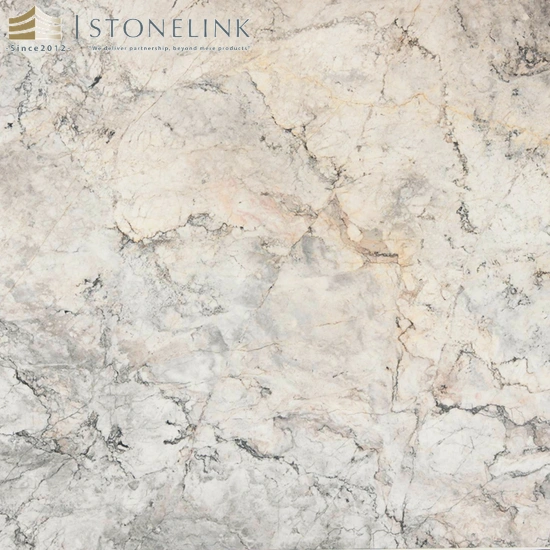
Large-format slab surfaces that carry from indoor counters to outdoor living — the use case porcelain and sintered stone were built for.
Of all the categories we track, porcelain slab and sintered stone are growing fastest. They are not a fad; they solve problems natural stone handles poorly, and they open project types — especially outdoor and high-heat — that a marble-only or granite-only distributor has to walk away from. This article lays out what the material is, where it wins, where it falls short, and how to position it next to your natural stone range.
Why This Category Is Growing Fast
The driver is versatility. A single large-format porcelain or sintered slab can serve a kitchen counter, a bathroom wall, an outdoor kitchen, and a building facade. Few natural stones do all four without real compromise. As outdoor living and seamless indoor-outdoor design grew, so did demand for a slab that does not care which side of the window it sits on.
For an importer, the appeal is a line that pulls both residential and commercial specs and is not in direct price competition with your marble aisle.
What Porcelain & Sintered Stone Do Well
The performance story is the selling point, and it is concrete:
- Extremely stain resistant — the non-porous surface shrugs off wine, oil, and acid that would mark a lighter marble.
- Heat resistant — safe around cooktops and outdoor grills where some stones fret.
- Near-zero water absorption — frost and moisture do not penetrate, which is why it works outdoors.
- Can be made very thin — large panels stay light, easing handling and facade use.
- Indoor + outdoor seamless — one material, one look, inside and out.
The Trade-Offs Versus Natural Stone
Porcelain is not simply “better stone.” It trades away things natural stone owners value, and a good salesperson names those upfront so the buyer trusts the rest of the pitch.
| Factor | Porcelain / Sintered | Natural Stone |
|---|---|---|
| Vein depth & uniqueness | Printed / engineered, repeatable | One-of-a-kind depth from the earth |
| Repair of chips | Hard to repair invisibly | Many stones polish and repair well |
| Seams | Still present on large installs | Also present; bookmatch hides them |
| Stain & heat | Excellent | Varies by stone; marbles need care |
| Outdoor use | Strong, frost-proof | Limited by stone type |
The honest summary: porcelain wins on performance and breadth of use, but it does not have the unique, deep character of a natural slab, chips are harder to make disappear, and you still manage seams on big jobs. None of that is a reason to avoid it — it is a reason to place it correctly.
We tell buyers the truth: porcelain is the better tool for some jobs and the wrong tool for others. Specifying it well is what builds repeat orders.
Complement, Not Replace
The mistake some distributors make is framing porcelain as a stone killer. That framing loses both sales and trust. The better position — and the one we use — is that the two serve different specs:
- Natural stone for hero surfaces where character and uniqueness are the point: a bookmatched island, a feature wall, a luxury bath.
- Porcelain / sintered for performance surfaces: outdoor kitchens, facades, high-traffic commercial tops, and jobs where stain and heat resistance matter most.
Sold this way, the categories feed each other. A client who buys a marble island may also buy a porcelain outdoor kitchen from the same supplier — and that is a larger relationship than either sale alone.
If Your Supplier Can Source It, It Is a Growth Line
Most traditional stone importers under-carry porcelain. That gap is the opportunity. If your manufacturing and export partner can supply large-format porcelain or sintered slab, adding it is a low-cannibalization way to grow:
- It captures outdoor and facade jobs you previously lost.
- It gives commercial specifiers a single-source option.
- It protects margin because it is not in a price war with your marble range.
- It future-proofs the catalog as indoor-outdoor design keeps climbing.
Confirm with your supplier that slabs come in the large formats fabricators expect, and that edges and matching trim are available — a porcelain line with no coordinating pieces is hard to install cleanly.
Frequently Asked Questions
Is porcelain slab the same as sintered stone?
They are close cousins. Both are manufactured, fired panels with very low absorption. “Sintered stone” usually refers to a specific compaction-and-sintering process; porcelain slab is the broader category. For most buyers the performance overlap is what matters, not the process label.
Will porcelain replace natural stone in my catalog?
It should not. Natural stone holds the character-driven, high-end jobs that porcelain cannot match. Treat porcelain as an addition that captures outdoor, facade, and heavy-use specs — a wider book of business, not a swap.
Can porcelain be used outdoors year-round?
Yes. Near-zero water absorption means frost and moisture do not penetrate, so it performs through freeze-thaw cycles where many natural stones struggle. That is exactly why it leads in outdoor kitchen and facade applications.
Are chips on porcelain easy to repair?
Generally no — a chipped porcelain edge is harder to make invisible than on many natural stones, which often polish and fill well. The mitigation is careful fabrication and edge protection, plus ordering a small spare allowance per job.
Does porcelain still show seams on big installations?
Yes. Despite the large formats, full walls and long runs still need joints. Good layout and color-matched adapters keep them tidy, but plan for seams rather than assuming a seamless plane.
About the Source
STONELINK is a natural stone manufacturer and exporter supplying marble, granite, quartzite, and other natural stone slabs, tiles, and cut-to-size pieces to importers, wholesalers, and project contractors worldwide. For material selection support or a tailored quotation, contact our team.
Explore Related Stone Products
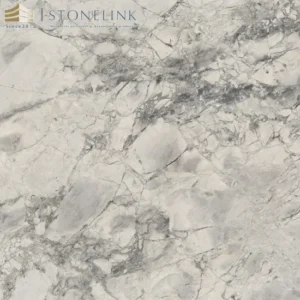
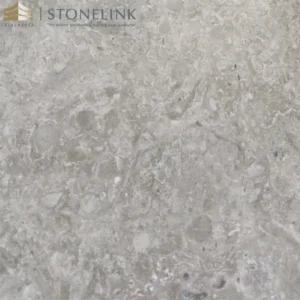
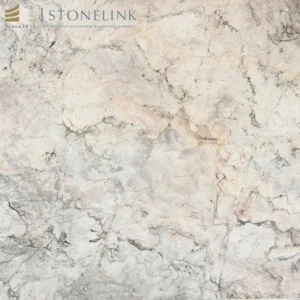
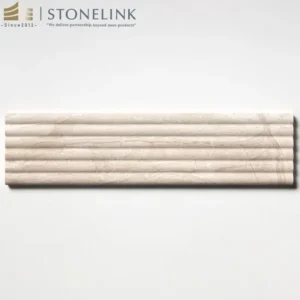
- Raggio Verde Green Marble Slab — a natural character slab for hero indoor surfaces porcelain cannot replicate.
- Four Seasons Cherry Blossom Marble Slab — warm marble for feature islands that pair with performance porcelain elsewhere.
- Diana Royal Beige Marble Tile — a warm neutral tile for indoor wall and floor specs.
- Babylon Grey Natural Marble Slab — a neutral-warm slab for indoor tops that complement an outdoor porcelain line.