
Material comparison · Updated 2026 · For importers, fabricators, contractors & specifiers
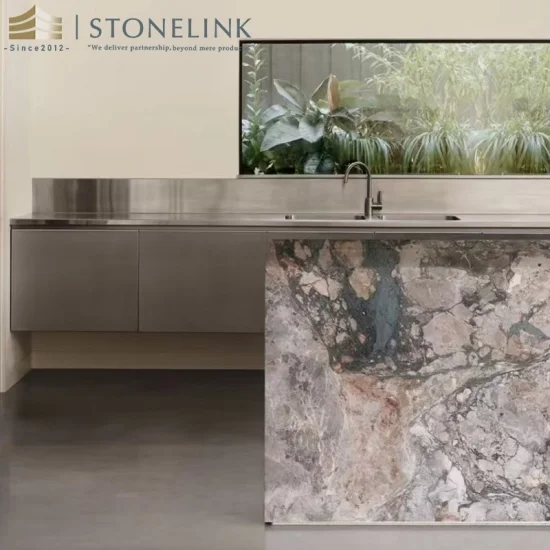
Natural marble countertops on a kitchen island — timeless, but higher maintenance than granite or quartzite.
Quick Comparison at a Glance
| Feature | Marble | Granite | Quartzite |
|---|---|---|---|
| Rock type | Metamorphic (limestone) | Igneous (magma) | Metamorphic (sandstone) |
| Hardness (Mohs) | 3–5 | 6–7 | 7–8 |
| Scratch resistance | Fair | Excellent | Excellent |
| Heat resistance | Good (use trivets) | Excellent | Excellent |
| Etch resistance (acids) | Poor | Good | Good |
| Maintenance | Seal every 6–12 mo | Seal every 1–2 yr | Seal every 1–2 yr |
| Price (installed, per sq ft) | $40–$200+ | $40–$100+ | $70–$150+ |
| Best for | Bathrooms, islands, low-traffic luxury | Busy kitchens, outdoors | Kitchens wanting “marble look” + toughness |
Price ranges are typical installed market figures (US, 2026) and vary by grade, color rarity, slab thickness, and region. They are guides, not quotations.
What Each Stone Actually Is
Marble
Marble is a metamorphic rock formed when limestone is subjected to heat and pressure, recrystallizing into calcite. The result is the luminous depth and organic veining no engineered material replicates. Its main mineral, calcium carbonate, is what makes it react to acids (etching) and why it needs sealing. Popular types include Carrara, Calacatta, Statuario, Crema Marfil, Emperador, and Nero Marquina.
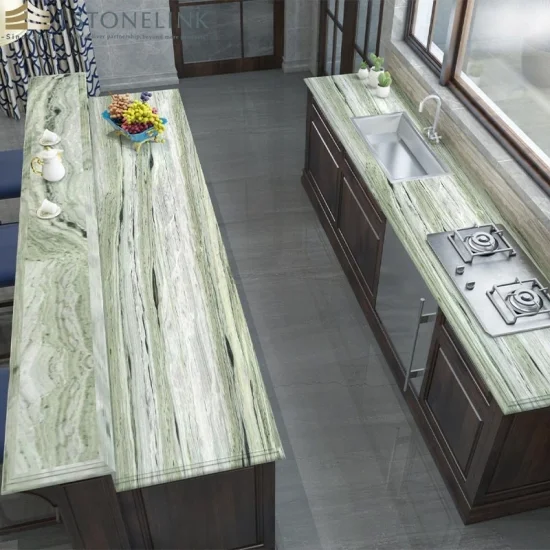
Raggio Verde green natural marble — a polished slab showing the depth of veining marble is prized for.
Granite
Granite is an igneous rock from cooled magma, with a dense, crystalline structure. It is one of the hardest natural countertop materials, highly scratch- and heat-resistant, and naturally UV-stable — which is why it is the default choice for outdoor kitchens. Every slab is unique in pattern.
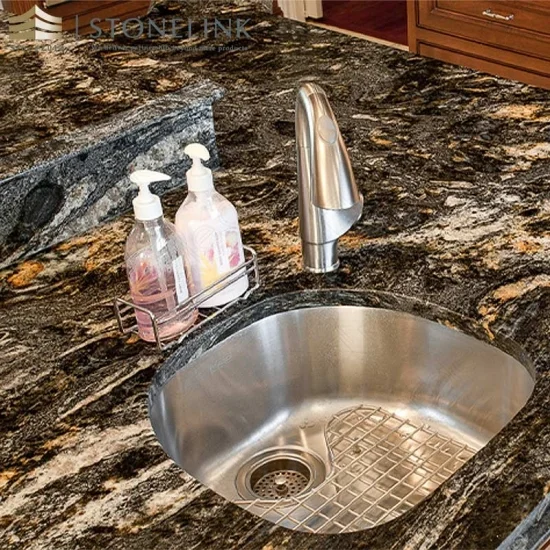
Cosmic Black granite countertop — dense, crystalline, and highly scratch- and heat-resistant.
Quartzite
Quartzite is a natural metamorphic rock (sandstone + extreme heat/pressure). It is often confused with engineered quartz, but it is 100% natural and harder than granite. Visually it mimics marble’s veining while delivering granite-level durability — the “best of both worlds” option.
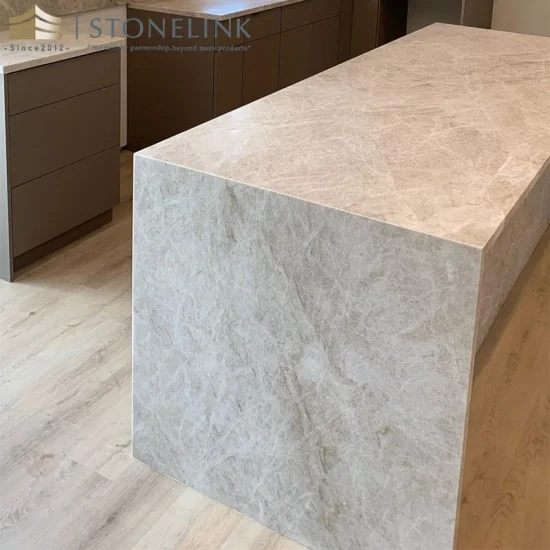
Taj Mahal quartzite — the “marble look” with granite-level toughness that buyers increasingly ask for.
Durability & Maintenance Compared
- Marble is the softest of the three (3–5 Mohs). It scratches more easily and etches when exposed to citrus, wine, vinegar, or tomato. It requires sealing every 6–12 months and prompt cleanup. Many owners accept the developing patina as part of its character.
- Granite is very hard (6–7 Mohs), chip- and scratch-resistant, and only needs sealing roughly once a year. It is the lowest-maintenance natural stone.
- Quartzite (7–8 Mohs) is the most durable; it resists etching far better than marble while keeping a marble-like appearance. Seal yearly.
Heat & Etching: The Deciding Factor for Kitchens
If your countertop will face hot pans, daily cooking, and the occasional spilled glass of red wine, granite or quartzite win. Marble tolerates moderate heat but can etch or discolor; always use trivets. For pastry stations, bathrooms, fireplace surrounds, and showpiece islands with light use, marble’s elegance is worth the care.
“If you clean spills immediately, marble is manageable. If you let them sit, choose granite or quartzite.” — a useful rule of thumb for any buyer.
How to Choose by Lifestyle (Decision Cheat Sheet)
| Your situation | Pick | Avoid |
|---|---|---|
| Busy family kitchen, daily cooking | Granite / Quartzite | Marble |
| “I want marble’s look but need toughness” | Quartzite | Laminate |
| Luxury bathroom, low traffic | Marble (Calacatta/Statuario) | — |
| Outdoor kitchen / cladding | Granite (dense, UV-stable) | Marble (weather-sensitive) |
| Tight budget, still natural stone | Granite / Carrara marble | Exotic quartzite |
Finish Matters: Polished vs Honed vs Leathered
- Polished: Glossy, reflective, showcases color and vein. Most popular for countertops.
- Honed: Matte, softer look; shows etching and wear less than polished — often preferred for marble kitchens.
- Leathered: Textured, low-sheen; hides fingerprints and adds depth. Common on granite and quartzite.
Frequently Asked Questions
Is marble bad for kitchen countertops?
No — it is safe and timeless if you seal it and wipe acidic spills promptly. It suits islands and low-traffic areas best.
Which is more durable, granite or quartzite?
Quartzite is generally harder (7–8 Mohs) and more etch-resistant; granite (6–7) is still excellent and usually more affordable with wider color range.
Does quartzite stain like marble?
Less so. Like all natural stone it is porous and should be sealed, but it resists acid etching far better than marble.
What is the cheapest natural stone countertop?
Carrara marble and common granite typically start around $40/sq ft installed; exotic Calacatta or rare quartzite can exceed $200/sq ft.
Can I use marble outdoors?
Generally not recommended — weather, pollution, and thermal movement affect it. Granite is the safer outdoor choice.
About the Source
STONELINK is a natural stone manufacturer and exporter supplying marble, granite, and quartzite slabs, tiles, and cut-to-size pieces to importers, wholesalers, and project contractors worldwide. For material selection support or a tailored quotation, contact our team — we help buyers match the right stone to the right application.
This guide is educational. Always request current batch photos, samples, and a written quotation (origin, grade, finish, thickness, lead time, MOQ, and payment terms) before ordering.
Explore Related Stone Products
- Cosmic Black granite kitchen countertops — bold, heat-resistant granite for kitchens
- Excalibur quartzite slab — marble look with granite-grade durability
- Raggio Verde green marble slab — rare green marble for countertops & feature walls
- Babylon Grey marble slab — elegant grey marble for floors & walls