Granite, as a common building material, is widely used in various construction and decoration projects due to its high hardness, wear resistance, and high compressive strength. However, during the processing of granite, there may be some stone loss due to cutting, polishing, and grinding operations. Reasonable calculation and control of these losses are of great significance for improving material utilization, reducing costs, and enhancing engineering economic benefits.
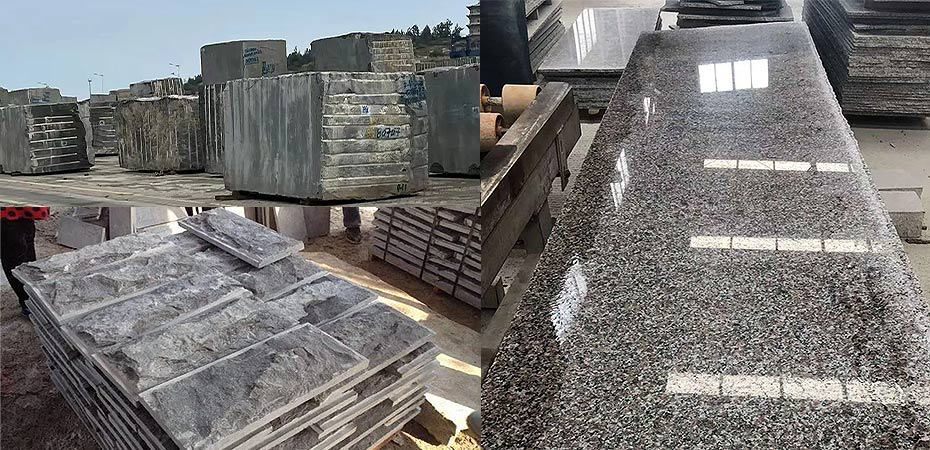
1. Types of losses during granite processing
In the processing of granite, losses are mainly divided into the following categories:
Cutting loss: When cutting granite stone raw materials into the required size, a certain amount of waste will be generated due to the accuracy limitations of the cutting equipment, improper operation, or the irregular shape of the raw granite stone materials themselves.
Polishing Loss: When polishing a rough granite stone slab into a polished finish, there will also be losses. The polishing loss rate is usually low, but as the thickness of the rough granite stone slab increases, the loss rate will decrease. During the polishing process, a layer of granite stone surface will be removed, resulting in wear and tear. The size of polishing loss is related to the accuracy of polishing equipment, polishing process, and the hardness of the granite stone itself.
Shape trimming loss: For irregular shaped granite stone materials such as circular arc slabs, oblique cut to size tiles, etc., shape trimming is required during the processing, which also generates certain losses.
2. Calculation method for granite stone loss rate
The granite stone loss rate is usually calculated using the following formula:
Loss rate (%) = (stone waste / total stone quantity) * 100%
Among them, the amount of granite stone waste refers to the amount of waste generated during the processing due to cutting, polishing, and other operations, while the total amount of granite stone refers to the total weight or volume of the original granite stone used.
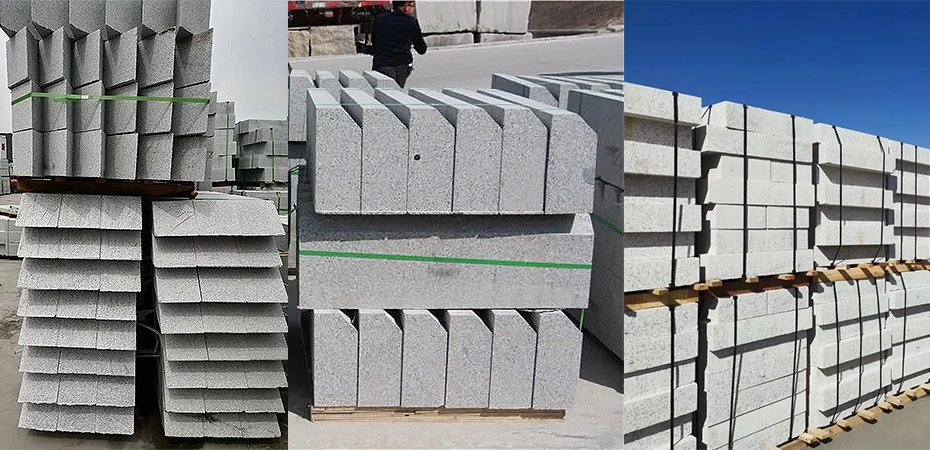
3. Analysis of loss rate in various stages of granite processing
3.1. Processing granite stone raw materials into rough granite stone slab
Loss rate range: usually between 30% and 45%.
Influencing factors: shape, size, hardness of granite stone raw materials, and precision of cutting equipment. The more regular the shape and larger the size of the granite stone raw materials, the lower the loss rate; The higher the precision of the cutting equipment, the lower the loss rate.
Example analysis: Taking a granite block with a volume of 1 cubic meter as an example, if it is processed into a granite stone rough slab with a thickness of 2.0 centimeters, the loss rate is about 38.15%; If processed into a granite stone rough slab with a thickness of 3.2 centimeters, the loss rate decreases to 32.14%.
3.2. Processing granite stone rough slab into polished slab
Loss rate range: usually 4% -7%.
Influencing factors: thickness of the granite stone rough slab, accuracy of the polishing equipment, and polishing process, etc. The thicker the thickness of the granite stone rough slab, the lower the polishing loss rate; The higher the precision of the polishing equipment, the lower the loss rate.
Example analysis: If a granite stone rough slab with a thickness of 2.0 centimeters is polished into a polished slab with a thickness of 1.8 centimeters, the loss rate is about 6.18%; If the 3.2 centimeters thick granite stone rough slab is polished into a 3.0 centimeters polished slab, the loss rate decreases to 4.24%.
3.3. Processing of irregular granite stone materials
Characteristics of loss rate: The processing loss rate of irregular granite stone is usually high because complex shape adjustments are required.
Optimization method: Adopting the cutting process can significantly reduce the loss rate. The sleeve cutting process refers to optimizing and combining the cutting paths of multiple irregular granite stones, so as to maximize the utilization of granite stones during the cutting process.
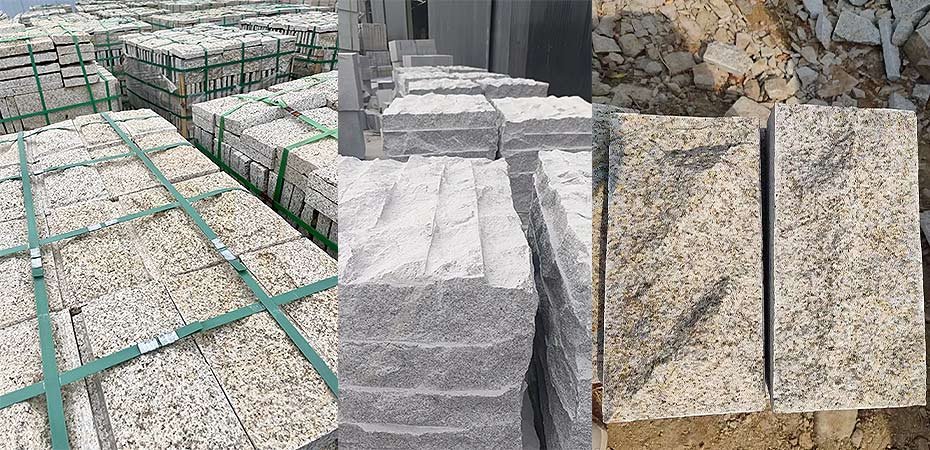
4. How to reduce stone loss
Improve equipment accuracy: By using high-precision cutting and polishing equipment, waste and loss can be reduced.
Optimizing processing technology: Through reasonable processing technology and cutting path design, stone can be maximally utilized and waste can be reduced.
Strengthening employee training: Improving the skill level and sense of responsibility of operators can reduce losses caused by improper operations.
Recycling waste: Recycling and reusing the waste generated during the processing can reduce the loss rate and improve resource utilization.
The granite stone loss during processing is a complex issue that involves multiple links and factors. By reasonably calculating the loss rate, analyzing the causes of loss, optimizing processing technology, and strengthening management measures, the loss rate can be effectively reduced and the material utilization rate can be improved. This not only helps to reduce costs and improve the economic benefits of engineering, but also contributes to the sustainable use of resources and environmental protection. Therefore, in the process of granite processing, the calculation and control of granite stone loss should be highly valued.
Frequently Asked Questions
How can I import natural stone from China?
Most overseas buyers work with Stonelink in four clear steps. (1) Share your project specifications, drawings or inspiration photos, or choose directly from our 60,000 m² inventory of 2,000+ designs. (2) We send whole-slab high-resolution photos and short video so you can verify exact veining, color and finish before committing — bookmatching and sequence are confirmed at this stage. (3) We handle export packing (foam-protected, fumigated wooden crates), container booking and ocean freight from Xiamen or Shuitou port. (4) Goods arrive at your destination port with the full document set (commercial invoice, packing list, Bill of Lading, certificate of origin, insurance). We support both full-container-load and LCL shipments, and all communication is in English.
What is your minimum order quantity (MOQ) and lead time?
MOQ typically starts from one container (about 20–27 tons depending on slab size and thickness), and mixed sizes or products are accepted so you can consolidate an entire project in one shipment. For smaller trials we can sometimes ship an LCL (less-than-container) batch of a few slabs, though the per-unit freight is higher; ask us and we will quote both options. Standard lead time is about 15–25 days after order confirmation for in-stock materials, or longer for custom cutting and special finishes. Before shipment we provide whole-slab photos and video so you know exactly what you receive, and we can hold stock for phased deliveries. For recurring orders we offer reserved inventory and rolling production schedules to keep your supply chain steady, and we quote both FOB Xiamen/Shuitou and delivered CIF or DDP to your port.
Can you send stone samples before I place an order?
Yes. We provide samples — offcuts or small slabs — so you can verify color, finish and quality before committing to a full shipment. Samples ship worldwide by courier (DHL, FedEx or UPS), typically within 3–7 days, and the sample cost is usually credited against your first container order. For large projects we can also send a full digital package — high-resolution whole-slab photos and short videos — so your designers can spec with confidence before any physical sample moves. Tell us the exact application, dimensions and finish you need and we will pick the most representative pieces rather than random offcuts, so the sample truly reflects the batch you would receive.
Do you provide quality control and certifications?
Yes. Stonelink is a China-based natural stone manufacturer and exporter operating from the Xiamen and Shuitou stone hub since 2012, with a 60,000 m² inventory spanning 2,000+ designs and direct quarry access, shipping to 80+ countries. Every shipment is inspected for packing and quality before loading — slabs are checked for cracks, bow, thickness tolerance and finish, then crated in foam-protected, fumigated wooden packaging. We can arrange third-party inspection (SGS, Intertek and similar) and supply the documentation your destination requires: commercial invoice, packing list, Bill of Lading, certificate of origin and, where relevant, CE marking or material test reports. Tell us your certification and labeling needs (for example the EU, US, Australia or Middle East) and we will match them and pre-clear the paperwork so customs clearance goes smoothly.
How do I choose the right natural stone for my project?
Start with the application: floors and high-traffic areas favor harder stones (granite, quartzite), while marble and onyx shine in lower-abuse, design-led spaces such as feature walls and vanities. Match the finish to the mood — polished for drama, honed for calm, leathered for texture — and confirm color stability under your actual lighting, since natural stone shifts with light. For wet areas choose a denser, well-sealing material and an appropriate finish, and review whole-slab photos or video with our team before you buy. We advise free of charge based on your project’s traffic, budget and aesthetic, so you avoid expensive mismatches and rework.
What shipping terms and documents are included?
We ship FOB Xiamen or Shuitou as standard and can also quote CIF or DDP to your port, so you control insurance and freight or let us handle it end to end. We manage export packing, container booking and ocean freight, and provide the full document set: commercial invoice, packing list, Bill of Lading, certificate of origin and cargo insurance. Both full-container-load and LCL (less-than-container-load) shipments are supported, and for landlocked destinations we can arrange door-to-door multimodal transport. Tell us your delivery address and incoterm preference and we will quote a landed cost, not just an ex-works price, so there are no surprises at the border.