


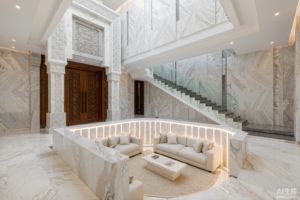
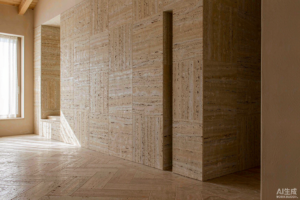
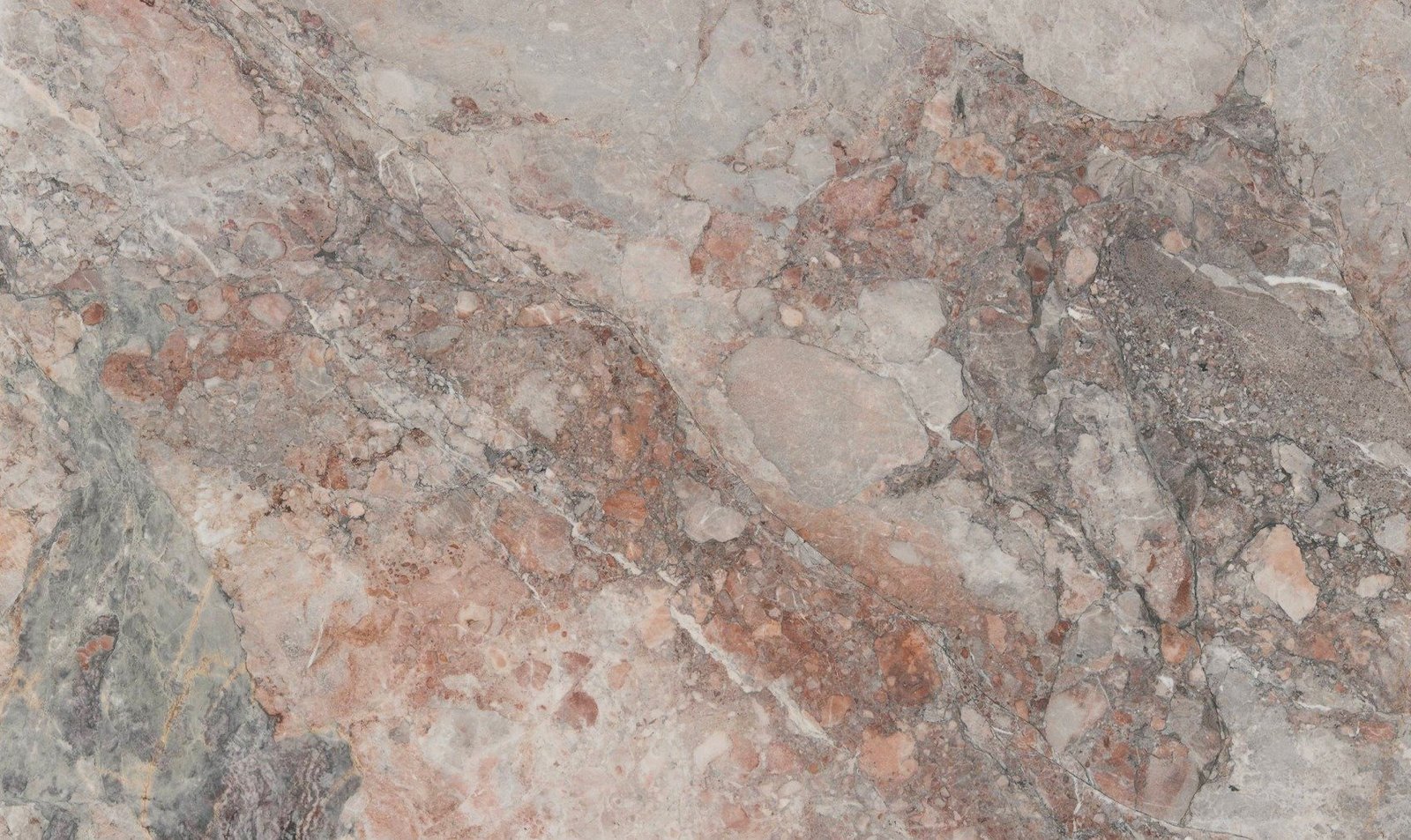
Project-spec marble from our Four Seasons line — the kind of warm, veined slab overseas buyers are requesting more often in 2026.
The consumer side of the stone market moves faster than most supply chains. By the time a finish trends on social feeds, fabricators are already fielding requests they cannot fully fill. Below, we translate the 2026 end-user wants into concrete stocking and sourcing advice.
1. The Year of Quartzite
Nearly 62% of designers expect quartzite demand to rise sharply in 2026, and Taj Mahal has become the single most-specified quartzite on the market. That is a supply planning problem as much as a style one: quartzite is harder to quarry and process than many marbles, so lead times are longer and block consistency matters more.
What to stock: Keep Taj Mahal as a core line, but do not stop there. Build a small quartzite range — two to three looks (white, gold-toned, grey-green) so you can offer alternatives when one stone is short. Buy consistent-color blocks so slabs match across shipments.
2. Warm Neutrals Replace Cool Grey
Cream, beige, and greige (the grey-beige blend) are now the default palette. Cool grey, which dominated the last decade, is losing floor space. This is the single biggest shift we see in repeat orders.
What to stock: Warm marbles and light beiges move first. A beige tile like Diana Royal and a soft grey marble like Babylon Grey cover two corners of demand — one warm, one neutral-warm. Trim cold-grey inventory gradually; some commercial specs still call for it.
3. Bold Veining & Bookmatch as the Focal Point
Subtle, quiet stone is no longer the safe default. Buyers want drama — strong veining, and bookmatched slabs where two halves mirror each other across a seam. Bookmatch drives slab demand because a single feature wall or island now takes two, four, or more sequential slabs.
What to stock: Prioritize directional, figure-grade veining and ask your supplier to keep sequential slab sets together. Bookmatch lifts average order value, but only if you deliver matched sets reliably — invest in the logistics, not just the material.
4. Exotic Granites Are Back
After years of quiet, exotic granites are returning to specification sheets. Patagonia, Blue Bahia, and Fantasy Brown are the names we hear most. These are statement stones — they photograph well and they differentiate a showroom that otherwise looks like everyone else’s.
What to stock: You do not need a deep granite catalog. Two or three exotics kept as full slabs give you a “wow” corner that pulls foot traffic — margin builders, not volume movers.
5. Porcelain Slabs & Sintered Stone — The Fastest Grower
Porcelain slab and sintered stone are the fastest-growing category, used both indoors and out. We cover this in depth in a dedicated article, but for stocking purposes: this is the one line most traditional stone importers under-carry.
What to stock: If your supplier can source it, add a porcelain/sintered range in large formats. It covers outdoor kitchens and facades that natural stone serves less easily — and complements, not replaces, your stone business.
6. Full-Height Backsplash + Waterfall Edge
The “statement stone” design language now runs vertically and over the edge: full-height backsplashes (stone running from counter to upper cabinet) and waterfall edges (the slab wrapping down the side of an island). Both consume more square footage per project than a standard 4-inch splash.
What to stock: Plan for larger per-project yield — a waterfall island alone can add a full slab. Keep matching slab from the same batch to cover backsplash and edge, or you will explain color drift to an unhappy fabricator.
Stocking Summary for 2026
If you only adjust inventory in one direction this year, move weight from cold grey toward warm neutrals and quartzite, and open a porcelain line.
| Trend | What buyers want | Importer stocking move |
|---|---|---|
| Quartzite year | Taj Mahal + alternatives | Core Taj Mahal, 2–3 backup quartzites, consistent blocks |
| Warm neutrals | Cream, beige, greige | Add beige & warm-grey; phase out cold grey slowly |
| Bold veining / bookmatch | Figure-grade, mirrored slabs | Keep sequential slab sets; sell matched sets |
| Exotic granite | Patagonia, Blue Bahia, Fantasy Brown | 2–3 full-slab exotics as showroom margin builders |
| Porcelain / sintered | Large-format indoor + outdoor | Open a complementary porcelain line if sourced |
| Full-height + waterfall | More stone per project | Stock batch-matched slab for full coverage |
Frequently Asked Questions
Which 2026 stone trend should an importer prioritize first?
Quartzite and warm neutrals are the two with the broadest pull across both residential and commercial jobs. If you can only add one line this quarter, add a warm quartzite or a warm marble; if you can add two, pair that with a small porcelain slab range.
Is bookmatched slab demand real, or just for high-end projects?
It is real and spreading down-market. Fabricators now offer bookmatch as a standard upsell on islands and feature walls, not only in luxury builds. The constraint is supply: you need sequential, matched slabs, which is a sourcing discipline more than a material cost.
Should I drop cool grey entirely?
No. Phase it down, do not zero it out. Some commercial and rental-spec work still specifies cool grey, and a sudden gap leaves a competitor the order. Let warm neutrals take the new floor space while grey shrinks to a smaller, steady line.
Does porcelain slab compete with my natural stone business?
Used correctly, it extends it. Porcelain covers outdoor and high-heat applications where natural stone is weaker, so it lets you quote jobs you previously had to walk away from. Sell the two side by side and let the project decide.
How do I avoid color drift on waterfall and full-height jobs?
Buy the full project’s slab from one block or one tightly-matched batch, and label slabs by sequence at the warehouse. Most drift complaints come from mixing two production runs — a logistics fix, not a stone problem.
About the Source
STONELINK is a natural stone manufacturer and exporter supplying marble, granite, quartzite, and other natural stone slabs, tiles, and cut-to-size pieces to importers, wholesalers, and project contractors worldwide. For material selection support or a tailored quotation, contact our team.
Explore Related Stone Products
- Raggio Verde Green Marble Slab — a figure-grade green marble suited to bookmatched feature walls and statement islands.
- Four Seasons Cherry Blossom Marble Slab — warm-toned marble with soft pink-beige veining for the 2026 neutral palette.
- Diana Royal Beige Marble Tile — a dependable warm beige tile that answers the shift away from cool grey.
- Babylon Grey Natural Marble Slab — a neutral-warm grey slab that bridges the old grey demand and the new warm direction.
Frequently Asked Questions
How can I import natural stone from China?
Most overseas buyers work with Stonelink in four clear steps. (1) Share your project specifications, drawings or inspiration photos, or choose directly from our 60,000 m² inventory of 2,000+ designs. (2) We send whole-slab high-resolution photos and short video so you can verify exact veining, color and finish before committing — bookmatching and sequence are confirmed at this stage. (3) We handle export packing (foam-protected, fumigated wooden crates), container booking and ocean freight from Xiamen or Shuitou port. (4) Goods arrive at your destination port with the full document set (commercial invoice, packing list, Bill of Lading, certificate of origin, insurance). We support both full-container-load and LCL shipments, and all communication is in English.
What is your minimum order quantity (MOQ) and lead time?
MOQ typically starts from one container (about 20–27 tons depending on slab size and thickness), and mixed sizes or products are accepted so you can consolidate an entire project in one shipment. For smaller trials we can sometimes ship an LCL (less-than-container) batch of a few slabs, though the per-unit freight is higher; ask us and we will quote both options. Standard lead time is about 15–25 days after order confirmation for in-stock materials, or longer for custom cutting and special finishes. Before shipment we provide whole-slab photos and video so you know exactly what you receive, and we can hold stock for phased deliveries. For recurring orders we offer reserved inventory and rolling production schedules to keep your supply chain steady, and we quote both FOB Xiamen/Shuitou and delivered CIF or DDP to your port.
Can you send stone samples before I place an order?
Yes. We provide samples — offcuts or small slabs — so you can verify color, finish and quality before committing to a full shipment. Samples ship worldwide by courier (DHL, FedEx or UPS), typically within 3–7 days, and the sample cost is usually credited against your first container order. For large projects we can also send a full digital package — high-resolution whole-slab photos and short videos — so your designers can spec with confidence before any physical sample moves. Tell us the exact application, dimensions and finish you need and we will pick the most representative pieces rather than random offcuts, so the sample truly reflects the batch you would receive.
Do you provide quality control and certifications?
Yes. Stonelink is a China-based natural stone manufacturer and exporter operating from the Xiamen and Shuitou stone hub since 2012, with a 60,000 m² inventory spanning 2,000+ designs and direct quarry access, shipping to 80+ countries. Every shipment is inspected for packing and quality before loading — slabs are checked for cracks, bow, thickness tolerance and finish, then crated in foam-protected, fumigated wooden packaging. We can arrange third-party inspection (SGS, Intertek and similar) and supply the documentation your destination requires: commercial invoice, packing list, Bill of Lading, certificate of origin and, where relevant, CE marking or material test reports. Tell us your certification and labeling needs (for example the EU, US, Australia or Middle East) and we will match them and pre-clear the paperwork so customs clearance goes smoothly.
How do I choose the right natural stone for my project?
Start with the application: floors and high-traffic areas favor harder stones (granite, quartzite), while marble and onyx shine in lower-abuse, design-led spaces such as feature walls and vanities. Match the finish to the mood — polished for drama, honed for calm, leathered for texture — and confirm color stability under your actual lighting, since natural stone shifts with light. For wet areas choose a denser, well-sealing material and an appropriate finish, and review whole-slab photos or video with our team before you buy. We advise free of charge based on your project’s traffic, budget and aesthetic, so you avoid expensive mismatches and rework.
What shipping terms and documents are included?
We ship FOB Xiamen or Shuitou as standard and can also quote CIF or DDP to your port, so you control insurance and freight or let us handle it end to end. We manage export packing, container booking and ocean freight, and provide the full document set: commercial invoice, packing list, Bill of Lading, certificate of origin and cargo insurance. Both full-container-load and LCL (less-than-container-load) shipments are supported, and for landlocked destinations we can arrange door-to-door multimodal transport. Tell us your delivery address and incoterm preference and we will quote a landed cost, not just an ex-works price, so there are no surprises at the border.